


Retrieval of HCV patients lost to follow-up as a strategy for Hepatitis C Microelimination: results of a Brazilian multicentre study
- PMID: 37442976
- PMCID: PMC10339629
- DOI: 10.1186/s12879-023-08169-0
Retrieval of HCV patients lost to follow-up as a strategy for Hepatitis C Microelimination: results of a Brazilian multicentre study
Abstract
Background: Several HCV patients in Brazil were lost to follow-up (LTFU) in the last two decades before achievement of sustained virological response (SVR). Strategies to recall those diagnosed but untreated patients have been used elsewhere with different success rates.
Aim: To identify and retrieve LTFU patients in order to offer them the treatment with the current highly effective direct acting antiviral agents (DAAs).
Methods: Registries ofall HCV patients from three large reference centers in Brazil were retrospectively reviewed to identify those with no registry of SVR. Reasons for non-achievement of SVR were elicited in HCV-RNA + patients. All patients who were not treated or cured were contacted to offer the therapy with DAAs.
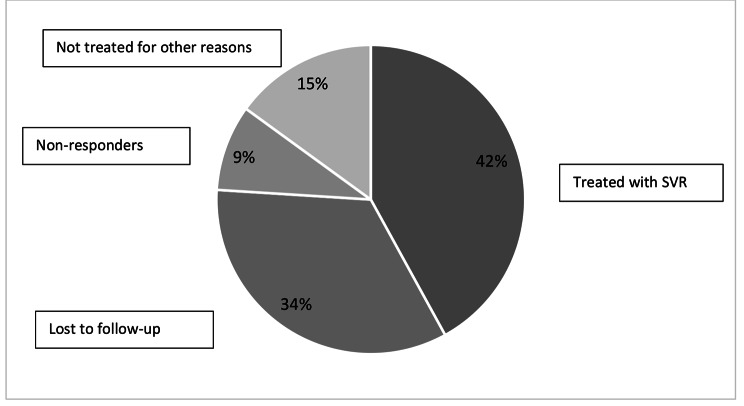
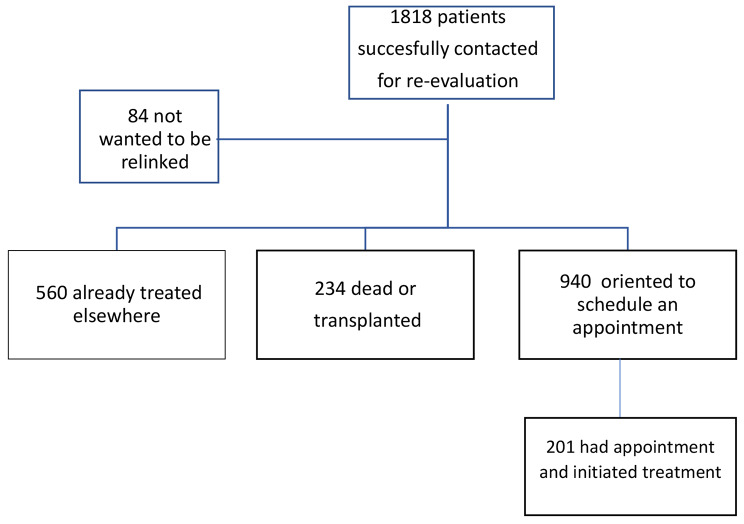
Results: 10,289 HCV patients (50% males, mean age 52 ± 11 years) were identified. Only 4,293 (41.7%) had been successfully treated previously. From the remaining 5,996 most were LTFU (59%), were not treated for other reasons (14.7%) or were non-responders (26.3%). After revision of the charts 3,559 were considered eligible to be retrieved. The callback success of phone calls was 18%, 13% to cellphone messages (SMS or WhatsApp) and 7% to regular mail. Five-hundred sixty patients had been already treatedor were on treatment and 234 were reported to be dead or transplanted. Finally, 201 had made an appointment and initiated antiviral treatment.
Conclusion: Even considering the low callback rate, retrieval of LTFU patients was shown to be an important strategy forhepatitis C micro-elimination in Brazil.
Keywords: DAA treatment; Hepatitis C; Micro-elimination; Non-SVR.
© 2023. The Author(s).
Conflict of interest statement
The authors declare no competing interests.
Figures
References
-
- Polaris Observatory HCV, Collaborators. Global change in hepatitis C virus prevalence and cascade of care between 2015 and 2020: a modelling study. Lancet GastroenterolHepatol. 2022;7:396–415. - PubMed
-
- World Health Organization. Hepatitis C key facts. July 2021. https://www.who.int/news-room/fact-sheets/detail/hepatitis-c Accessed in 24 Feb 2022.
-
- Ferraz MLG, de Zorzi Piccoli L, Rezende R, BorbaL A, Junior AP, Cheinquer H, et al. National brazilian survey on the outcomes of hepatitis C retreatment in patients non-responders to direct antiviral agents. Brazilian J Infect Dis. 2022;26(4):102388. doi: 10.1016/j.bjid.2022.102388. - DOI - PMC - PubMed
Publication types
MeSH terms
Substances
LinkOut - more resources
Full Text Sources
Medical
