


Experimental investigation of wettability alteration, IFT reduction, and injection schemes during surfactant/smart water flooding for EOR application
- PMID: 37443172
- PMCID: PMC10344957
- DOI: 10.1038/s41598-023-37657-1
Experimental investigation of wettability alteration, IFT reduction, and injection schemes during surfactant/smart water flooding for EOR application
Abstract
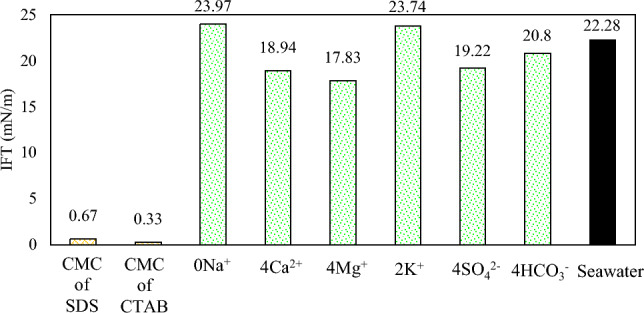
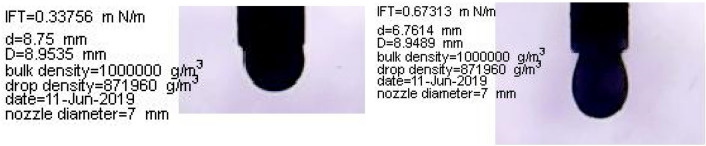
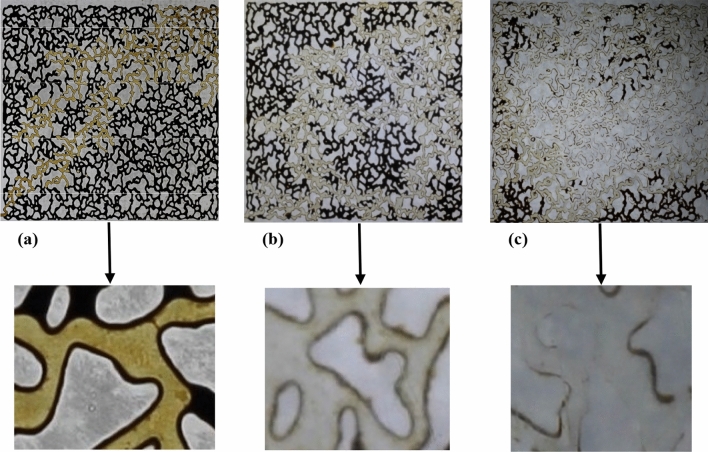
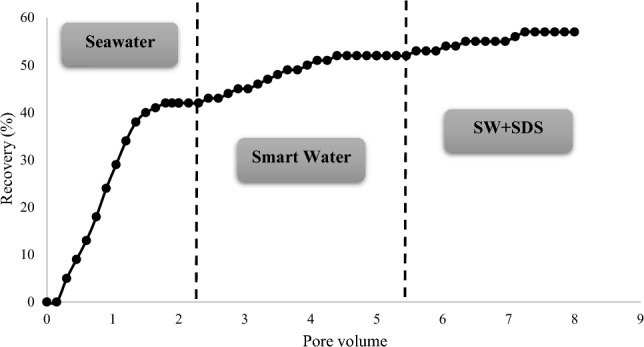
In recent years, the application of smart water and surfactant in order to improve oil recovery has attracted special attention in carbonate reservoirs. In this research, the effects of various salts in smart water and two surfactants of Cetyl Trimethyl Ammonium Bromide (CTAB) and Sodium Dodecyl Sulfate (SDS) on the wettability alteration of carbonate rock and IFT were studied. Besides, along with micromodel flooding, core flooding tests were conducted to assess the amount of oil recovery at reservoir conditions as an injection scheme was used. In this regard, the results illustrated that the presence of CTAB or SDS in seawater (SW) can act better in contact angle reduction compared to smart water. Also, a four times increase in the concentration of SO42- and removing Na+ from SW reduced the contact angle to 68° and 71°, respectively, being the best possible options to alter the carbonate surface wettability to more water-wet states. Moreover, in the second-order process in which the rock section was first placed in SW, and then was put in the smart solution (with or without surfactant), CTAB had a great effect on the wettability alteration. In the case of IFT reduction, although SW4Mg2+, compared to other ions, better decreased the IFT to 17.83 mN/m, SW + SDS and SW + CTAB further declined the IFT to 0.67 and 0.33 mN/m, respectively. Concerning different ions, divalent cations (Mg2+ and Ca2+) show better results in improving oil recovery factor. However, the combination of SW and surfactants has a more positive effect on boosting oil recovery, as compared to smart water flooding. It should be mentioned that the first-order injection is better than the second-order one since SW is flooded at first, and then, after the breakthrough, smart water is injected into the micromodel. In addition, the core flooding tests showed that SW + CTAB and SW + SDS in tertiary injection increased the oil recovery to about 59 and 57%, respectively, indicating that the presence of CTAB could be more effective than that of SDS.
© 2023. The Author(s).
Conflict of interest statement
The authors declare no competing interests.
Figures






References
-
- Myint PC, Firoozabadi A. Thin liquid films in improved oil recovery from low-salinity brine. Colloid Interface Sci. 2015;20:105–114.
-
- Treiber L, Owens W. A laboratory evaluation of the wettability of fifty oil-producing reservoirs. SPE J. 1972;12(06):531–540.
-
- Cuiec, L. Rock/crude oil interactions and wettability: An attempt to understand their interrelation. In SPE Annual Technical Conference and Exhibition, Houston, September 16 (1984).
-
- Sheng JJ. Review of surfactant enhanced oil recovery in carbonate reservoirs. Adv. Pet. Explor. Dev. 2013;6:1–10.
-
- Alipour Tabrizy V, Hamouda AA, Denoyel R. Influence of magnesium and sulfate ions on wettability alteration of calcite, quartz, and kaolinite: Surface energy analysis. Energy Fuels. 2011;25:1667–1680. doi: 10.1021/ef200039m. - DOI
MeSH terms
Substances
LinkOut - more resources
Full Text Sources
Miscellaneous
