


Classification of Maxillofacial Morphology by Artificial Intelligence Using Cephalometric Analysis Measurements
- PMID: 37443528
- PMCID: PMC10340345
- DOI: 10.3390/diagnostics13132134
Classification of Maxillofacial Morphology by Artificial Intelligence Using Cephalometric Analysis Measurements
Abstract
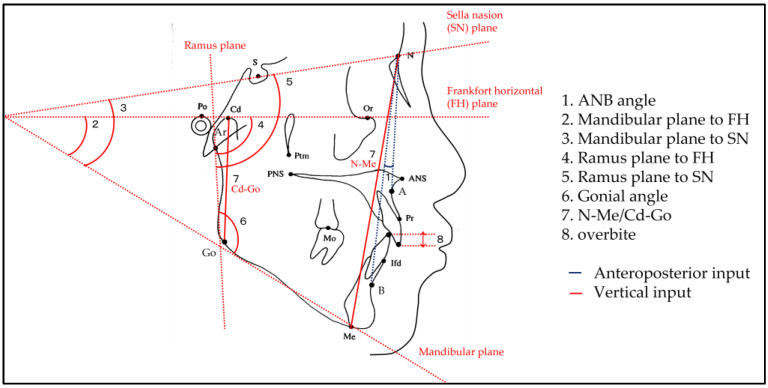
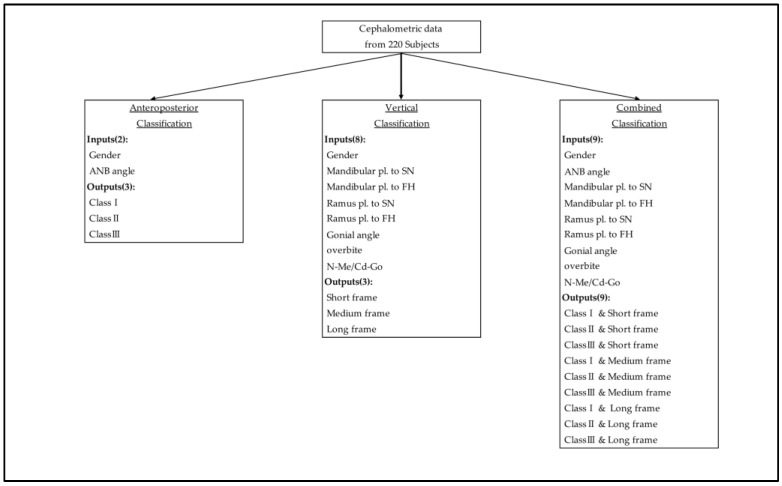
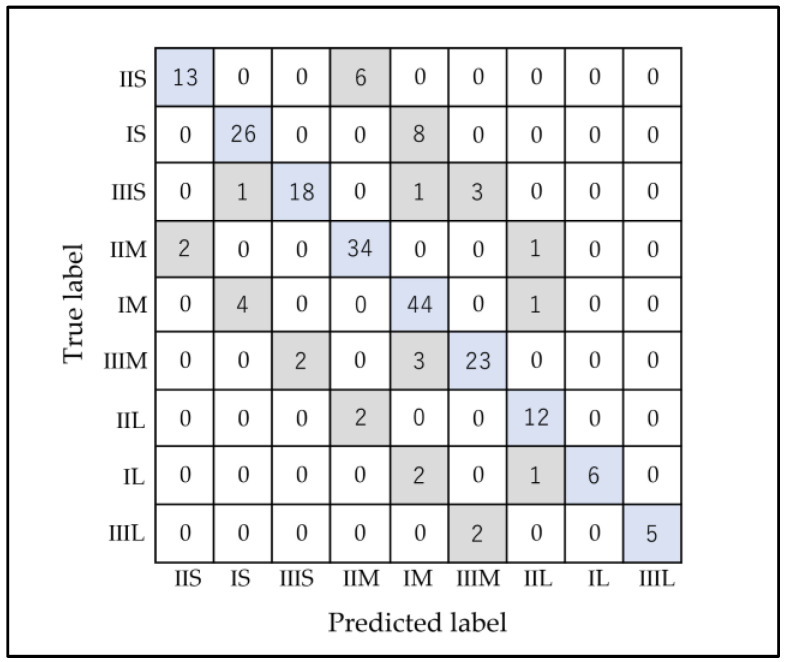
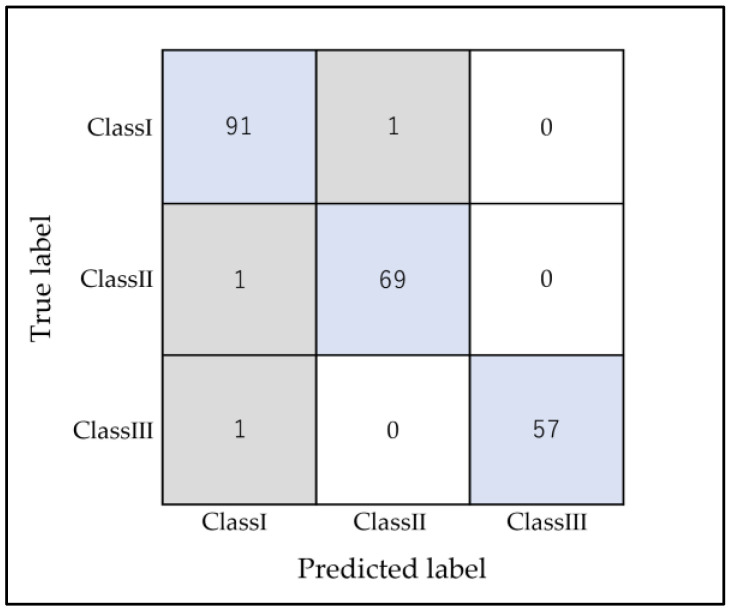
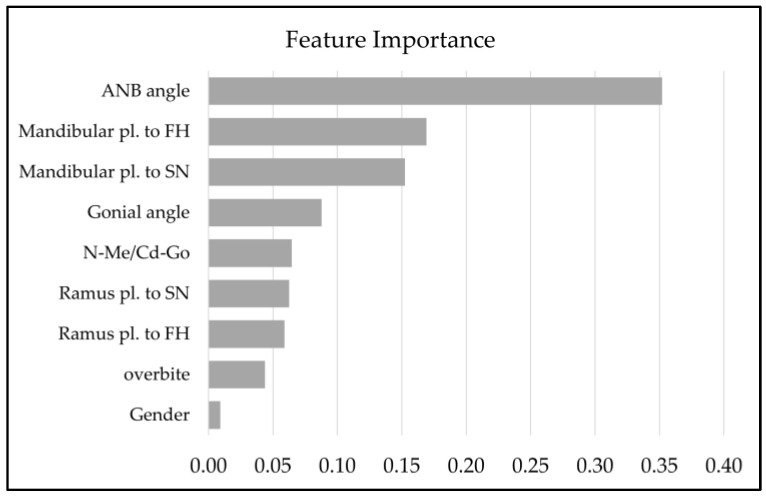
The characteristics of maxillofacial morphology play a major role in orthodontic diagnosis and treatment planning. While Sassouni's classification scheme outlines different categories of maxillofacial morphology, there is no standardized approach to assigning these classifications to patients. This study aimed to create an artificial intelligence (AI) model that uses cephalometric analysis measurements to accurately classify maxillofacial morphology, allowing for the standardization of maxillofacial morphology classification. This study used the initial cephalograms of 220 patients aged 18 years or older. Three orthodontists classified the maxillofacial morphologies of 220 patients using eight measurements as the accurate classification. Using these eight cephalometric measurement points and the subject's gender as input features, a random forest classifier from the Python sci-kit learning package was trained and tested with a k-fold split of five to determine orthodontic classification; distinct models were created for horizontal-only, vertical-only, and combined maxillofacial morphology classification. The accuracy of the combined facial classification was 0.823 ± 0.060; for anteroposterior-only classification, the accuracy was 0.986 ± 0.011; and for the vertical-only classification, the accuracy was 0.850 ± 0.037. ANB angle had the greatest feature importance at 0.3519. The AI model created in this study accurately classified maxillofacial morphology, but it can be further improved with more learning data input.
Keywords: artificial intelligence (AI); cephalograms; k-fold; machine learning; orthodontics; random forest classifier (RF).
Conflict of interest statement
The authors declare no conflict of interest.
Figures

References
-
- Ogawa K., Ishida Y., Kuwajima Y., Lee C., Emge J.R., Izumisawa M., Satoh K., Ishikawa-Nagai S., Da Silva J.D., Chen C.Y. Accuracy of a Method to Monitor Root Position Using a 3D Digital Crown/Root Model during Orthodontic Treatments. Tomography. 2022;8:550–559. doi: 10.3390/tomography8020045. - DOI - PMC - PubMed
-
- Jingang J., Yongde Z., Mingliang J. Bending Process Analysis and Structure Design of Orthodontic Archwire Bending Robot. Int. J. Smart Home. 2013;7:345–352. doi: 10.14257/ijsh.2013.7.5.33. - DOI
LinkOut - more resources
Full Text Sources
