


Occult Pneumothorax in Blunt Thoracic Trauma: Clinical Characteristics and Results of Delayed Tube Thoracostomy in a Level 1 Trauma Center
- PMID: 37445368
- PMCID: PMC10342870
- DOI: 10.3390/jcm12134333
Occult Pneumothorax in Blunt Thoracic Trauma: Clinical Characteristics and Results of Delayed Tube Thoracostomy in a Level 1 Trauma Center
Abstract
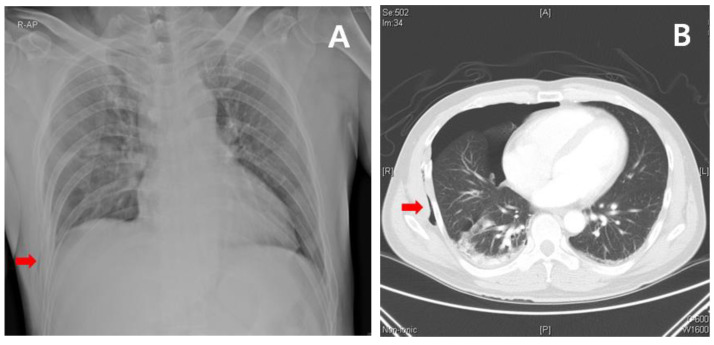
Occult pneumothorax in blunt trauma patients is often diagnosed only after computed tomography because supine chest X-ray (CXR) is preferred as an initial evaluation. However, improperly managed preexisting occult pneumothorax could threaten the vitality of patients. Therefore, this study aimed to evaluate the incidence, characteristics, risk factors, and outcomes of occult pneumothorax in a single trauma center. From 2020 to 2022, patients who were admitted to the level 1 trauma center were retrospectively investigated. Inclusion criteria focused on blunt chest trauma. Variables including demographic factors, image findings, injury-related factors, tube thoracostomy timing, and treatment results were evaluated. Of the 1621 patients, 187 who met the criteria were enrolled in the study: 32 with overt pneumothorax and 81 with occult pneumothorax. Among all of the pneumothorax cases, the proportion of occult pneumothorax was 71.7% (81/113), and its incidence in all admitted trauma victims was 5.0% (81/1621). Subcutaneous emphysema and rib fractures on supine CXR were risk factors for occult pneumothorax. Six patients underwent delayed tube thoracostomy; however, none had serious complications. Given that occult pneumothorax is common in patients with blunt chest trauma, treatment plans should be established that consider the possibility of pneumothorax. However, the prognosis is generally good, and follow-up is an alternative.
Keywords: blunt chest trauma; chest X-ray; chest computed tomography; pneumothorax.
Conflict of interest statement
The authors declare no conflict of interest.
Figures
References
-
- Charbit J., Millet I., Maury C., Conte B., Roustan J.P., Taourel P., Capdevila X. Prevalence of large and occult pneumothoraces in patients with severe blunt trauma upon hospital admission: Experience of 526 cases in a French level 1 trauma center. Am. J. Emerg. Med. 2015;33:796–801. doi: 10.1016/j.ajem.2015.03.057. - DOI - PubMed
-
- Jahanshir A., Moghari S.M., Ahmadi A., Moghadam P.Z., Bahreini M. Value of point-of-care ultrasonography compared with computed tomography scan in detecting potential life-threatening conditions in blunt chest trauma patients. Ultrasound J. 2020;12:36. doi: 10.1186/s13089-020-00183-6. - DOI - PMC - PubMed
LinkOut - more resources
Full Text Sources
Miscellaneous
