


Non-Vesicular Lipid Transport Machinery in Leishmania donovani: Functional Implications in Host-Parasite Interaction
- PMID: 37445815
- PMCID: PMC10341546
- DOI: 10.3390/ijms241310637
Non-Vesicular Lipid Transport Machinery in Leishmania donovani: Functional Implications in Host-Parasite Interaction
Abstract
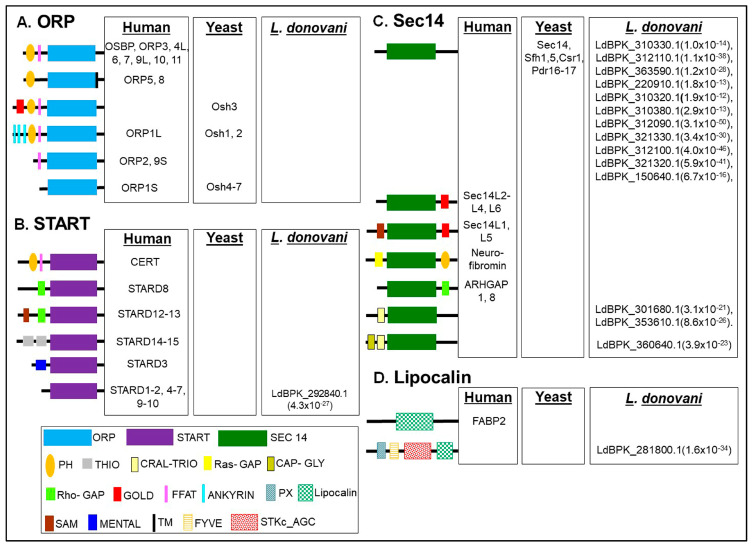
Eukaryotic cells have distinct membrane-enclosed organelles, each with a unique biochemical signature and specialized function. The unique identity of each organelle is greatly governed by the asymmetric distribution and regulated intracellular movement of two important biomolecules, lipids, and proteins. Non-vesicular lipid transport mediated by lipid-transfer proteins (LTPs) plays essential roles in intra-cellular lipid trafficking and cellular lipid homeostasis, while vesicular transport regulates protein trafficking. A comparative analysis of non-vesicular lipid transport machinery in protists could enhance our understanding of parasitism and basis of eukaryotic evolution. Leishmania donovani, the trypanosomatid parasite, greatly depends on receptor-ligand mediated signalling pathways for cellular differentiation, nutrient uptake, secretion of virulence factors, and pathogenesis. Lipids, despite being important signalling molecules, have intracellular transport mechanisms that are largely unexplored in L. donovani. We have identified a repertoire of sixteen (16) potential lipid transfer protein (LTP) homologs based on a domain-based search on TriTrypDB coupled with bioinformatics analyses, which signifies the presence of well-organized lipid transport machinery in this parasite. We emphasized here their evolutionary uniqueness and conservation and discussed their potential implications for parasite biology with regards to future therapeutic targets against visceral leishmaniasis.
Keywords: Leishmania donovani; drug development; lipid signaling; lipid transfer protein; pathogenesis.
Conflict of interest statement
The author declares no conflict of interest, financial or otherwise.
Figures

References
Publication types
MeSH terms
Substances
Grants and funding
LinkOut - more resources
Full Text Sources
