


Antioxidant and Antidiabetic Properties of Phlorotannins from Ascophyllum nodosum Seaweed Extracts
- PMID: 37446599
- PMCID: PMC10343254
- DOI: 10.3390/molecules28134937
Antioxidant and Antidiabetic Properties of Phlorotannins from Ascophyllum nodosum Seaweed Extracts
Abstract
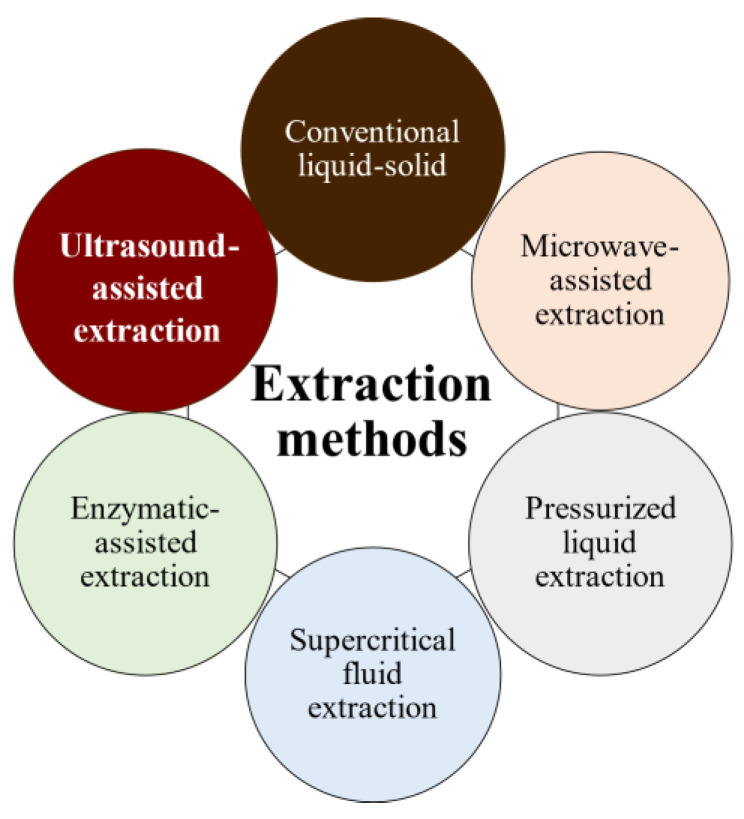
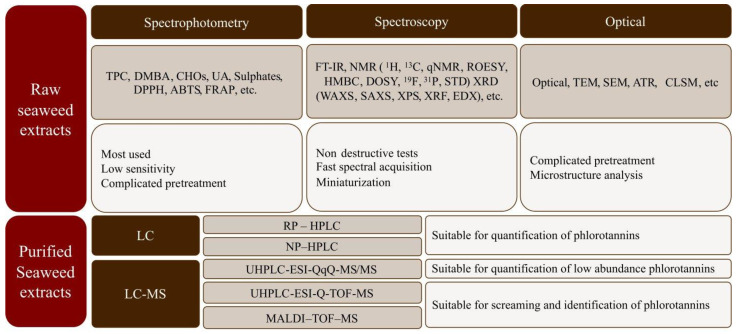
Seaweeds have gained considerable attention in recent years due to their potential health benefits and high contents of bioactive compounds. This review focuses on the exploration of seaweed's health-promoting properties, with particular emphasis on phlorotannins, a class of bioactive compounds known for their antioxidant and antidiabetic properties. Various novel and ecofriendly extraction methods, including solid-liquid extraction, ultrasound-assisted extraction, and microwave-assisted extraction are examined for their effectiveness in isolating phlorotannins. The chemical structure and isolation of phlorotannins are discussed, along with methods for their characterization, such as spectrophotometry, nuclear magnetic resonance, Fourier transform infrared spectroscopy, and chromatography. Special attention is given to the antioxidant activity of phlorotannins. The inhibitory capacities of polyphenols, specifically phlorotannins from Ascophyllum nodosum against digestive enzymes, such as α-amylase and α-glucosidase, are explored. The results suggest that polyphenols from Ascophyllum nodosum seaweed hold significant potential as enzyme inhibitors, although the inhibitory activity may vary depending on the extraction conditions and the specific enzyme involved. In conclusion, seaweed exhibits great potential as a functional food ingredient for promoting health and preventing chronic diseases. Overall, this review aims to condense a comprehensive collection of high-yield, low-cost, and ecofriendly extraction methods for obtaining phlorotannins with remarkable antioxidant and antidiabetic capacities.
Keywords: antioxidant activity; bioactivity; digestive enzymes inhibition; functional food; phlorotannins; polyphenols; solid–liquid extraction; ultrasound-assisted extraction; α-amylase; α-glucosidase.
Conflict of interest statement
The authors declare no conflict of interest.
Figures
References
-
- Valderrama D. Social and economic dimensions of seaweed farming: A global review; Proceedings of the Sixteenth Biennial Conference of the International Institute of Fisheries Economics and Trade; Dar es Salaam, Tanzania. 16–20 July 2012.
-
- Craigie J.S. Seaweed extract stimuli in plant science and agriculture. J. Appl. Phycol. 2011;23:371–393. doi: 10.1007/s10811-010-9560-4. - DOI
-
- Graham L.E., Graham J., Wilcox L.W. Algae. 2nd ed. Pearson; San Francisco, CA, USA: 2009. Introduction to algae; pp. 1–5.
-
- Lawton R.J. The industrial ecology of freshwater macroalga for biomass applications. Algal Res. 2017;24:486–491. doi: 10.1016/j.algal.2016.08.019. - DOI
Publication types
MeSH terms
Substances
LinkOut - more resources
Full Text Sources
