


Gut Microbiota Enterotypes Mediate the Effects of Dietary Patterns on Colorectal Neoplasm Risk in a Chinese Population
- PMID: 37447266
- PMCID: PMC10346730
- DOI: 10.3390/nu15132940
Gut Microbiota Enterotypes Mediate the Effects of Dietary Patterns on Colorectal Neoplasm Risk in a Chinese Population
Abstract
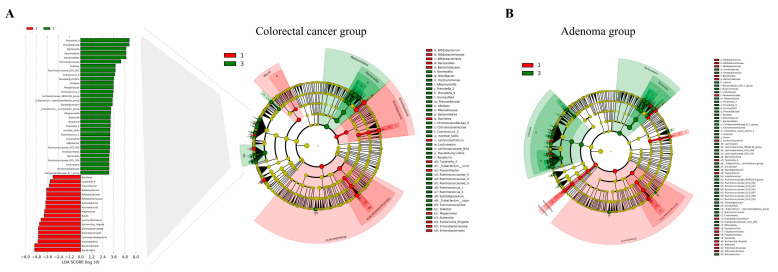
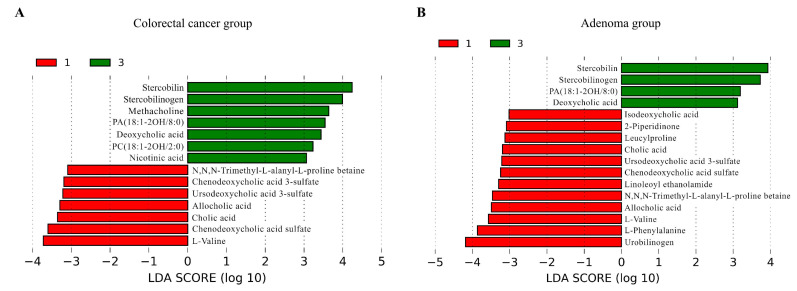
Colorectal cancer (CRC) risk is influenced by dietary patterns and gut microbiota enterotypes. However, the interaction between these factors remains unclear. This study examines this relationship, hypothesizing that different diets may affect colorectal tumor risk in individuals with varied gut microbiota enterotypes. We conducted a case-control study involving 410 Han Chinese individuals, using exploratory structural equation modeling to identify two dietary patterns, and a Dirichlet multinomial mixture model to classify 250 colorectal neoplasm cases into three gut microbiota enterotypes. We assessed the association between dietary patterns and the risk of each tumor subtype using logistic regression analysis. We found that a healthy diet, rich in vegetables, fruits, milk, and yogurt, lowers CRC risk, particularly in individuals with type I (dominated by Bacteroides and Lachnoclostridium) and type II (dominated by Bacteroides and Faecalibacterium) gut microbiota enterotypes, with adjusted odds ratios (ORs) of 0.66 (95% confidence interval [CI] = 0.48-0.89) and 0.42 (95% CI = 0.29-0.62), respectively. Fruit consumption was the main contributor to this protective effect. No association was found between a healthy dietary pattern and colorectal adenoma risk or between a high-fat diet and colorectal neoplasm risk. Different CRC subtypes associated with gut microbiota enterotypes displayed unique microbial compositions and functions. Our study suggests that specific gut microbiota enterotypes can modulate the effects of diet on CRC risk, offering new perspectives on the relationship between diet, gut microbiota, and colorectal neoplasm risk.
Keywords: colorectal adenoma; colorectal cancer; dietary patterns; enterotypes; gut microbiota.
Conflict of interest statement
The authors declare no conflict of interest.
Figures
References
-
- Arima K., Zhong R., Ugai T., Zhao M., Haruki K., Akimoto N., Lau M.C., Okadome K., Mehta R.S., Väyrynen J.P., et al. Western-style diet, pks island-carrying Escherichia coli, and colorectal cancer: Analyses from two large prospective cohort studies. Gastroenterology. 2022;163:862–874. doi: 10.1053/j.gastro.2022.06.054. - DOI - PMC - PubMed
-
- Mehta R.S., Nishihara R., Cao Y., Song M., Mima K., Qian Z.R., Nowak J.A., Kosumi K., Hamada T., Masugi Y., et al. Association of dietary patterns with risk of colorectal cancer subtypes classified by Fusobacterium nucleatum in tumor tissue. JAMA Oncol. 2017;3:921–927. doi: 10.1001/jamaoncol.2016.6374. - DOI - PMC - PubMed
MeSH terms
Grants and funding
- 81473045/National Natural Science Foundation of China
- QF2006/Undergraduate Innovation and Entrepreneurship Program (Qingfeng Scholars Program) of Shanghai Medical College, Fudan University
- 2020 year/Xiyuan Program from Fudan University's Undergraduate Research Opportunities Program (FDUROP)
- S202110246209/Shanghai Undergraduate Innovation Training Program
- SQ2020QNJJ0433/Youth Foundation Project of Hainan Natural Science Foundation of China
LinkOut - more resources
Full Text Sources
Medical
