


Effect of Flaxseed Gum on the Textural, Rheological, and Tribological Properties of Acid-Induced Soy Protein Isolate Gels
- PMID: 37447480
- PMCID: PMC10347051
- DOI: 10.3390/polym15132834
Effect of Flaxseed Gum on the Textural, Rheological, and Tribological Properties of Acid-Induced Soy Protein Isolate Gels
Abstract
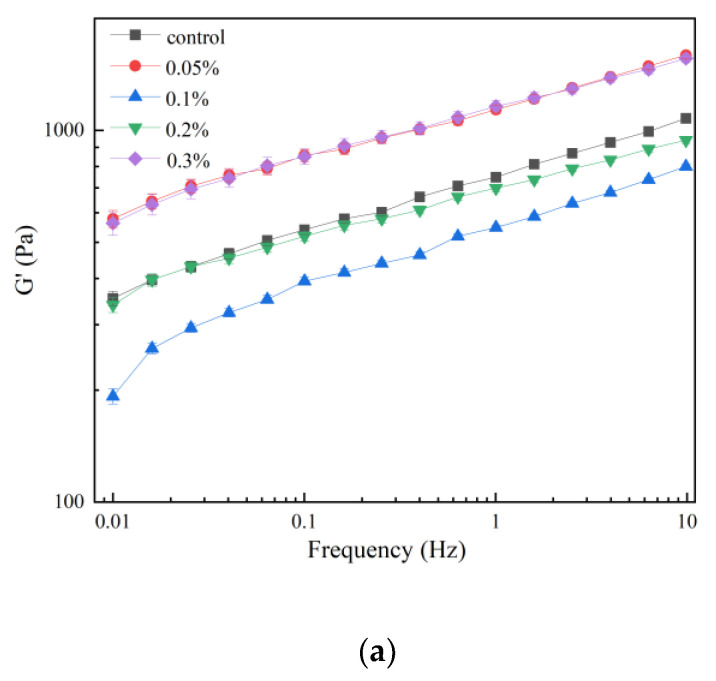
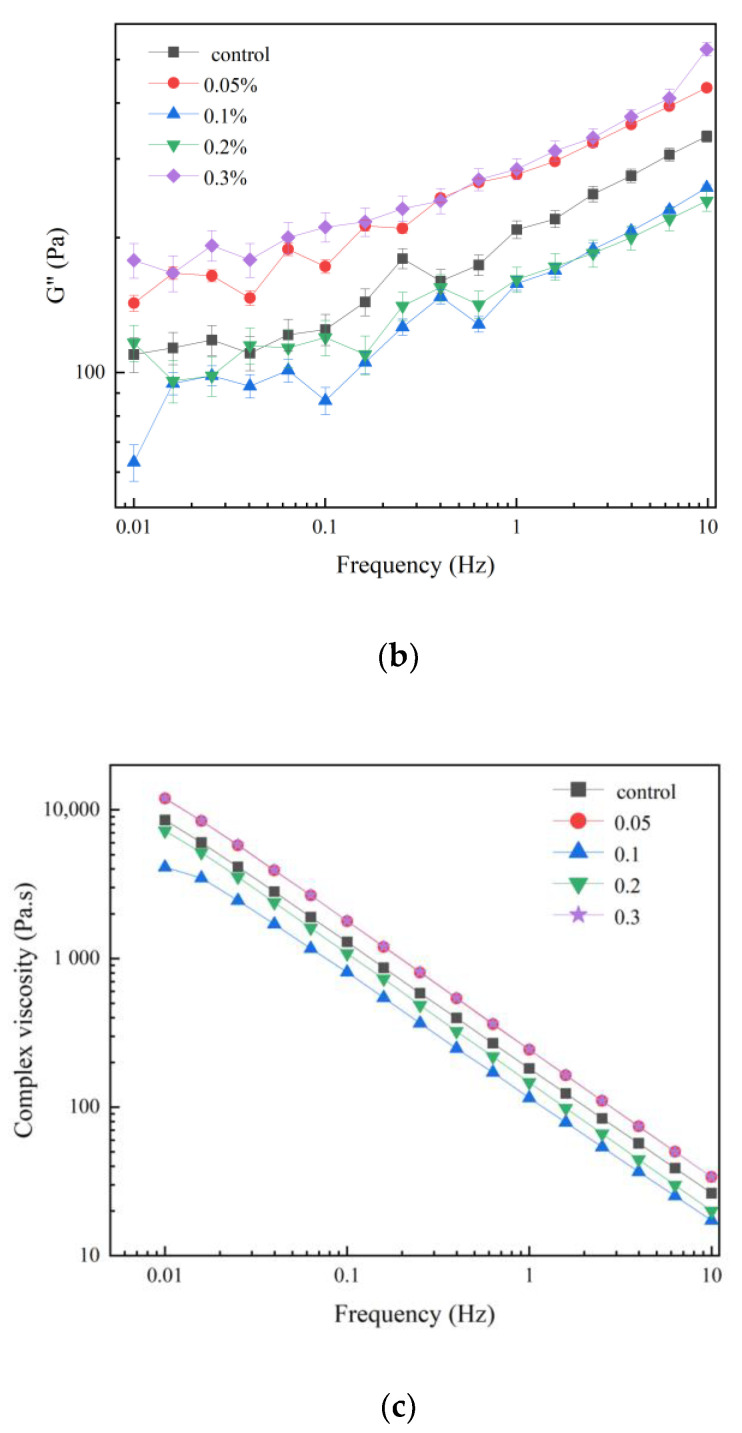
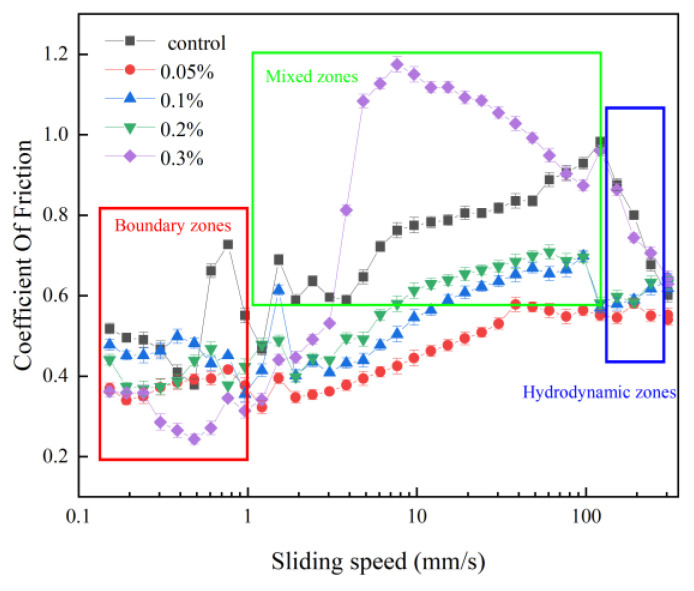
This study aimed to investigate the effects of incorporating different concentrations of flaxseed gum (FG) into acid-induced soy protein isolate (SPI) gels. The investigation focused on assessing the effects of FG on the textural, rheological, and tribological properties of the resultant SPI gels. The results showed that adding a small amount of FG (0.05%) to the SPI gel system increased the storage modulus (G') and enhanced gelation while improving textural properties including hardness, viscosity, elasticity, and adhesion. Moreover, these gels exhibited strong water-holding capacity, a desirable property in various food products. However, when the concentration was increased to 0.3%, the WHC of the gel decreased, as did the hardness and cohesiveness. The particle size of the gel also increased with increasing concentration. Tribological investigations revealed that at 0.05-0.2% FG addition, the coefficient of friction (μ) of the composite gel was decreased compared to the pure SPI gel. In the sliding speed range of 1-100 mm/s, the coefficient of friction gradually increased with increasing concentration. When the FG concentration was 0.05%, the μ of the gel system was the lowest. In summary, low concentration of FG (0.05%) was found to play an important role in improving the properties of SPI gel, including enhancing textural, rheological, and lubricating properties.
Keywords: flaxseed gum; rheology; soy protein gel; texture; tribology.
Conflict of interest statement
The authors declare that they have no competing financial interests or personal relationships that could influence the work reported in this paper.
Figures
References
-
- Manzoor A., Dar A.H., Pandey V.K., Shams R., Khan S., Panesar P.S., Kennedy J.F., Fayaz U., Khan S.A. Recent insights into polysaccharide-based hydrogels and their potential applications in food sector: A review. Int. J. Biol. Macromol. 2022;213:987–1006. doi: 10.1016/j.ijbiomac.2022.06.044. - DOI - PubMed
-
- Han Y.M., Zhu L., Qi X.G., Zhang H., Wu G.C. Characteristics of low-fat whipped cream containing protein-based fat replacers. Int. J. Dairy Technol. 2023;76:276–290. doi: 10.1111/1471-0307.12934. - DOI
-
- Xie A., Zhao S., Liu Z., Yue X., Shao J., Li M., Li Z. Polysaccharides, proteins, and their complex as microencapsulation carriers for delivery of probiotics: A review on carrier types and encapsulation techniques. Int. J. Biol. Macromol. 2023;242:124784. doi: 10.1016/j.ijbiomac.2023.124784. - DOI - PubMed
Grants and funding
LinkOut - more resources
Full Text Sources
Research Materials
