


Role of innate immunity and systemic inflammation in cystic fibrosis disease progression
- PMID: 37449112
- PMCID: PMC10336457
- DOI: 10.1016/j.heliyon.2023.e17553
Role of innate immunity and systemic inflammation in cystic fibrosis disease progression
Abstract
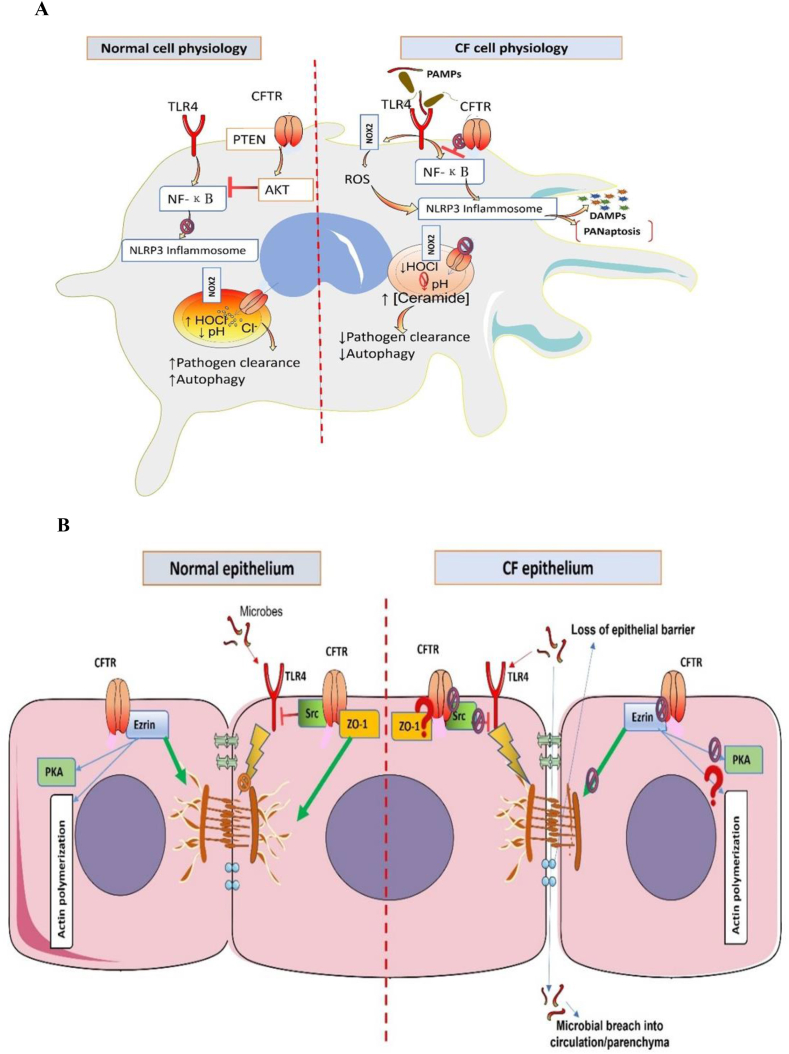
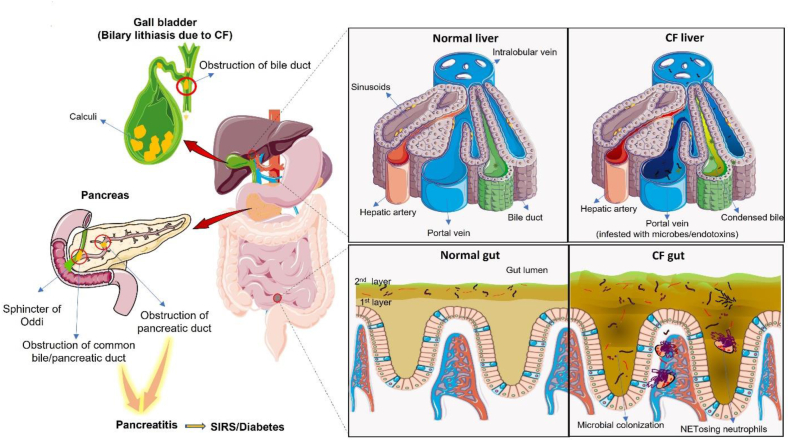
Pathophysiological manifestations of cystic fibrosis (CF) result from a functional defect in the cystic fibrosis transmembrane conductance regulator (CFTR) paving way for mucus obstruction and pathogen colonization. The role of CFTR in modulating immune cell function and vascular integrity, irrespective of mucus thickening, in determining the host cell response to pathogens/allergens and causing systemic inflammation is least appreciated. Since CFTR plays a key role in the conductance of anions like Cl-, loss of CFTR function could affect various basic cellular processes, such as cellular homeostasis, lysosome acidification, and redox balance. CFTR aids in endotoxin tolerance by regulating Toll-like receptor-mediated signaling resulting in uncontrolled activation of innate immune cells. Although leukocytes of CF patients are hyperactivated, they exhibit compromised phagosome activity thus favouring the orchestration of sepsis from defective pathogen clearance. This review will emphasize the importance of innate immunity and systemic inflammatory response in the development of CF and other CFTR-associated pathologies.
Keywords: Cystic fibrosis; Innate immunity; NETosis; PRR-Mediated signaling; Systemic inflammation; T1/T2 immune cell ratio.
© 2023 The Author(s).
Conflict of interest statement
The authors declare that they have no known competing financial interests or personal relationships that could have appeared to influence the work reported in this paper.
Figures



References
-
- Xu Y., Yuan Q., Cao S., Cui S., Xue L., Song X., Li Z., Xu R., Yuan Q., Li R. Aldehyde dehydrogenase 2 inhibited oxidized LDL-induced NLRP3 inflammasome priming and activation via attenuating oxidative stress. Biochem. Biophys. Res. Commun. 2020;529:998–1004. doi: 10.1016/j.bbrc.2020.06.075. - DOI - PubMed
Publication types
LinkOut - more resources
Full Text Sources
