


Serum progesterone concentration on pregnancy test day might predict ongoing pregnancy after controlled ovarian stimulation and fresh embryo transfer
- PMID: 37455896
- PMCID: PMC10338216
- DOI: 10.3389/fendo.2023.1191648
Serum progesterone concentration on pregnancy test day might predict ongoing pregnancy after controlled ovarian stimulation and fresh embryo transfer
Abstract
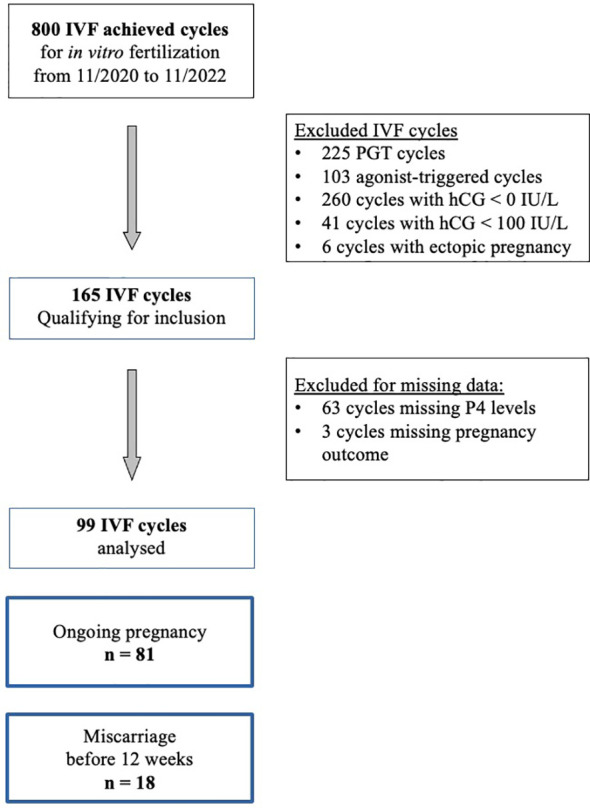
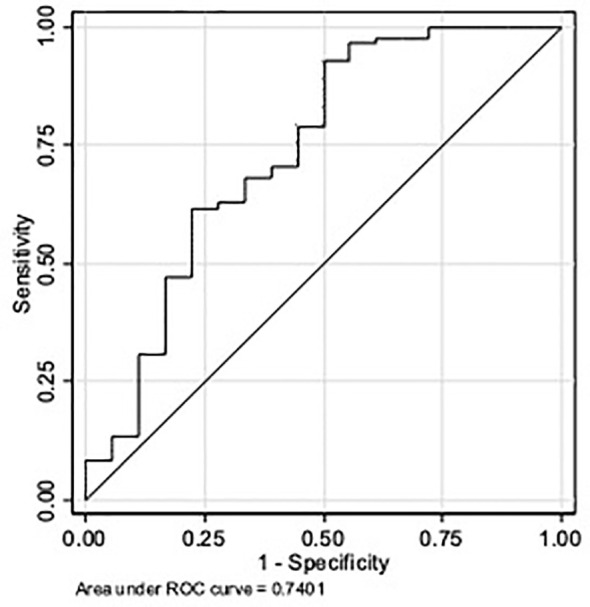
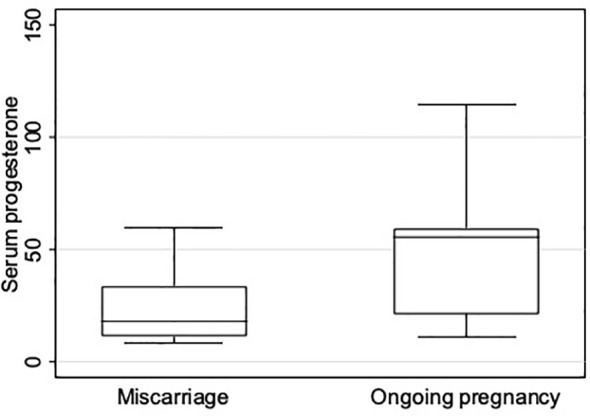
Progesterone (P4) is essential for pregnancy. A controlled ovarian stimulation (COS) leads to a iatrogenic luteal defect that indicates a luteal phase support (LPS) at least until pregnancy test day. Some clinicians continue the LPS until week 8 or later, when P4 is mainly secreted by syncytiotrophoblast cells.Measuring serum P4 on pregnancy test day after a fresh embryo transfer could help to identify women who might benefit from prolonged LPS. In women with LPS based on P4 administered by the rectal route, P4 concentration on pregnancy test day was significantly higher in patients with ongoing pregnancy than in patients with abnormal pregnancy.This monocentric retrospective study used data on 99 consecutive cycles of COS, triggered with human chorionic gonadotropin, followed by fresh embryo transfer resulting in a positive pregnancy test (>100 IU/L) (from November 2020 to November 2022). Patients undergoing preimplantation genetic screening or with ectopic pregnancy were excluded. All patients received standard luteal phase support (i.e. micronized vaginal progesterone 600 mg per day for 15 days). The primary endpoint was P4 concentration at day 15 after oocyte retrieval (pregnancy test day) in women with ongoing pregnancy for >12 weeks and in patients with miscarriage before week 12 of pregnancy.The median P4 concentration [range] at pregnancy test day was higher in women with ongoing pregnancy than in women with miscarriage (55.9 ng/mL [11.6; 290.6] versus 18.1 ng/mL [8.3; 140.9], p = 0.002). A P4 concentration ≥16.5 ng/mL at pregnancy test day was associated with higher ongoing pregnancy rate (OR = 12.5, 95% CI 3.61 - 43.33, p <0.001). A P4 concentration ≥16.5 ng/mL at pregnancy test day was significantly associated with higher live birth rate (OR = 11.88, 95% CI 3.30-42.71, p <0.001).After COS and fresh embryo transfer, the risk of miscarriage is higher in women who discontinue luteal support after 15 days, as recommended, but with P4 concentration <16.5 ng/mL. The benefit of individualized prolonged luteal phase support should be evaluated.
Keywords: controlled ovarian stimulation; fresh embryo transfer; in vitro fertilization (IVF); luteal phase support; micronized vaginal progesterone; miscarriage; serum progesterone concentration.
Copyright © 2023 Duport Percier, Brouillet, Mollevi, Duraes, Anahory and Ranisavljevic.
Conflict of interest statement
The authors declare that the research was conducted in the absence of any commercial or financial relationships that could be construed as a potential conflict of interest.
Figures
Similar articles
-
A drop in serum progesterone from oocyte pick-up +3 days to +5 days in fresh blastocyst transfer, using hCG-trigger and standard luteal support, is associated with lower ongoing pregnancy rates.Hum Reprod. 2023 Feb 1;38(2):225-236. doi: 10.1093/humrep/deac255. Hum Reprod. 2023. PMID: 36478179
-
Rectal progesterone administration secures a high ongoing pregnancy rate in a personalized Hormone Replacement Therapy Frozen Embryo Transfer (HRT-FET) protocol: a prospective interventional study.Hum Reprod. 2023 Nov 2;38(11):2221-2229. doi: 10.1093/humrep/dead185. Hum Reprod. 2023. PMID: 37759346 Free PMC article.
-
The impact of luteal serum progesterone levels on live birth rates-a prospective study of 602 IVF/ICSI cycles.Hum Reprod. 2018 Aug 1;33(8):1506-1516. doi: 10.1093/humrep/dey226. Hum Reprod. 2018. PMID: 29955789
-
Individualized luteal phase support after fresh embryo transfer: unanswered questions, a review.Reprod Health. 2022 Jan 22;19(1):19. doi: 10.1186/s12978-021-01320-7. Reprod Health. 2022. PMID: 35065655 Free PMC article. Review.
-
Short versus extended progesterone supplementation for luteal phase support in fresh IVF cycles: a systematic review and meta-analysis.Reprod Biomed Online. 2020 Jan;40(1):143-150. doi: 10.1016/j.rbmo.2019.10.009. Epub 2019 Oct 24. Reprod Biomed Online. 2020. PMID: 31864902
Cited by
-
Serum progesterone measurement on the day of fresh embryo transfer and its correlation with pregnancy success rates: A prospective analysis.Clinics (Sao Paulo). 2024 Oct 9;79:100511. doi: 10.1016/j.clinsp.2024.100511. eCollection 2024. Clinics (Sao Paulo). 2024. PMID: 39388739 Free PMC article.
-
Contractile responses of engineered human μmyometrium to prostaglandins and inflammatory cytokines.APL Bioeng. 2024 Dec 24;8(4):046115. doi: 10.1063/5.0233737. eCollection 2024 Dec. APL Bioeng. 2024. PMID: 39734362 Free PMC article.
References
-
- Beckers NGM, Macklon NS, Eijkemans MJ, Ludwig M, Felberbaum RE, Diedrich K, et al. . Nonsupplemented luteal phase characteristics after the administration of recombinant human chorionic gonadotropin, recombinant luteinizing hormone, or gonadotropin-releasing hormone (GnRH) agonist to induce final oocyte maturation in in vitro fertilization patients after ovarian stimulation with recombinant follicle-stimulating hormone and GnRH antagonist cotreatment. J Clin Endocrinol Metab (2003) 88:4186–92. doi: 10.1210/jc.2002-021953 - DOI - PubMed
MeSH terms
Substances
LinkOut - more resources
Full Text Sources
Medical
