


Adropin - A new player in energy regulation predicts long-term prognosis of patients with acute myocardial infarction
- PMID: 37455994
- PMCID: PMC10344749
- DOI: 10.1016/j.heliyon.2023.e17803
Adropin - A new player in energy regulation predicts long-term prognosis of patients with acute myocardial infarction
Abstract
Background: As a novel energy homeostasis regulator, Adropin not only plays a vital part in meditating energy metabolism, but also has a certain correlation with atherosclerotic diseases. The purpose of this study was to evaluate the effect of Adropin on the long-term prognosis of patients with acute myocardial infarction (AMI).
Methods: 162 recruited patients with AMI were divided into low Adropin group (Adropin<166.3 pg/mL, n = 82) and high Adropin group (Adropin≥166.3 pg/mL, n = 80), according to the mean value of serum Adropin level. Patients were followed up and major adverse cardiac events (MACEs) were recorded. The Kaplan-Meier method and Cox regression model were used to evaluate the survival of patients and the related factors of cardiac events.
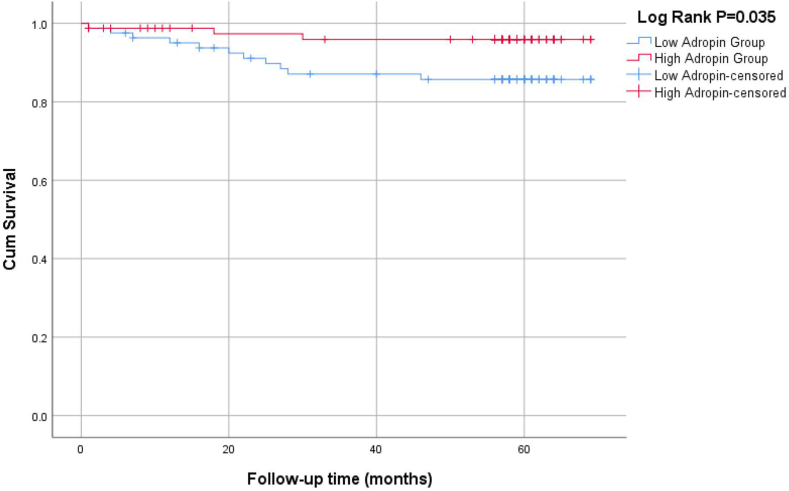
Results: Diabetes was more common in low Adropin group than that in high Adropin group (P < 0.05). Patients were followed up for an average of 50.3 ± 19.2 months. MACEs occurred in 37 patients (22.8%), including 6 cardiac deaths (3.7%), 14 recurrent myocardial infarction (8.6%) and 17 rehospitalization of heart failure (10.5%). The incidence of recurrent myocardial infarction in low Adropin group was higher than that in high Adropin group (13.4% vs 3.8%, P < 0.05). There was no significant difference in the overall incidence of MACE, cardiac death and rehospitalization of heart failure between the two groups. Kaplan-Meier method (log rank test) analysis results showed that patients with low Adropin had lower survival rate without recurrent myocardial infarction (log rank P = 0.035).
Conclusion: Low Adropin level was associated with an increased risk of long-term recurrent myocardial infarction in patients with AMI.
Keywords: Acute myocardial infarction; Adropin; Long-term prognosis.
© 2023 The Authors.
Conflict of interest statement
The authors declare that they have no known competing financial interests or personal relationships that could have appeared to influence the work reported in this paper.
Figures
References
-
- Bansilal S., Castellano J.M., Fuster V., et al. Global burden of CVD: focus on secondary prevention of cardiovascular disease. Int. J. Cardiol. 2015;201(Suppl 1):S1–S7. - PubMed
-
- Li H.Y., Sun K., Zhao R.P., et al. Inflammatory biomarkers of coronary heart disease. Front Biosci (Schol Ed) 2018;10:185–196. - PubMed
-
- Ridker P.M., Antman E.M. Pathogenesis and pathology of coronary heart disease syndromes. J. Thromb. Thrombolysis. 1999;8(3):167–189. - PubMed
LinkOut - more resources
Full Text Sources
Research Materials
