


Pea hull fiber supplementation does not modulate uremic metabolites in adults receiving hemodialysis: a randomized, double-blind, controlled trial
- PMID: 37457968
- PMCID: PMC10349378
- DOI: 10.3389/fnut.2023.1179295
Pea hull fiber supplementation does not modulate uremic metabolites in adults receiving hemodialysis: a randomized, double-blind, controlled trial
Abstract
Background: Fiber is a potential therapeutic to suppress microbiota-generated uremic molecules. This study aimed to determine if fiber supplementation decreased serum levels of uremic molecules through the modulation of gut microbiota in adults undergoing hemodialysis.
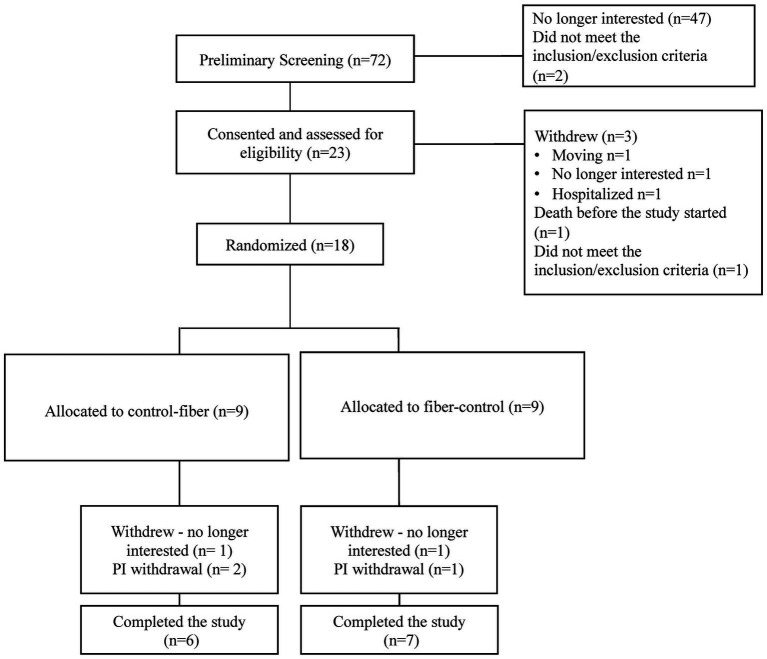
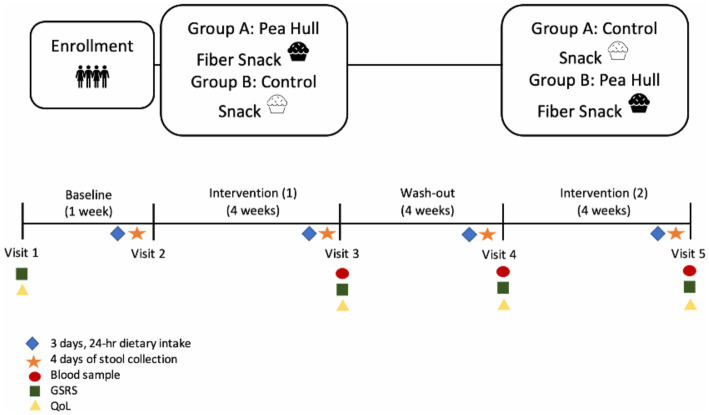
Methods: A randomized, double-blinded, controlled crossover study was conducted. Following a 1-week baseline, participants consumed muffins with added pea hull fiber (PHF) (15 g/d) and control muffins daily, each for 4 weeks, separated by a 4-week washout. Blood and stool samples were collected per period. Serum p-cresyl sulfate (PCS), indoxyl sulfate (IS), phenylacetylglutamine (PAG), and trimethylamine N-oxide (TMAO) were quantified by LC-MS/MS, and fecal microbiota profiled by 16S rRNA gene amplicon sequencing and specific taxa of interest by qPCR. QIIME 2 sample-classifier was used to discover unique microbiota profiles due to the consumption of PHF.
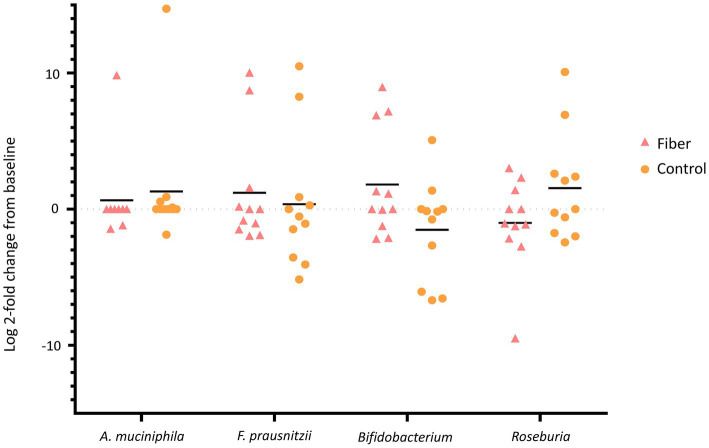
Results: Intake of PHF contributed an additional 9 g/d of dietary fiber to the subjects' diet due to compliance. No significant changes from baseline were observed in serum PCS, IS, PAG, or TMAO, or for the relative quantification of Akkermansia muciniphila, Faecalibacterium prausnitzii, Bifidobacterium, or Roseburia, taxa considered health-enhancing. Dietary protein intake and IS (r = -0.5, p = 0.05) and slow transit stool form and PCS (r = 0.7, p < 0.01) were significantly correlated at baseline. PHF and control periods were not differentiated; however, using machine learning, taxa most distinguishing the microbiota composition during the PHF periods compared to usual diet alone were enriched Gemmiger, Collinsella, and depleted Lactobacillus, Ruminococcus, Coprococcus, and Mogibacteriaceae.
Conclusion: PHF supplementation did not mitigate serum levels of targeted microbial-generated uremic molecules. Given the high cellulose content, which may be resistant to fermentation, PHF may not exert sufficient effects on microbiota composition to modulate its activity at the dose consumed.
Keywords: dietary protein; fiber; hemodialysis; indoxyl sulfate; microbiota; p-cresyl sulfate; stool form; uremia.
Copyright © 2023 Fatani, Suh, Auger, Alabasi, Wang, Segal and Dahl.
Conflict of interest statement
Author JA, employed with Lallemand Health Solutions Inc., assisted with the analysis and interpretation of the microbiota data and in writing the microbiota methods and results. The remaining authors declare that the research was conducted in the absence of any commercial or financial relationships that could be construed as a potential conflict of interest.
Figures
References
-
- Rossi M, Johnson DW, Xu H, Carrero JJ, Pascoe E, French C, et al. Dietary protein-fiber ratio associates with circulating levels of indoxyl sulfate and p-cresyl sulfate in chronic kidney disease patients. Nutr Metab Cardiovasc Dis. (2015) 25:860–5. doi: 10.1016/j.numecd.2015.03.015, PMID: - DOI - PubMed
LinkOut - more resources
Full Text Sources
