


A Randomized Controlled Trial Comparing the Efficacy and Safety of IDegLira Versus Basal-Bolus in Patients With Poorly Controlled Type 2 Diabetes and Very High HbA1c ≥9-15%: DUAL HIGH Trial
- PMID: 37459574
- PMCID: PMC10465828
- DOI: 10.2337/dc22-2426
A Randomized Controlled Trial Comparing the Efficacy and Safety of IDegLira Versus Basal-Bolus in Patients With Poorly Controlled Type 2 Diabetes and Very High HbA1c ≥9-15%: DUAL HIGH Trial
Abstract
Objective: In participants with type 2 diabetes (T2D) and HbA1c >9.0-10.0%, guidelines recommend treatment with basal-bolus insulin.
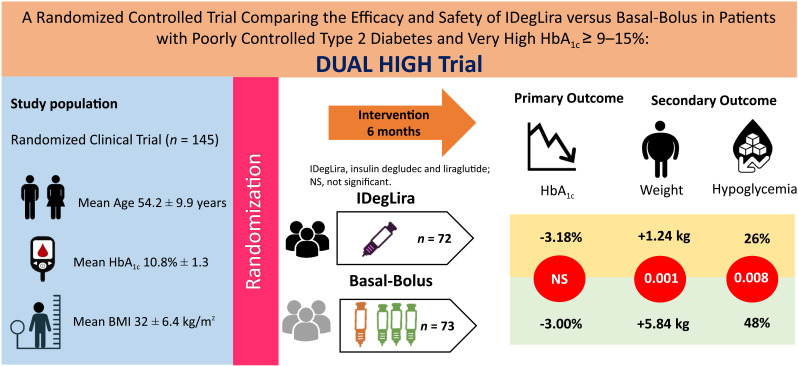
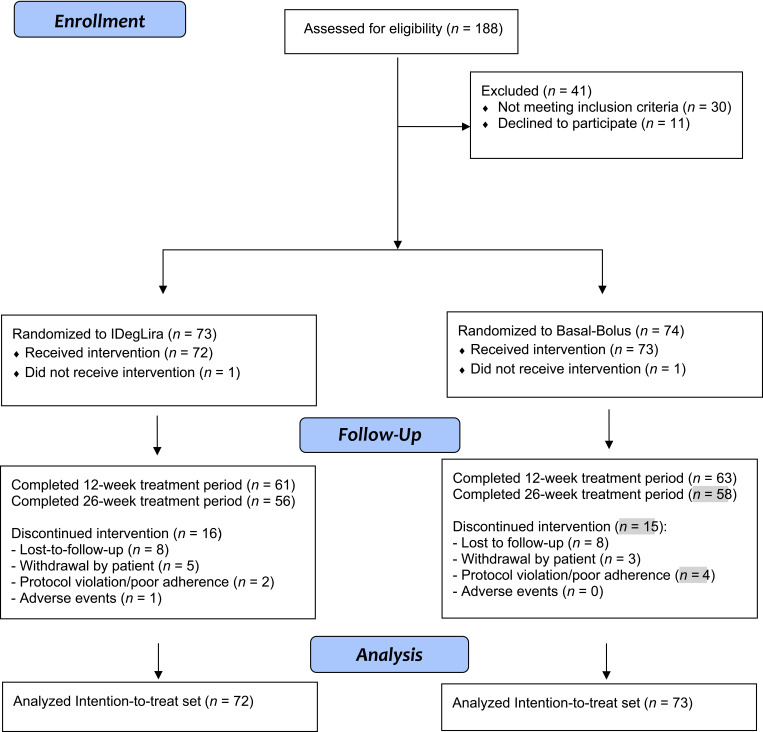
Research design and methods: This randomized trial compared the efficacy and safety of insulin degludec and liraglutide (IDegLira) and basal-bolus among participants with high HbA1c ≥9.0-15.0%, previously treated with 2 or 3 oral agents and/or basal insulin, allocated (1:1) to basal-bolus (n = 73) or IDegLira (n = 72). The primary end point was noninferiority (0.4%) in HbA1c reduction between groups.
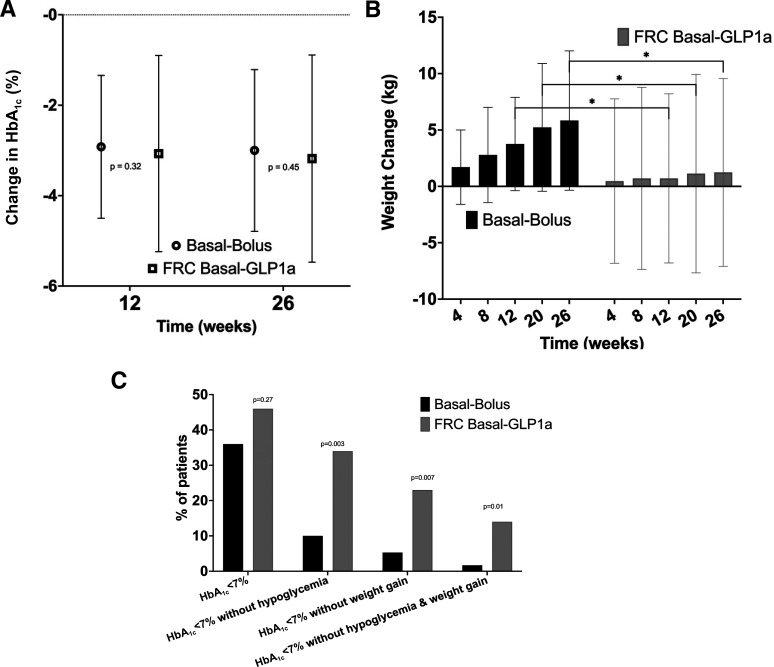
Results: Among 145 participants (HbA1c 10.8% ± 1.3), there was no statistically significant difference in HbA1c reduction (3.18% ± 2.29 vs. 3.00% ± 1.79, P = 0.65; estimated treatment difference (ETD) 0.18%, 95% CI -0.59, 0.94) between the IDegLira and basal-bolus groups. IDegLira resulted in significantly lower rates of hypoglycemia <70 mg/dL (26% vs. 48%, P = 0.008; odds ratio 0.39, 95% CI 0.19, 0.78), and less weight gain (1.24 ± 8.33 vs. 5.84 ± 6.18 kg, P = 0.001; ETD -4.60, 95% CI -7.33, -1.87).
Conclusions: In participants with T2D and HbA1c ≥9.0-15.0%, IDegLira resulted in similar HbA1c reduction, less hypoglycemia, and less weight gain compared with the basal-bolus regimen.
© 2023 by the American Diabetes Association.
Conflict of interest statement
Figures
References
-
- UK Prospective Diabetes Study (UKPDS) Group . Intensive blood-glucose control with sulphonylureas or insulin compared with conventional treatment and risk of complications in patients with type 2 diabetes (UKPDS 33). Lancet 1998;352:837–853 - PubMed
-
- UK Prospective Diabetes Study (UKPDS) Group . Effect of intensive blood-glucose control with metformin on complications in overweight patients with type 2 diabetes (UKPDS 34). Lancet 1998;352:854–865 - PubMed
-
- Holman RR, Paul SK, Bethel MA, Matthews DR, Neil HA. 10-year follow-up of intensive glucose control in type 2 diabetes. N Engl J Med 2008;359:1577–1589 - PubMed
-
- Ferrannini E. The stunned beta cell: a brief history. Cell Metab 2010;11:349–352 - PubMed
Publication types
MeSH terms
Substances
Grants and funding
LinkOut - more resources
Full Text Sources
Medical
