


Defining the role of natural killer cells in COVID-19
- PMID: 37460639
- PMCID: PMC10538371
- DOI: 10.1038/s41590-023-01560-8
Defining the role of natural killer cells in COVID-19
Abstract
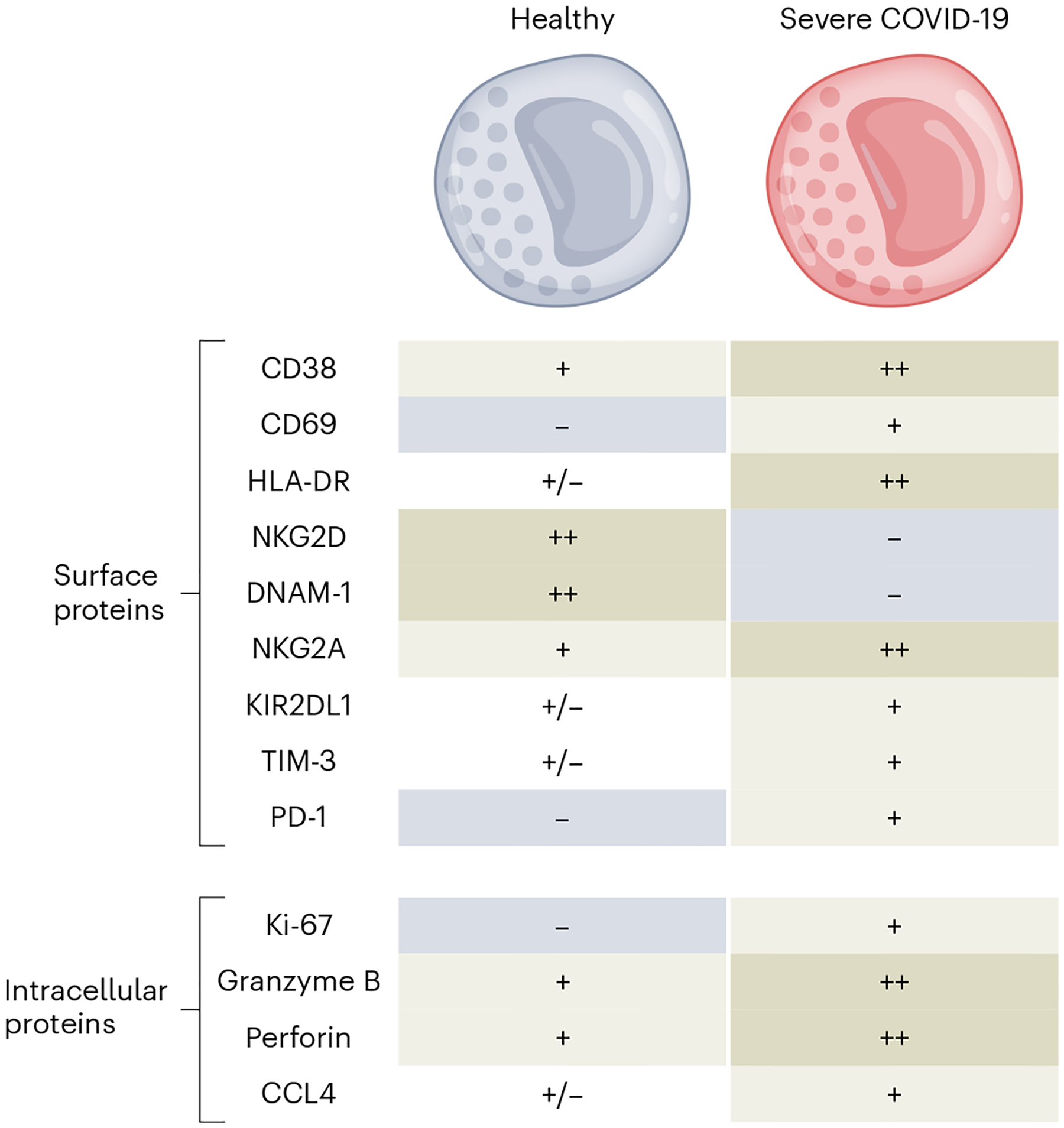
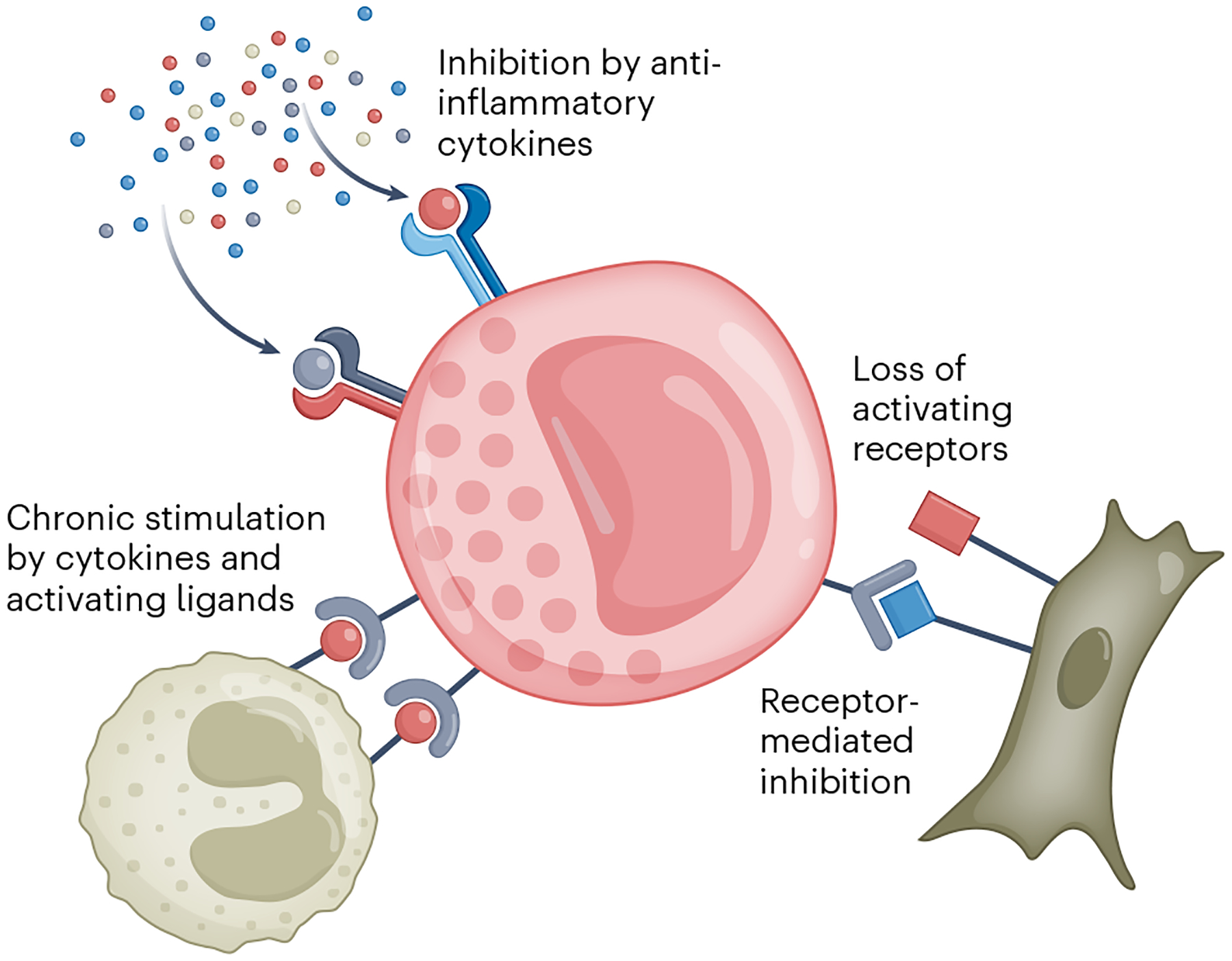
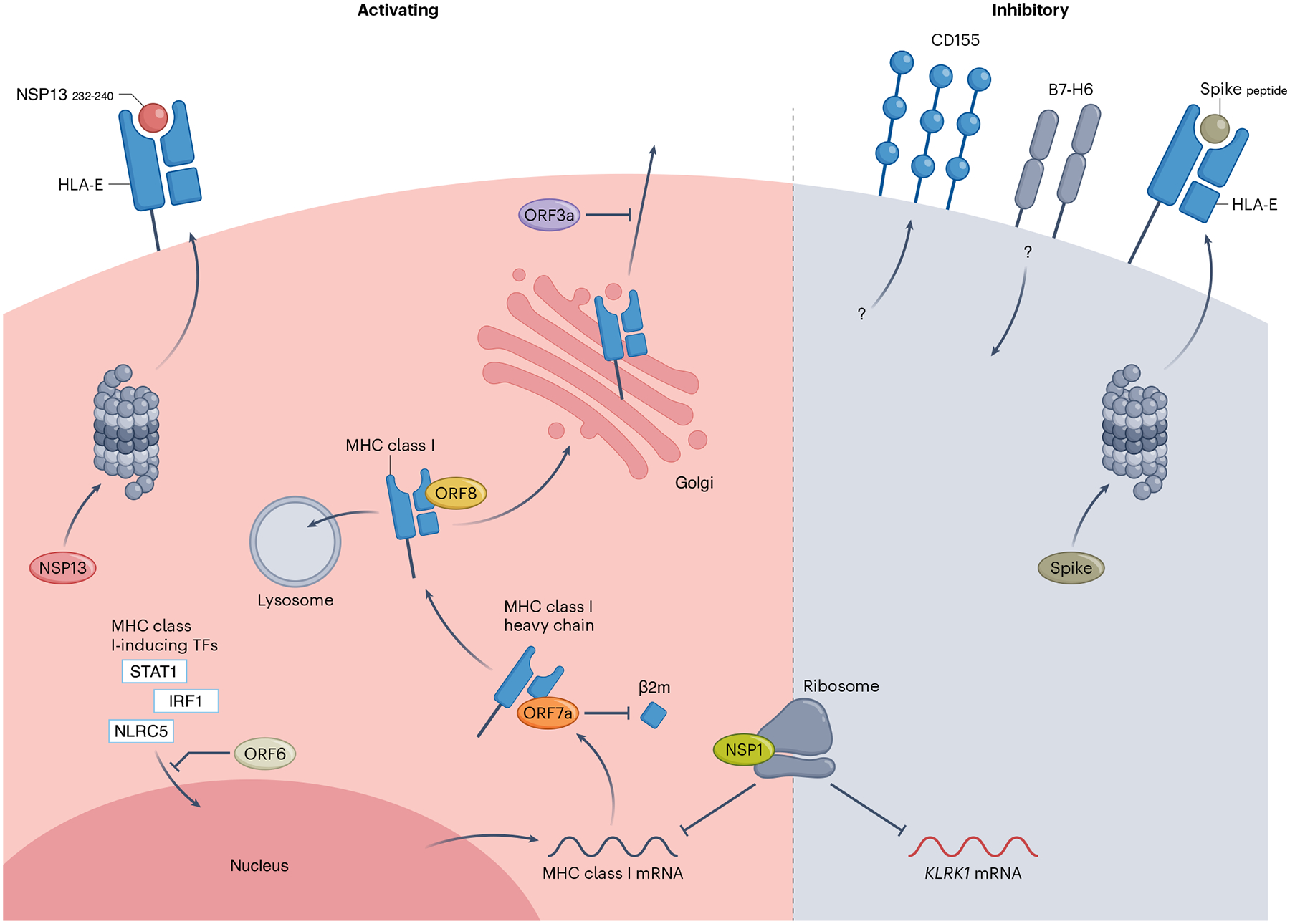
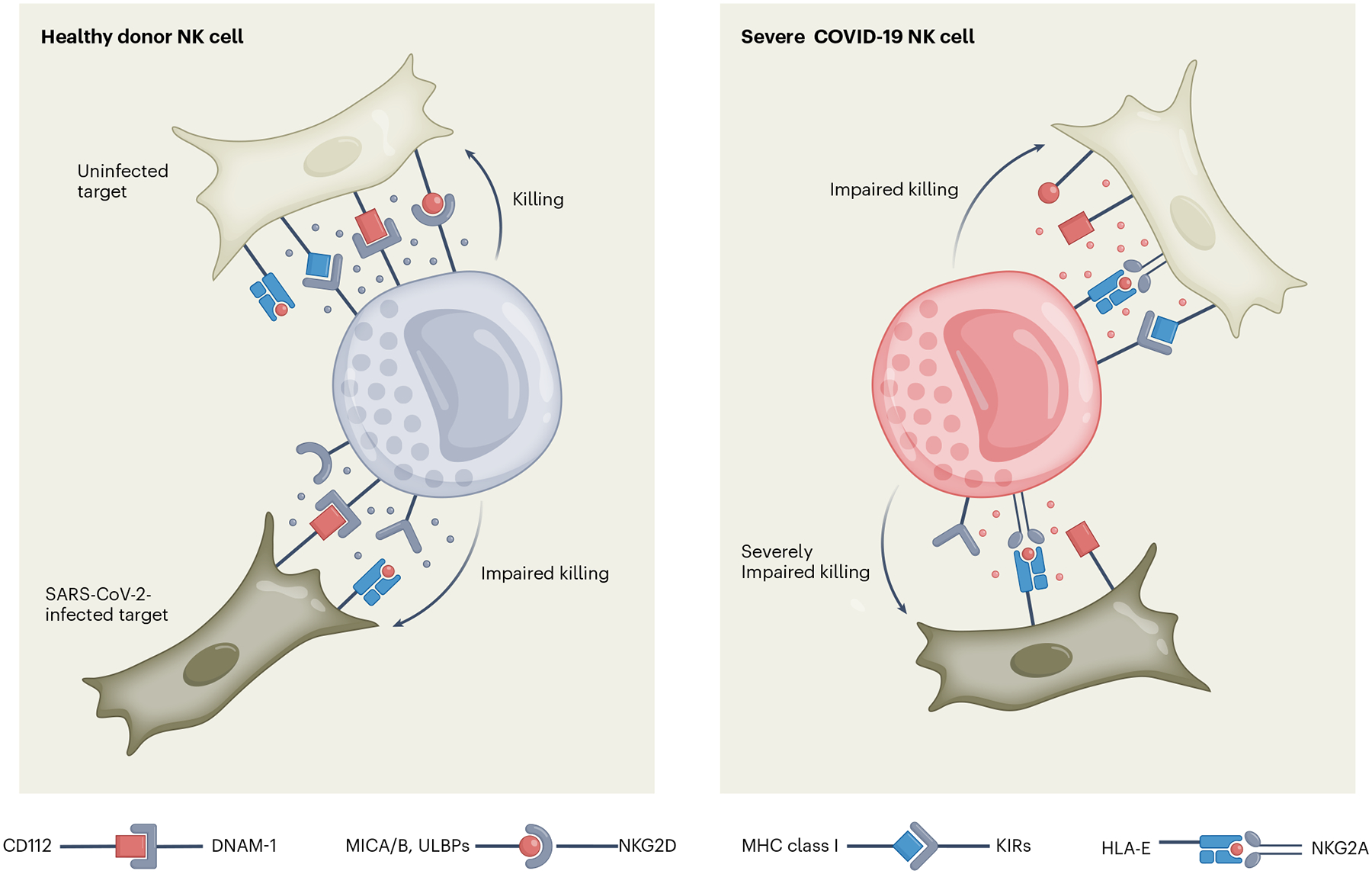
Natural killer (NK) cells are critical effectors of antiviral immunity. Researchers have therefore sought to characterize the NK cell response to coronavirus disease 2019 (COVID-19) and the virus that causes it, severe acute respiratory syndrome coronavirus 2 (SARS-CoV-2). The NK cells of patients with severe COVID-19 undergo extensive phenotypic and functional changes. For example, the NK cells from critically ill patients with COVID-19 are highly activated and exhausted, with poor cytotoxic function and cytokine production upon stimulation. The NK cell response to SARS-CoV-2 is also modulated by changes induced in virally infected cells, including the ability of a viral peptide to bind HLA-E, preventing NK cells from receiving inhibitory signals, and the downregulation of major histocompatibility complex class I and ligands for the activating receptor NKG2D. These changes have important implications for the ability of infected cells to escape NK cell killing. The implications of these findings for antibody-dependent NK cell activity in COVID-19 are also reviewed. Despite these advances in the understanding of the NK cell response to SARS-CoV-2, there remain critical gaps in our current understanding and a wealth of avenues for future research on this topic.
© 2023. Springer Nature America, Inc.
Conflict of interest statement
Competing interests
C.A.B. reports compensation for consulting and/or SAB membership from Catamaran Bio, DeepCell, Immunebridge, Sangamo Therapeutics and Bicycle Tx on topics unrelated to this review. M.J.L. declares no competing interests.
Figures
References
Publication types
MeSH terms
Substances
Grants and funding
LinkOut - more resources
Full Text Sources
Medical
Research Materials
Miscellaneous
