This is a preprint.
SIRT1 Regulates Hepatocyte Programmed Cell Death via GSDME - IL18 Axis in Human and Mouse Liver Transplantation
- PMID: 37461687
- PMCID: PMC10350112
- DOI: 10.21203/rs.3.rs-2986981/v1
SIRT1 Regulates Hepatocyte Programmed Cell Death via GSDME - IL18 Axis in Human and Mouse Liver Transplantation
Update in
-
SIRT1 regulates hepatocyte programmed cell death via GSDME - IL18 axis in human and mouse liver transplantation.Cell Death Dis. 2023 Nov 23;14(11):762. doi: 10.1038/s41419-023-06221-0. Cell Death Dis. 2023. PMID: 37996424 Free PMC article.
Abstract
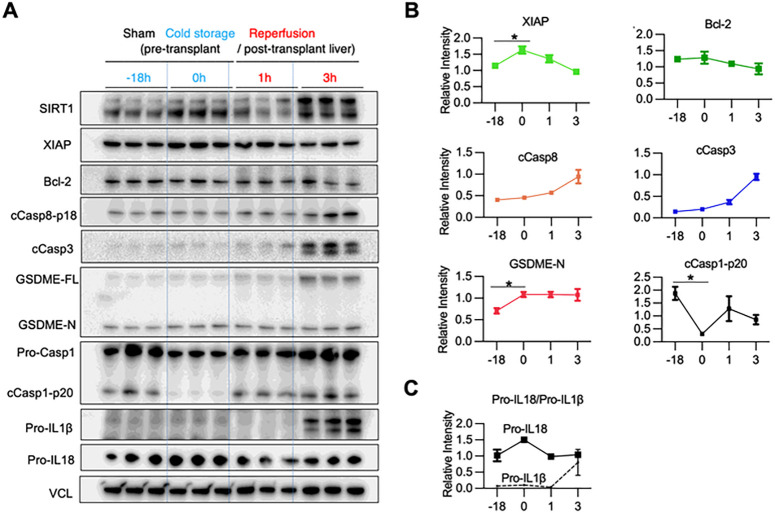
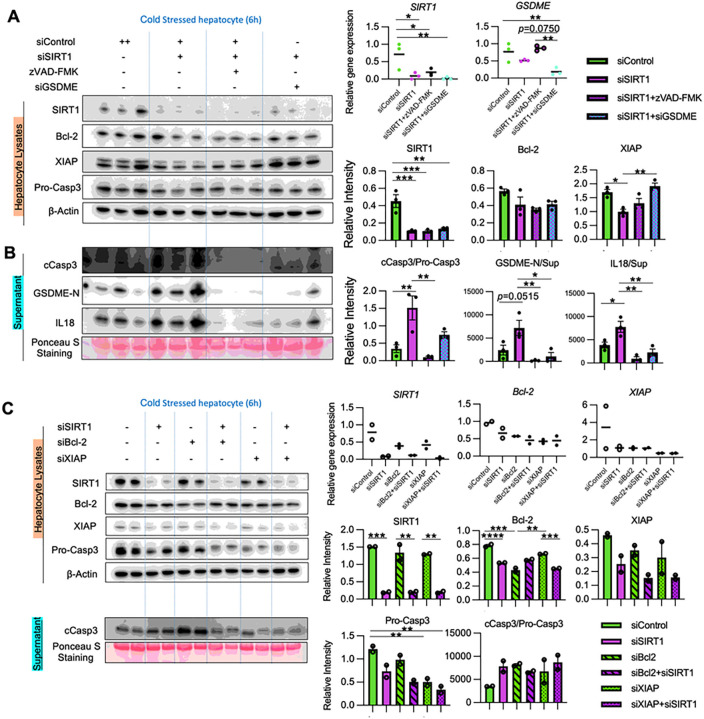
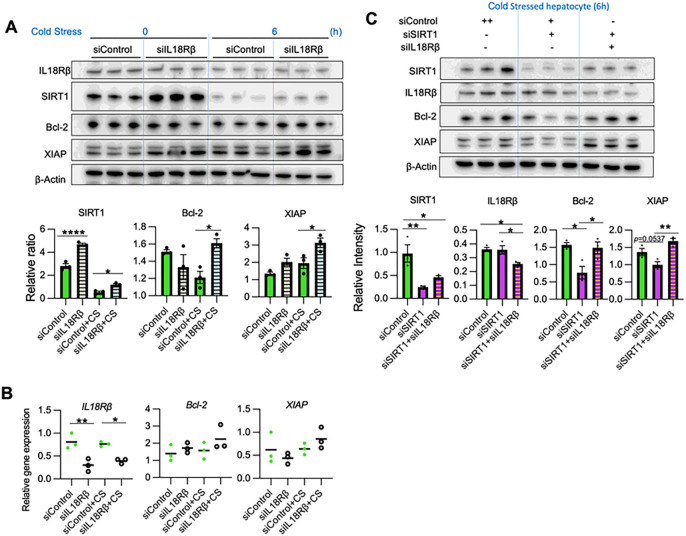
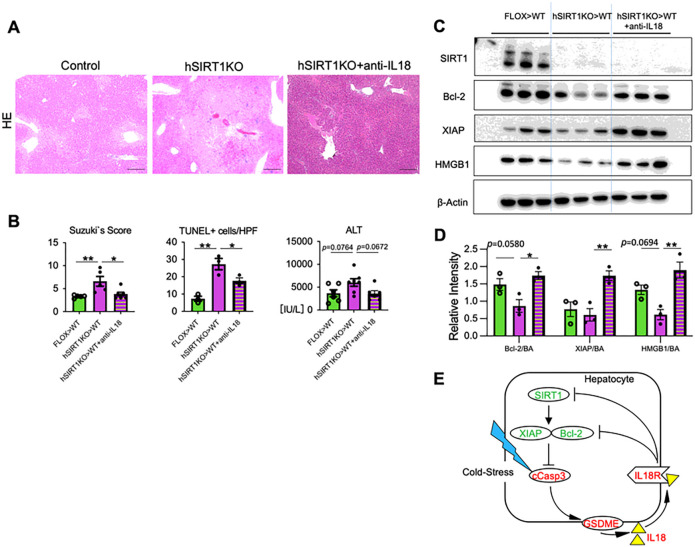
Sirtuin 1 (SIRT1) is a histone/protein deacetylase involved in cellular senescence, inflammation, and stress resistance. We previously reported that myeloid SIRT1 signaling regulates the inflamed liver's canonical pyroptosis cell death pathway. However, whether/how hepatocyte SIRT1 is engaged in programmed cell death in the cold-stressed liver remains uncertain. Here, we undertook translational studies in human and mouse orthotopic liver transplantation (OLT) to interrogate the significance of hepatocyte-specific SIRT1 signaling in cold-stored donor livers and liver grafts after reperfusion. In the clinical arm of sixty human OLT patients, hepatic SIRT1 levels in cold-preserved donor livers correlated with anti-apoptotic Bcl-2 expression. After reperfusion, improved OLT function was accompanied by hepatic SIRT1 levels negatively associated with cleaved caspase-3 expression. In the experimental arm, we compared FLOX-control with hepatocyte-specific SIRT1-KO livers after orthotopic transplantation into WT mouse recipients, parallel with primary murine hepatocyte cultures subjected to cold activation with/without knockdown of SIRT1, GSDME, and IL18Rβ signaling. Hepatocyte SIRT1 deficiency upregulated apoptosis and GSDME-mediated programmed cell death, which in turn deteriorated the hepatocellular function and shortened OLT survival. Augmented GSDME processing, accompanied by increased secretion of IL18 by stressed hepatocytes, was prominent in SIRT1-deficient, cold-stored livers. Hepatocyte SIRT1 signaling regulated anti-apoptotic Bcl-2/XIAP proteins, suppressed cold stress-triggered apoptosis, and mitigated GSDME licensing to release IL18. Notably, while crosslinking IL18R depressed SIRT1 and Bcl-2/XIAP signaling in vitro, IL18 neutralization in vivo prevented hepatocellular damage and restored the anti-apoptotic phenotype in otherwise injury-prone SIRT1-deficient OLTs. In conclusion, this translational study identifies a novel hepatocyte SIRT1-IL18 signaling circuit as a therapeutic target in the mechanism underpinning hepatocyte death in human and mouse liver transplantation.
Conflict of interest statement
COMPETING INTERESTS The authors declare that they have no conflict of interest.
Figures




References
-
- Dutkowski P, Linecker M, DeOliveira ML, Mullhaupt B, Clavien PA. Challenges to liver transplantation and strategies to improve outcomes. Gastroenterology 2015;148:307–323. - PubMed
-
- Hirao H, Nakamura K, Kupiec-Weglinski JW. Liver ischaemia-reperfusion injury: a new understanding of the role of innate immunity. Nat Rev Gastroenterol Hepatol 2021. - PubMed
-
- Karhumaki P, Tiitinen SL, Turpeinen H, Parkkinen J. Inhibition of ERK1/2 activation by phenolic antioxidants protects kidney tubular cells during cold storage. Transplantation 2007;83:948–953. - PubMed
-
- Caldwell-Kenkel JC, Currin RT, Tanaka Y, Thurman RG, Lemasters JJ. Reperfusion injury to endothelial cells following cold ischemic storage of rat livers. Hepatology 1989;10:292–299. - PubMed
-
- Kukan M, Haddad PS. Role of hepatocytes and bile duct cells in preservation-reperfusion injury of liver grafts. Liver Transpl 2001;7:381–400. - PubMed
Publication types
Grants and funding
LinkOut - more resources
Full Text Sources
Research Materials
Miscellaneous