


Blockade of innate inflammatory cytokines TNF α, IL-1 β, or IL-6 overcomes virotherapy-induced cancer equilibrium to promote tumor regression
- PMID: 37461742
- PMCID: PMC10349916
- DOI: 10.1093/immadv/ltad011
Blockade of innate inflammatory cytokines TNF α, IL-1 β, or IL-6 overcomes virotherapy-induced cancer equilibrium to promote tumor regression
Erratum in
-
Correction to: Blockade of innate inflammatory cytokines TNFα, IL-1β, or IL-6 overcomes virotherapy-induced cancer equilibrium to promote tumor regression.Immunother Adv. 2023 Oct 12;3(1):ltad019. doi: 10.1093/immadv/ltad019. eCollection 2023. Immunother Adv. 2023. PMID: 37841367 Free PMC article.
Abstract
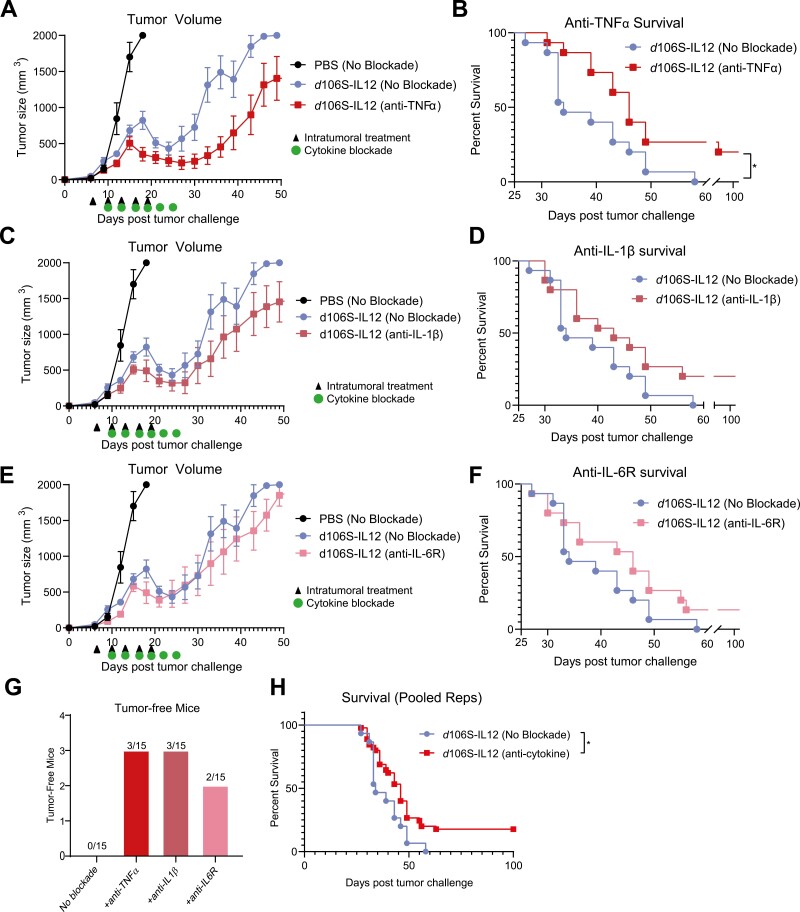
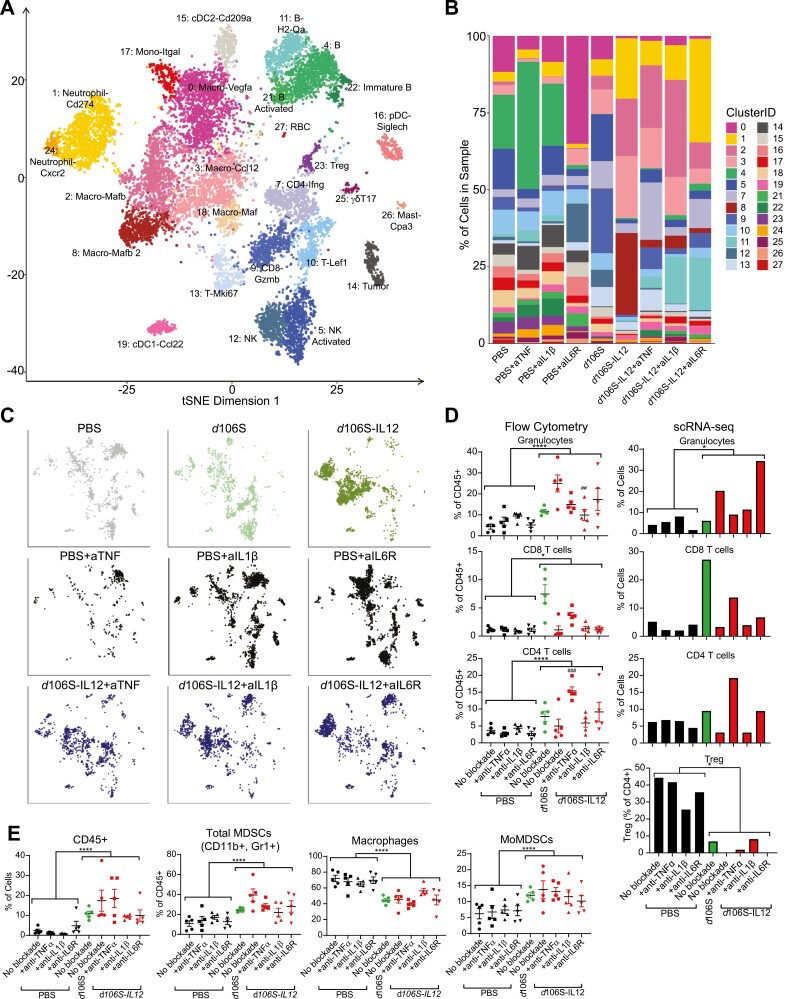
Cancer therapeutics can lead to immune equilibrium in which the immune response controls tumor cell expansion without fully eliminating the cancer. The factors involved in this equilibrium remain incompletely understood, especially those that would antagonize the anti-tumor immune response and lead to tumor outgrowth. We previously demonstrated that continuous treatment with a non-replicating herpes simplex virus 1 expressing interleukin (IL)-12 induces a state of cancer immune equilibrium highly dependent on interferon-γ. We profiled the IL-12 virotherapy-induced immune equilibrium in murine melanoma, identifying blockade of innate inflammatory cytokines, tumor necrosis factor alpha (TNFα), IL-1β, or IL-6 as possible synergistic interventions. Antibody depletions of each of these cytokines enhanced survival in mice treated with IL-12 virotherapy and helped to overcome equilibrium in some tumors. Single-cell RNA-sequencing demonstrated that blockade of inflammatory cytokines resulted in downregulation of overlapping inflammatory pathways in macrophages, shifting immune equilibrium towards tumor clearance, and raising the possibility that TNFα blockade could synergize with existing cancer immunotherapies.
Keywords: IL1B; IL6; TNF; cytokine blockade; equilibrium; macrophage.
© The Author(s) 2023. Published by Oxford University Press on behalf of the British Society for Immunology.
Conflict of interest statement
M.D. has received research funding from Eli Lilly; he has received consulting fees from Genentech, ORIC Pharmaceuticals, Partner Therapeutics, SQZ Biotech, AzurRx, Eli Lilly, Mallinckrodt Pharmaceuticals, Aditum, Foghorn Therapeutics, Palleon, Sorriso Pharmaceuticals, Generate Biomedicines, and Moderna; he is a member of the Scientific Advisory Board for Neoleukin Therapeutics, Veravas and Cerberus Therapeutics. S.K.D. received research funding unrelated to this project from Eli Lilly, Novartis, and Bristol-Myers Squibb and is a founder, science advisory board member (SAB), and equity holder in Kojin. M.J.W., D.M.K., and S.K.D. together have a patent application “Immunotherapeutic Virus for Treatment of Cancer” pending for using d106S as an immunomodulatory agent. Other authors declare no other competing interests.
Figures



References
Grants and funding
LinkOut - more resources
Full Text Sources
Molecular Biology Databases