


Glycolytic activity is required for the onset of neural plate folding during neural tube closure in mouse embryos
- PMID: 37465012
- PMCID: PMC10350492
- DOI: 10.3389/fcell.2023.1212375
Glycolytic activity is required for the onset of neural plate folding during neural tube closure in mouse embryos
Abstract
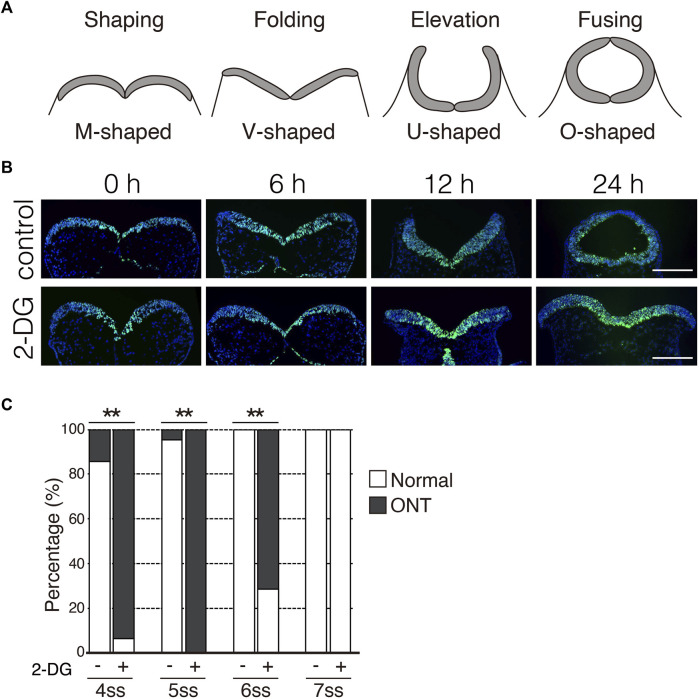
Physiological hypoxia is critical for placental mammalian development. However, the underlying mechanisms by which hypoxia regulates embryonic development remain unclear. We discovered that the expression of glycolytic genes partially depends on hypoxia in neuroepithelial cells of E8.25 mouse embryos. Consistent with this finding, inhibiting glycolysis during the early phase of neural tube closure (E8.0-8.5) resulted in a neural tube closure defect. In contrast, inhibiting the electron transport chain did not affect neural tube formation. Furthermore, inhibiting glycolysis affected cell proliferation, but not differentiation and survival. Inhibiting glycolysis repressed the phosphorylation of myosin light chain 2, and consequent neural plate folding. Our findings revealed that anaerobic glycolysis regulates neuroepithelial cell proliferation and apical constriction during the early phase of neural tube closure.
Keywords: glycolysis; hypoxia; metabolism; mouse; neural tube closure.
Copyright © 2023 Sakai, Murakami, Shigeta, Tomosugi, Sakata-Haga, Hatta and Shoji.
Conflict of interest statement
The authors declare that the research was conducted in the absence of any commercial or financial relationships that could be construed as a potential conflict of interest.
Figures




References
-
- Compernolle V., Brusselmans K., Franco D., Moorman A., Dewerchin M., Collen D., et al. (2003). Cardia bifida, defective heart development and abnormal neural crest migration in embryos lacking hypoxia-inducible factor-1alpha. Cardiovasc Res. 60 (3), 569–579. 10.1016/j.cardiores.2003.07.003 - DOI - PubMed
Associated data
LinkOut - more resources
Full Text Sources
Molecular Biology Databases
