


Impact of moist wound dressing on wound healing time: A meta-analysis
- PMID: 37465989
- PMCID: PMC10681401
- DOI: 10.1111/iwj.14319
Impact of moist wound dressing on wound healing time: A meta-analysis
Retraction in
-
RETRACTION: Impact of Moist Wound Dressing on Wound Healing Time: A Meta-Analysis.Int Wound J. 2025 Apr;22(4):e70566. doi: 10.1111/iwj.70566. Int Wound J. 2025. PMID: 40251140 Free PMC article.
Abstract
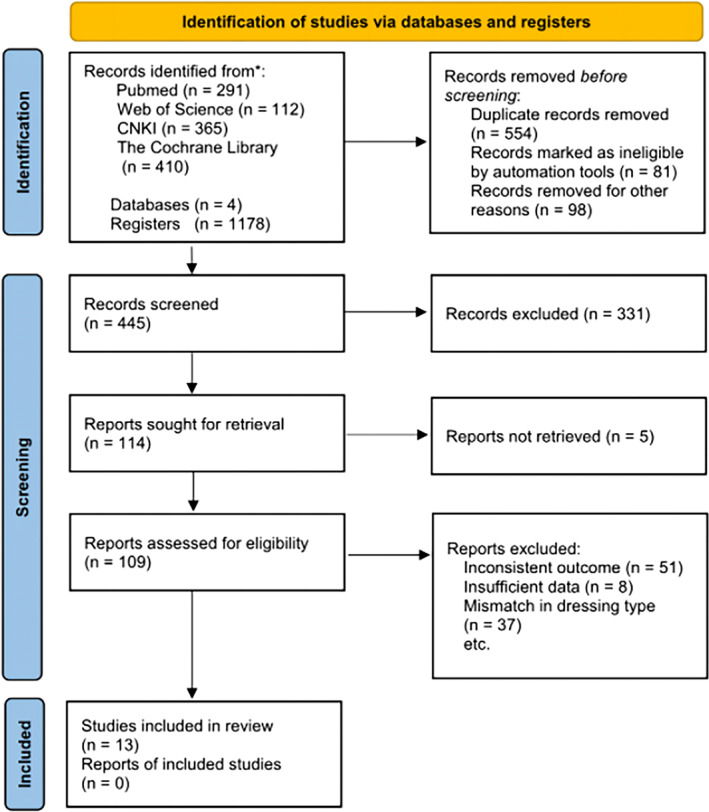
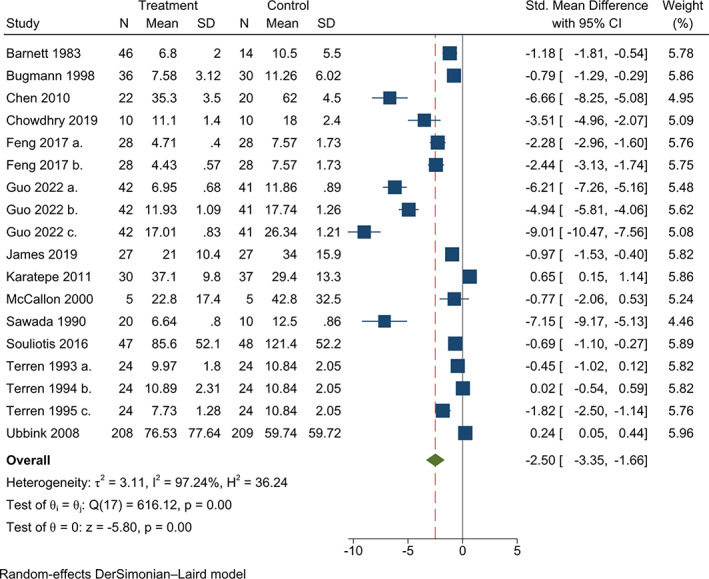
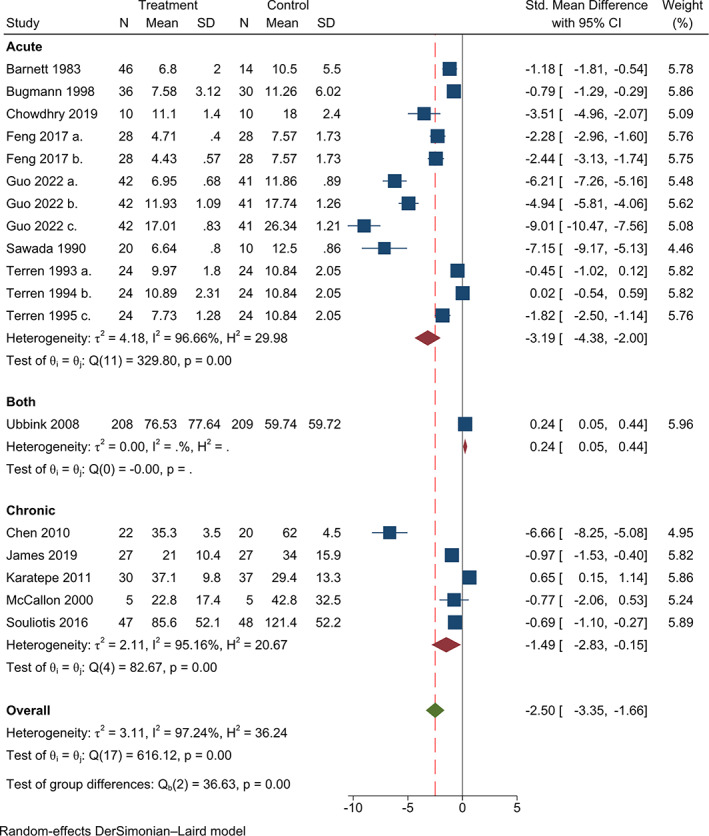
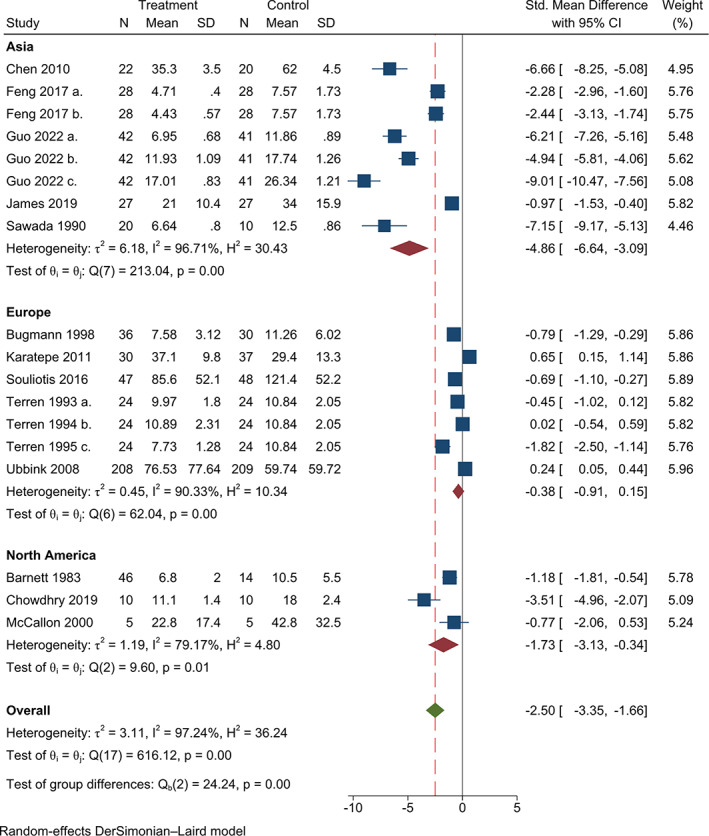
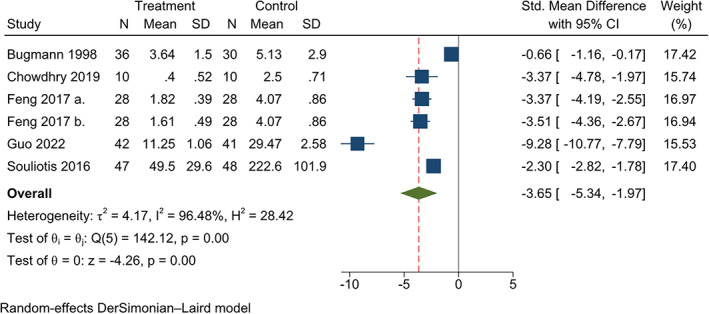
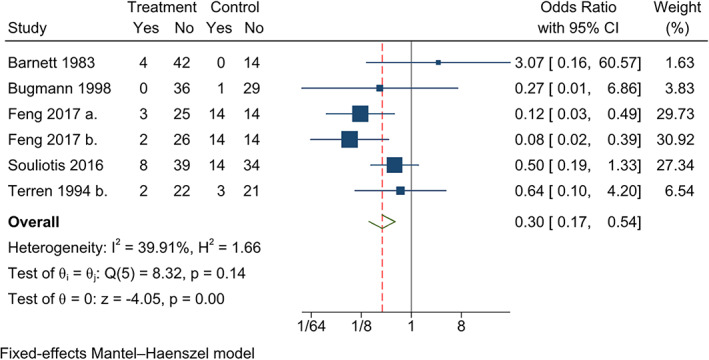
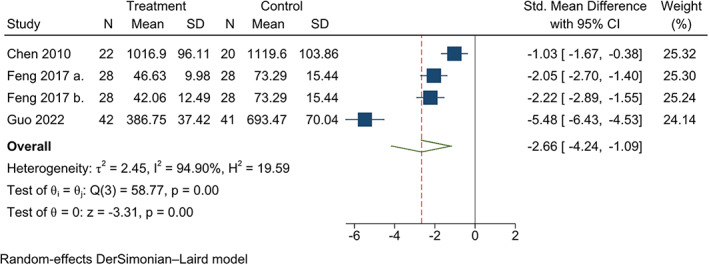
Among the assortment of available dressings aimed at promoting wound healing, moist dressings have gained significant popularity because of their ability to create an optimal environment for wound recovery. This meta-analysis seeks to compare the effects of moist dressing versus gauze dressing on wound healing time. A comprehensive literature search was conducted, encompassing publications up until April 1, 2023, across multiple databases including PubMed, Web of Science, China National Knowledge Infrastructure (CNKI), and Cochrane Library. Stringent criteria were used to determine study inclusion and evaluate methodological quality. Statistical analyses were performed utilizing Stata 17.0. A total of 13 articles, encompassing 866 participants, were included in the analysis. The findings indicate that moist dressing surpasses gauze dressing in terms of wound healing time (standard mean difference [SMD] -2.50, 95% confidence interval [CI] -3.35 to -1.66, p < 0.01; I2 = 97.24%), wound site infection rate (odds ratio [OR] 0.30, 95% CI 0.17 to 0.54, p < 0.01; I2 = 39.91%), dressing change times (SMD -3.65, 95% CI -5.34 to -1.97, p < 0.01; I2 = 96.48%), and cost (SMD -2.66, 95% CI -4.24 to -1.09, p < 0.01; I2 = 94.90%). Subgroup analyses revealed possible variations in wound healing time based on wound types and regions. This study underscores the significant advantages associated with the use of moist dressings, including expedited wound healing, reduced infection rates, decreased frequency of dressing changes, and lower overall treatment costs.
Keywords: gauze dressings; impact; meta-analysis; moist dressings; wound healing time.
© 2023 The Authors. International Wound Journal published by Medicalhelplines.com Inc and John Wiley & Sons Ltd.
Conflict of interest statement
The work described has not been submitted elsewhere for publication, in whole or in part. No conflict of interest exits in the submission of this manuscript, and all the authors listed have approved the manuscript that is enclosed.
Figures
References
-
- Juniantito V, Izawa T, Yamamoto E, Murai F, Kuwamura M, Yamate J. Heterogeneity of macrophage populations and expression of galectin‐3 in cutaneous wound healing in rats. J Comp Pathol. 2011;145(4):378‐389. - PubMed
-
- Yanbing H. Research progress in wound healing [J]. Chin Nat Folk Med. 2013;22(9):59‐60.
-
- Atiyeh BS, Ioannovich J, Al‐Amm CA, El‐Musa KA. Management of acute and chronic open wounds: the importance of moist environment in optimal wound healing. Curr Pharm Biotechnol. 2002;3(3):179‐195. - PubMed
-
- Fang L, Bilong F. Classification and principles of management of wounds. Chin Clin Nurs. 2010;2(4):365‐367.
Publication types
MeSH terms
LinkOut - more resources
Full Text Sources
Miscellaneous
