


Exploring the variability of sarcopenia prevalence in a research population using different disease definitions
- PMID: 37466861
- PMCID: PMC10520157
- DOI: 10.1007/s40520-023-02496-7
Exploring the variability of sarcopenia prevalence in a research population using different disease definitions
Abstract
Background: Sarcopenia is the progressive loss of muscle mass and function with age. A number of different sarcopenia definitions have been proposed and utilised in research. This study aimed to investigate how the prevalence of sarcopenia in a research cohort of older adults is influenced by the use of independent aspects of these different definitions.
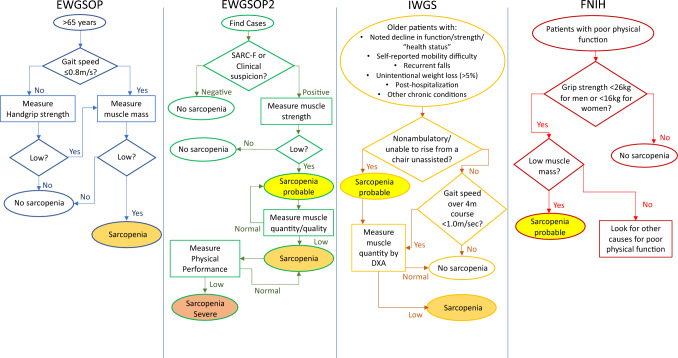
Methods: Data from 255 research participants were compiled. Defining criteria by the European Working Group on Sarcopenia in Older People, the International Working Group on Sarcopenia (IWGS), and the Foundation for the National Institutes of Health were applied.
Results: Prevalence of sarcopenia using muscle mass ranged from 4 to 22%. Gait speed and handgrip strength criteria identified 4-34% and 4-16% of participants as sarcopenic, respectively.
Conclusion: Prevalence of sarcopenia differs substantially depending on the criteria used. Work is required to address the impact of this for sarcopenia research to be usefully translated to inform on clinical practice.
Keywords: Ageing; Definitions; Health-span; Muscle; Sarcopenia.
© 2023. The Author(s).
Conflict of interest statement
No author has a conflict of interest to declare.
Figures
References
-
- Rosenberg IH. Sarcopenia: origins and clinical relevance. Am Soc Nutr Sci. 1997;127:3166. - PubMed
MeSH terms
Grants and funding
LinkOut - more resources
Full Text Sources
