. 2023 Aug 1;57(30):10940-10950.
doi: 10.1021/acs.est.3c01040. Epub 2023 Jul 19.

Tire-Derived Transformation Product 6PPD-Quinone Induces Mortality and Transcriptionally Disrupts Vascular Permeability Pathways in Developing Coho Salmon

Affiliations

Tire-Derived Transformation Product 6PPD-Quinone Induces Mortality and Transcriptionally Disrupts Vascular Permeability Pathways in Developing Coho Salmon

Justin B Greer et al. Environ Sci Technol. .

Abstract

Urban stormwater runoff frequently contains the car tire transformation product 6PPD-quinone, which is highly toxic to juvenile and adult coho salmon (Onchorychus kisutch). However, it is currently unclear if embryonic stages are impacted. We addressed this by exposing developing coho salmon embryos starting at the eyed stage to three concentrations of 6PPD-quinone twice weekly until hatch. Impacts on survival and growth were assessed. Further, whole-transcriptome sequencing was performed on recently hatched alevin to address the potential mechanism of 6PPD-quinone-induced toxicity. Acute mortality was not elicited in developing coho salmon embryos at environmentally measured concentrations lethal to juveniles and adults, however, growth was inhibited. Immediately after hatching, coho salmon were sensitive to 6PPD-quinone mortality, implicating a large window of juvenile vulnerability prior to smoltification. Molecularly, 6PPD-quinone induced dose-dependent effects that implicated broad dysregulation of genomic pathways governing cell-cell contacts and endothelial permeability. These pathways are consistent with previous observations of macromolecule accumulation in the brains of coho salmon exposed to 6PPD-quinone, implicating blood-brain barrier disruption as a potential pathway for toxicity. Overall, our data suggests that developing coho salmon exposed to 6PPD-quinone are at risk for adverse health events upon hatching while indicating potential mechanism(s) of action for this highly toxic chemical.

Keywords: nonpoint source pollution; salmon; transformation products; urban streams.


Conflict of interest statement

The authors declare no competing financial interest.

Figures
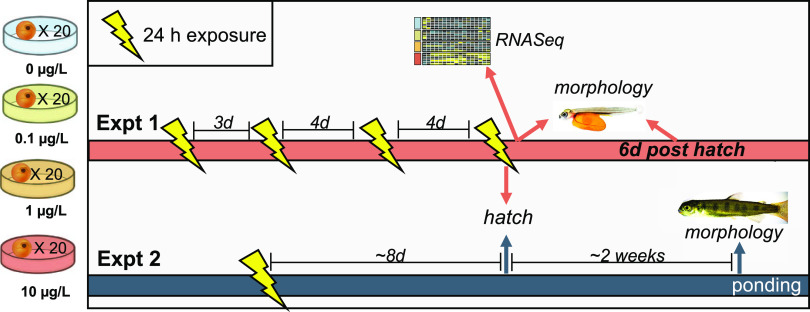
Figure 1
Figure 1
Experimental design for exposure studies. During experiment 1, coho salmon embryos were exposed to three concentrations of 6PPD-quinone (0.1, 1, 10 μg/L nominal) in 24 h pulse exposures twice weekly until hatching. During experiment 2, embryos were exposed to a single 24 h pulse. Greater than 98% of embryos hatched at the indicated hatching date, which occurred during the fourth exposure of experiment 1. Mortality and hatching success were monitored daily throughout both experiments. Morphological assessment included eye area and total length (experiment 1) or fork length (experiment 2).
Figure 2
Figure 2
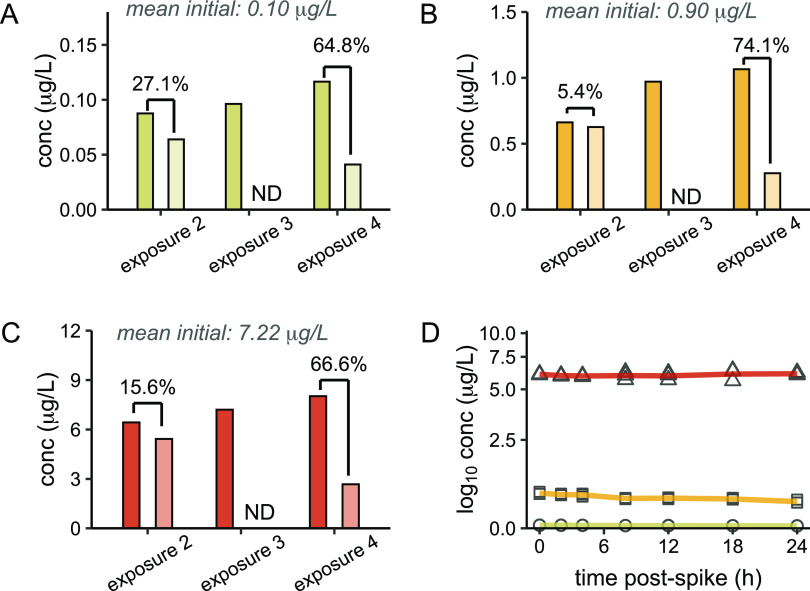
Analytical assessment of 6PPD-quinone concentrations. (A–D) Analysis of 6PPD-quinone concentrations measured in duplicate by UPLC/MS/MS from experiment 1. Dark bars represent measurements at the beginning of the exposure period and light bars indicate measurements at the end of the 24 h exposure. Mean initial exposure concentrations are indicated at the top of each panel for nominal concentrations of 0.1 μg/L (B), 1 μg/L (C), and 10 μg/L (D). Percent loss of the compound during the 24 h period is indicated above each exposure. Measurements were not determined (ND) during exposure 1 or at the end of exposure 3. Percentages indicate the percent loss of 6PPD-quinone during the exposure period. (E) Time course of water chemistry from the single exposure in experiment 2. Each concentration and time point were measured in triplicate.
Figure 3
Figure 3
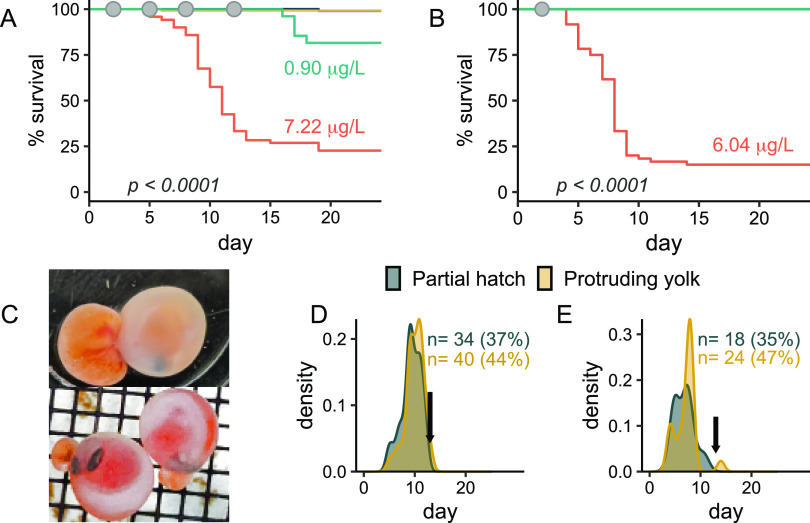
Mortality and associated phenotypes. (A) Kaplan–Meier survival analysis from experiment 1 (n = 120). Gray dots indicate 24 h periods of 6PPD-quinone exposure. X-axis represents days post 6PPD-quinone exposure, with the first exposure occurring on day 2 (372 ATUs). Significant mortality was induced at 0.90 and 7.22 μg/L (log-rank test, BH correction). Embryonic mortality was not observed at 0.95 μg/L (yellow line). (B) Kaplan–Meier survival analysis from experiment 2 (n = 60), with gray dot indicating the timing of exposure. X-axis represents days post 6PPD-quinone exposure, with the first exposure occurring on day 2 (390 ATUs). Significant mortality was induced after one exposure to 6.04 μg/L (log-rank test) (C) Representative gross morphology of embryos with protrusion of the yolk sac (orange) from the chorion, a phenotype that was fatal. (D) Density plot indicating timing of protruding yolk sac and partial hatching phenotypes from the high exposure concentration for experiment 1 (left panel) and experiment 2 (right panel). N represents the total number of mortalities, percentage indicates the proportion of total mortalities, and arrows indicate the hatching date for healthy individuals.
Figure 4
Figure 4
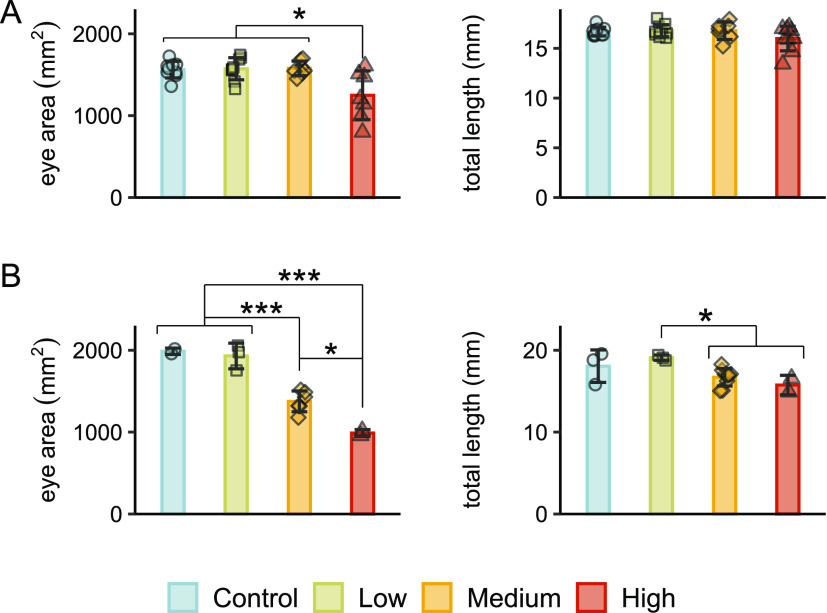
Altered development in surviving alevin in experiment 1. (A) Total fish length was significantly reduced at 7.22 μg/L immediately after hatching (p < 0.05, Kruskal–Wallace test, Dunn’s post-hoc, n = 10), but eye area was unaffected. (B) Total length and eye area were both significantly reduced at high concentrations in alevin at 6 days posthatch (p < 0.05, ANOVA, Tukey’s post-hoc).
Figure 5
Figure 5
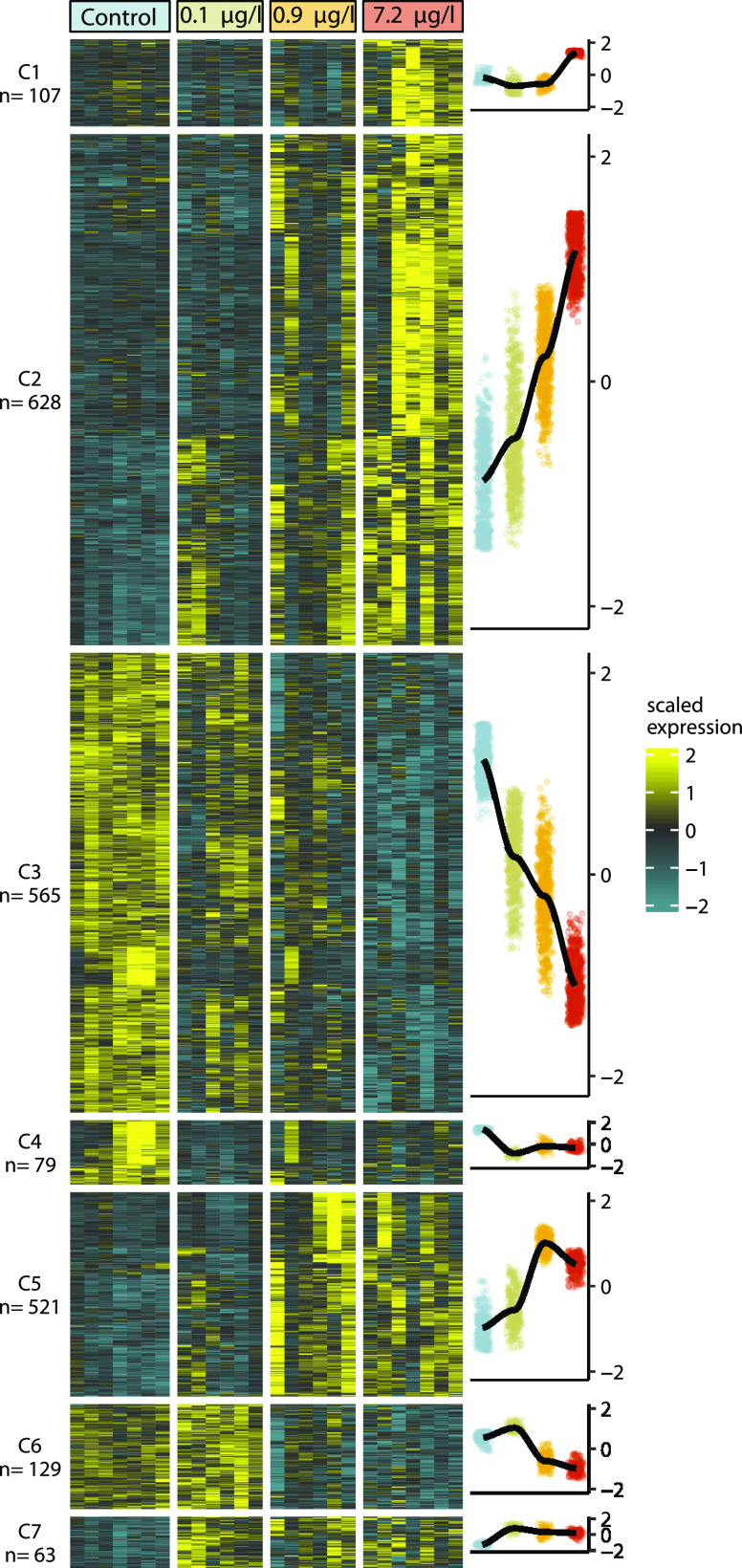
6PPD-quinone elicited strong dose-dependent modifications in gene expression. Heatmap of the 7 DEG clusters identified by likelihood ratio testing and DIANA hierarchical clustering. N represents the number of genes in each gene cluster. Right panel shows the LOESS model fit of scaled gene expression (y-axis) with increasing concentration (x-axis).
Figure 6
Figure 6
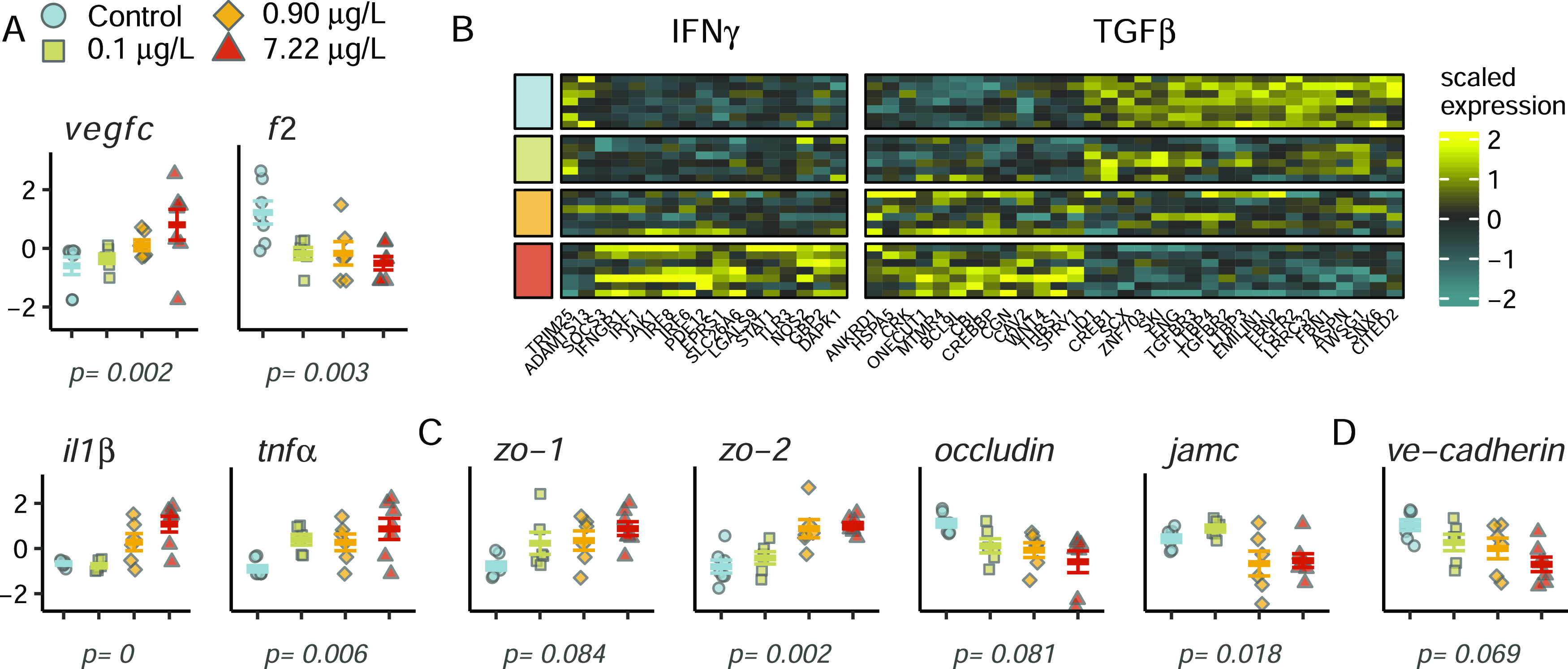
6PPD-quinone altered expression of mediators and genes involved in endothelial permeability. (A) Expression of permeability mediators vascular endothelial growth factor c (vegfc), thrombin (f2), interleukin 1 β (il1β), and tumor necrosis factor α (tnfα). Y-axis displays the gene expression z-score. (B) Gene ontology enrichment of endothelial permeability mediators interferon γ (IFNγ) and transforming growth factor β (TGFβ). Treatment is indicated on the left side, with colors corresponding to the legend in panel (A). (C) Altered expression of critical components of tight junctions zona occludin (zo-1 and zo-2), occludin, and junction adhesion molecule c (jamc). (D) Expression of VE-cadherin, the primary transmembrane protein at adherens junctions. Displayed p-values were obtained from likelihood ratio testing in DESeq2.
Figure 7
Figure 7
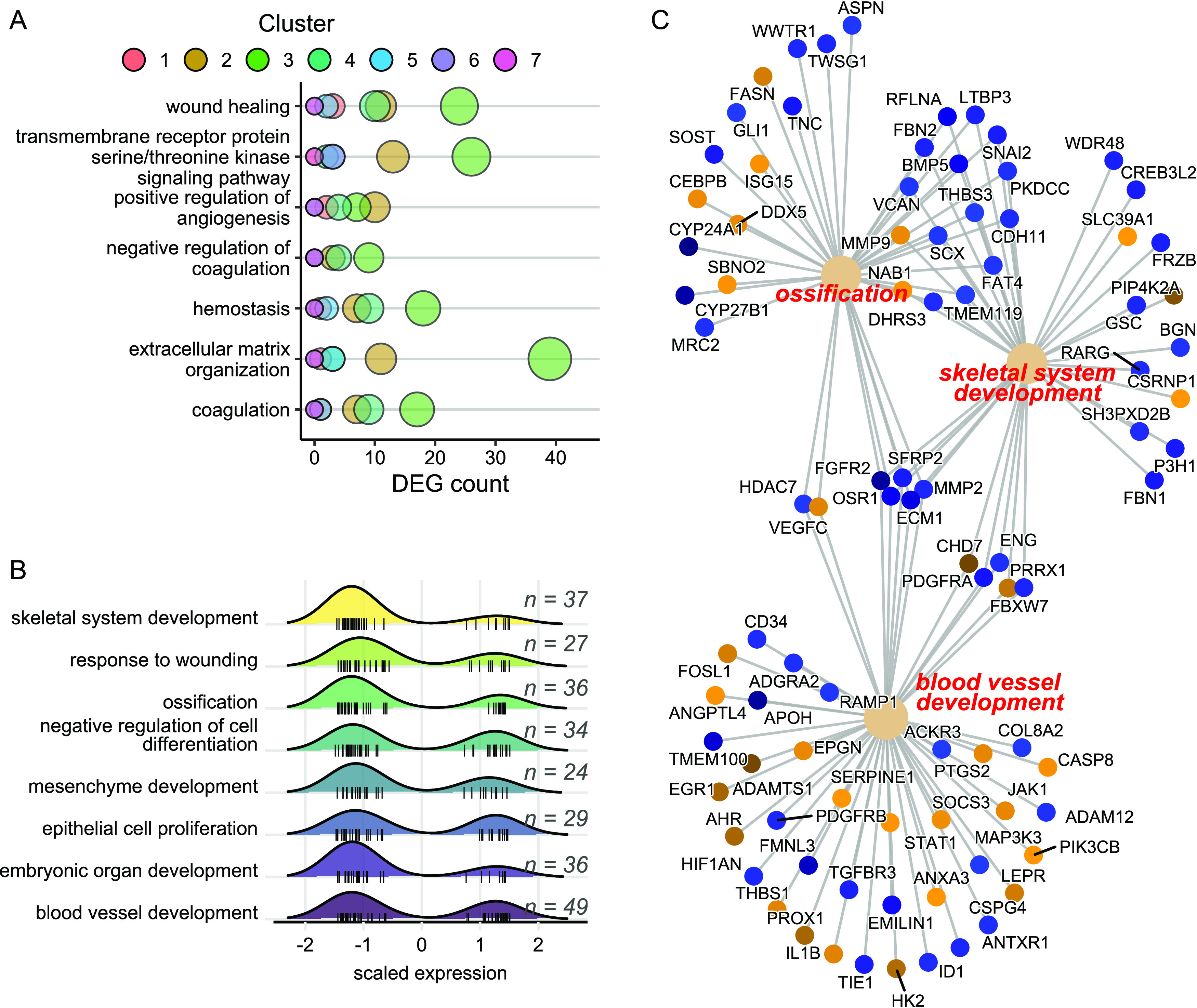
Gene ontology enrichment of hematological and developmental-related pathways. (A) Enrichment of hematological and extracellular organization pathways using the full dataset of DEGs. (B) Density plot of scaled gene expression for DEGs with strong dose-dependent changes (clusters 2 and 3) belonging to development and cell proliferation gene ontologies, with n representing the number of DEGs in each pathway. (C) Linkage network of DEGs in clusters 2 and 3 belonging to the indicated categories. Each node represents the specified DEG, color coded as downregulated (blue, cluster 3) or upregulated (orange, cluster 2) with increasing 6PPD-quinone concentration.

References

    1. Bradford M. J.; Irvine J. R. Land use, fishing, climate change, and the decline of Thompson River, British Columbia, coho salmon. Can. J. Fish. Aquat. Sci. 2000, 57, 13–16. 10.1139/f99-283. - DOI
    1. Schindler D. E.; Augerot X.; Fleishman E.; Mantua N. J.; Riddell B.; Ruckelshaus M.; Seeb J.; Webster M. Climate change, ecosystem impacts, and management for Pacific salmon. Fisheries 2008, 33, 502–506. 10.1577/1548-8446-33.10.502. - DOI
    1. Wainwright T. C.; Weitkamp L. A. Effects of climate change on Oregon Coast coho salmon: habitat and life-cycle interactions. Northwest Sci. 2013, 87, 219–242. 10.3955/046.087.0305. - DOI
    1. Good T. P.; Beechie T. J.; McElhany P.; McClure M. M.; Ruckelshaus M. H. Recovery planning for Endangered Species Act-listed Pacific salmon: using science to inform goals and strategies. Fisheries 2007, 32, 426–440. 10.1577/1548-8446(2007)32[426:RPFESL]2.0.CO;2. - DOI
    1. Brown L. R.; Moyle P. B.; Yoshiyama R. M. Historical decline and current status of coho salmon in California. N. Am. J. Fish. Manage. 1994, 14, 237–261. 10.1577/1548-8675(1994)014<0237:HDACSO>2.3.CO;2. - DOI

Publication types

MeSH terms

Substances