


Patient and family-centered care for children: A concept analysis
- PMID: 37469640
- PMCID: PMC10353635
- DOI: 10.33546/bnj.2350
Patient and family-centered care for children: A concept analysis
Abstract
Background: Family-centered care has evolved into patient and family-centered care. Although this is not a new concept; however, its application to nursing practice is very challenging among nurses due to its ambiguity.
Objective: This study aimed to clarify the concept of patient and family-centered care for children.
Methods: Walker and Avant's concept analysis method was used. A literature search was also done using the following databases: Google Scholar, ProQuest, ScienceDirect, and Scopus, for articles published from 2011 to 2021.
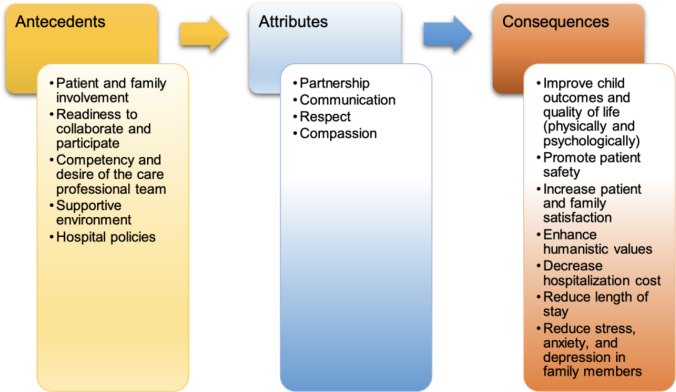
Results: The defining attributes of patient and family-centered care are partnership, communication, respect, and compassion. Antecedents include patient and family involvement, readiness to collaborate and participate, competency and desire of the care professional team, supportive environment, and policies. Consequences of the patient and family-centered care include improved child outcomes and quality of life, promotion of patient safety, increased patient and family satisfaction, enhancement of humanistic values, reduction of hospitalization cost and length of stay, and decreased stress, anxiety, and depression in family members.
Conclusion: Four attributes of patient and family-centered care, its antecedents, and consequences may aid researchers in better understanding the concept and its application in nursing practice. This concept can also be used to establish quality care delivery strategies and promote professional relationships between nurses, patients, and families in clinical settings.
Keywords: children; concept analysis; family-centered care; nurse; patient-centered care.
© The Author(s) 2023.
Conflict of interest statement
The authors have no conflict of interest regarding this article.
Figures
References
-
- Abney-Roberts, S. E., & Norman, C. (2012). Patient family centered care: It's more than open visitation. Journal of Obstetric, Gynecologic & Neonatal Nursing, 41, S107. 10.1111/j.1552-6909.2012.01361_80.x - DOI
-
- Abraham, M., & Moretz, J. G. (2012). Implementing patient-and family-centered care: Part I-understanding the challenges. Pediatric Nursing, 38(1), 44-47. - PubMed
-
- Brown, S. M., Rozenblum, R., Aboumatar, H., Fagan, M. B., Milic, M., Lee, B. S., Turner, K., & Frosch, D. L. (2015). Defining patient and family engagement in the intensive care unit. American Journal of Respiratory and Critical Care Medicine, 191(3), 358-360. 10.1164/rccm.201410-1936LE - DOI - PubMed
LinkOut - more resources
Full Text Sources