


Coffee intake and risk of diabetic nephropathy: a Mendelian randomization study
- PMID: 37469984
- PMCID: PMC10352828
- DOI: 10.3389/fendo.2023.1169933
Coffee intake and risk of diabetic nephropathy: a Mendelian randomization study
Erratum in
-
Corrigendum: Coffee intake and risk of diabetic nephropathy: a Mendelian randomization study.Front Endocrinol (Lausanne). 2023 Sep 14;14:1285535. doi: 10.3389/fendo.2023.1285535. eCollection 2023. Front Endocrinol (Lausanne). 2023. PMID: 37780609 Free PMC article.
Abstract
Rationale and objective: A causal relationship concerning coffee intake and diabetic nephropathy (DN) is controversial. We conducted a Mendelian randomization study to assess the causal nature of these associations.
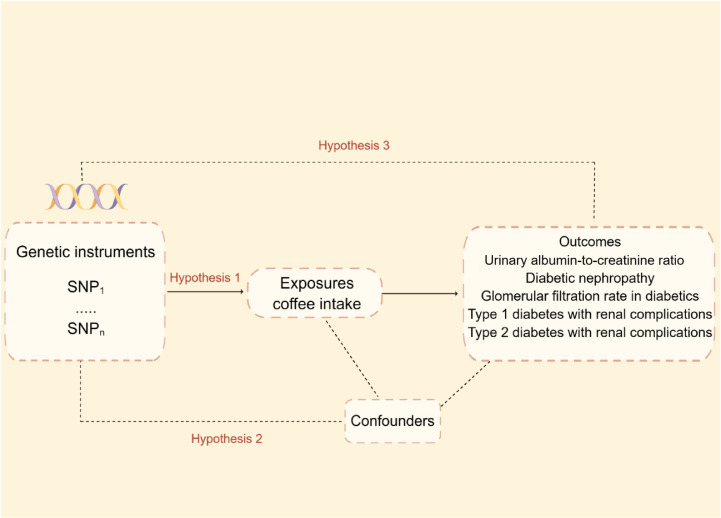
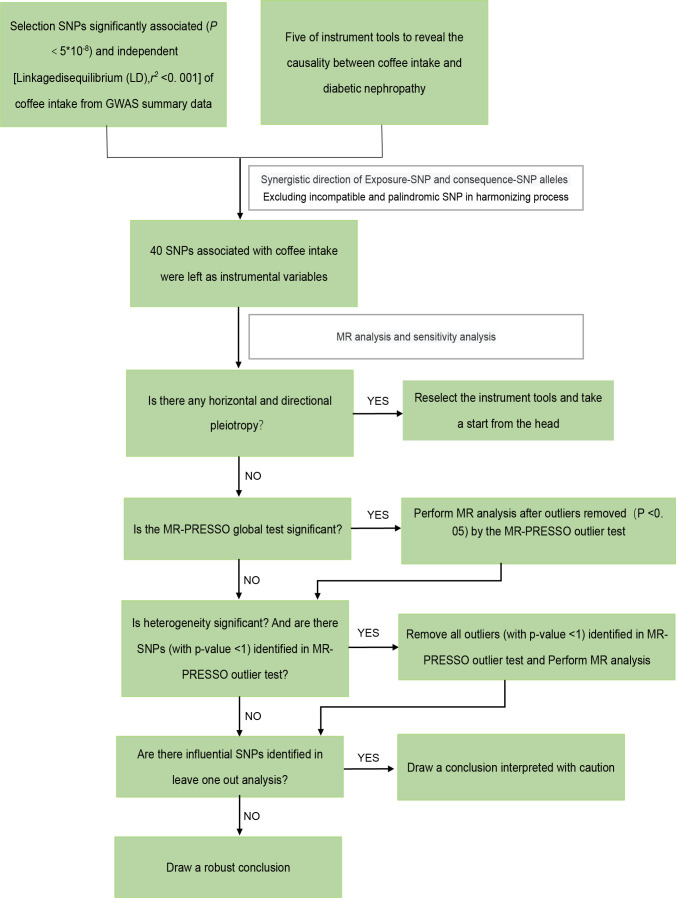
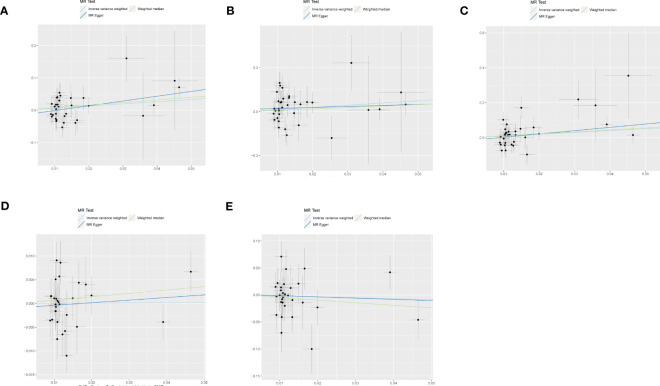
Methods: 40 independent single nucleotide polymorphisms (SNPs) associated with coffee intake were selected from the UK Biobank study. Summary-level data for diabetic nephropathy were obtained from publicly available genome-wide association studies (GWAS) and the FinnGen consortium. Inverse variance weighted (IVW), MR-Egger, and weighted median (WM) methods were used to examine a causal association. Sensitivity analyses included Cochran's Q test, the intercept of MR-Egger, MR-PRESSO, and the Outlier method. Leave-One-Out sensitivity analyses were also conducted to reduce the heterogeneity.
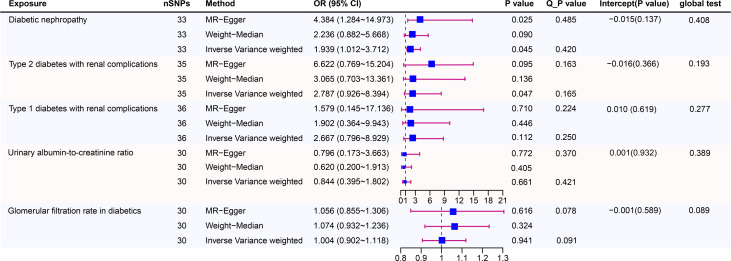
Results: Our current study demonstrated positive associations of genetically predicted coffee intake with diabetic nephropathy (OR=1.939; P = 0.045 and type 2 diabetes with renal complications (OR = 2.787, P= 0.047). These findings were robust across several sensitivity analyses.
Conclusions: This study found a positive correlation between coffee consumption and the risk of diabetic nephropathy using genetic data. For a more accurate and trustworthy conclusion, subgroup analysis on coffee intake, including preparing method, variety of coffee, and quantity, is required.
Keywords: Mendelian randomization; causality; coffee intake; diabetic nephropathy; risk.
Copyright © 2023 Fang, Song, Zhang, Liang, Zhao, Jin and He.
Conflict of interest statement
The authors declare that the research was conducted in the absence of any commercial or financial relationships that could be construed as a potential conflict of interest.
Figures
References
Publication types
MeSH terms
Substances
LinkOut - more resources
Full Text Sources
Medical
