Sex differences in the relationship between cannabis use motives and cannabis craving in daily life in emerging adults
- PMID: 37471012
- PMCID: PMC10528470
- DOI: 10.1037/adb0000945
Sex differences in the relationship between cannabis use motives and cannabis craving in daily life in emerging adults
Abstract
Objective: Cannabis use motives and craving are associated with increased risk for cannabis-related problems and are ideal targets for prevention and early intervention. Patterns of motives and craving reactivity to cannabis cues differ by sex; however, few studies closely examine the relationship between motives and craving and how it may differ by valence (±) across men and women.
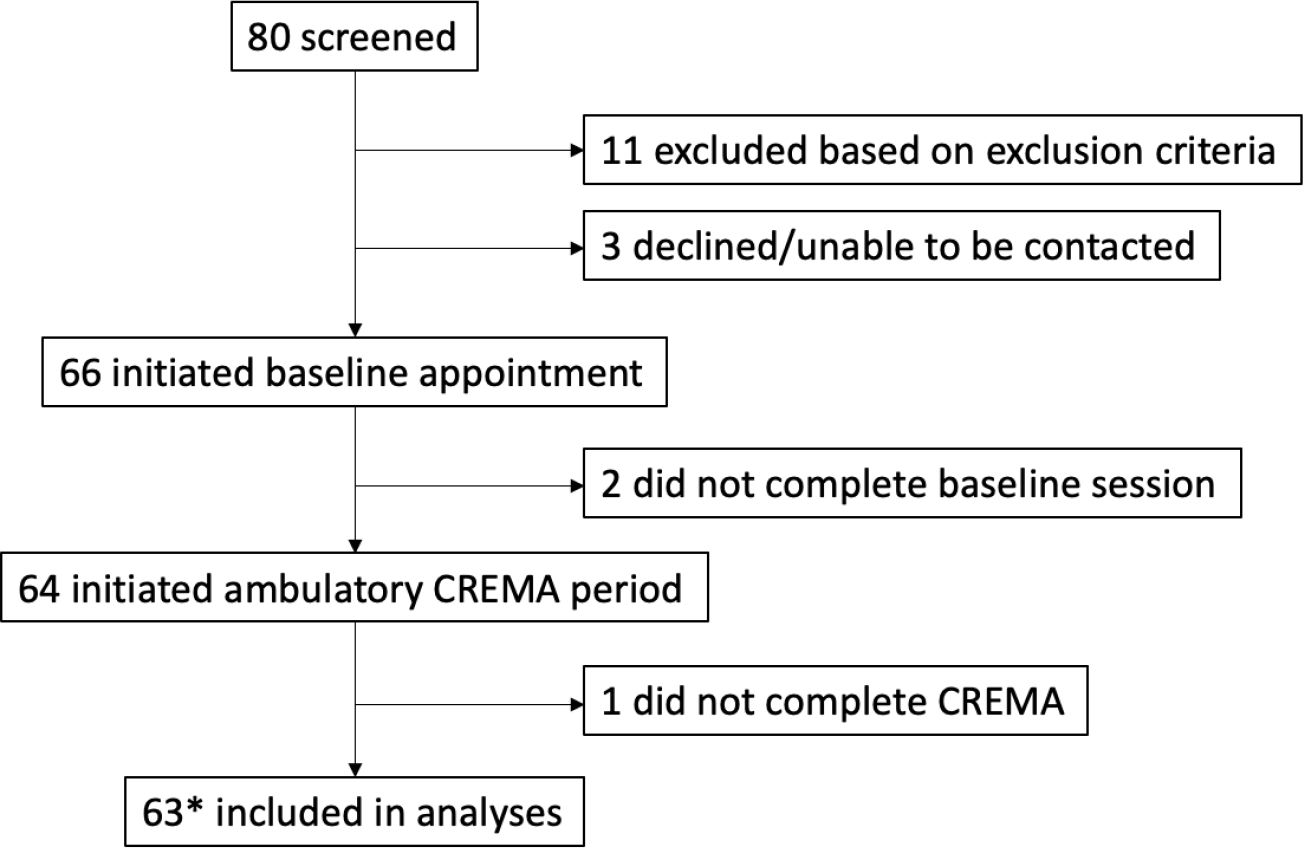
Method: The present study used Cue Reactivity Ecological Momentary Assessment to assess reward (+) and relief (-) craving four semirandom times per day for 2 weeks in a sample of 63 emerging adults (age 18-21; 54% cisgender women; 85.7% White) who frequently use cannabis (≥ 3 times per week). We assessed craving before and after exposure to brief neutral or cannabis image cues and examined within- and between-participant effects of cue type, motives, sex/gender, and their interactions, on postcue cannabis craving.
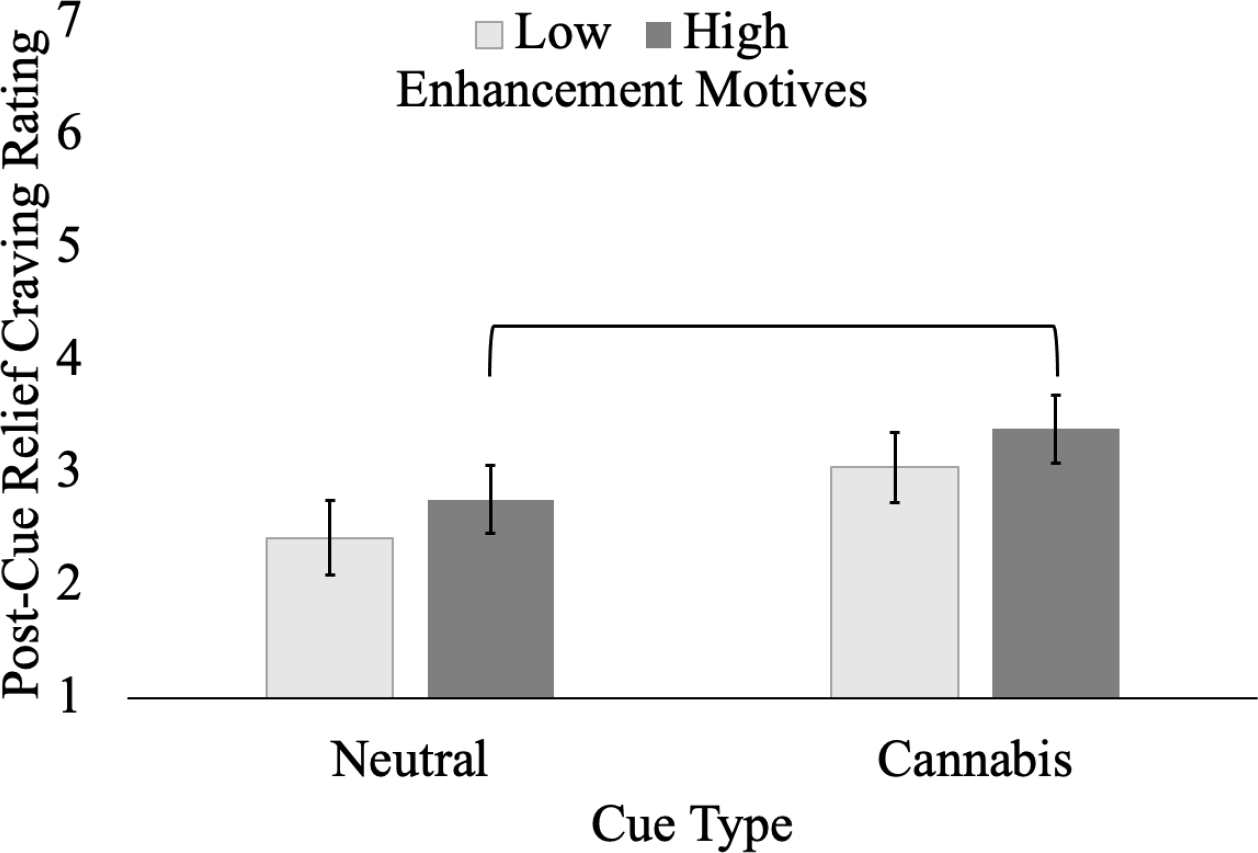
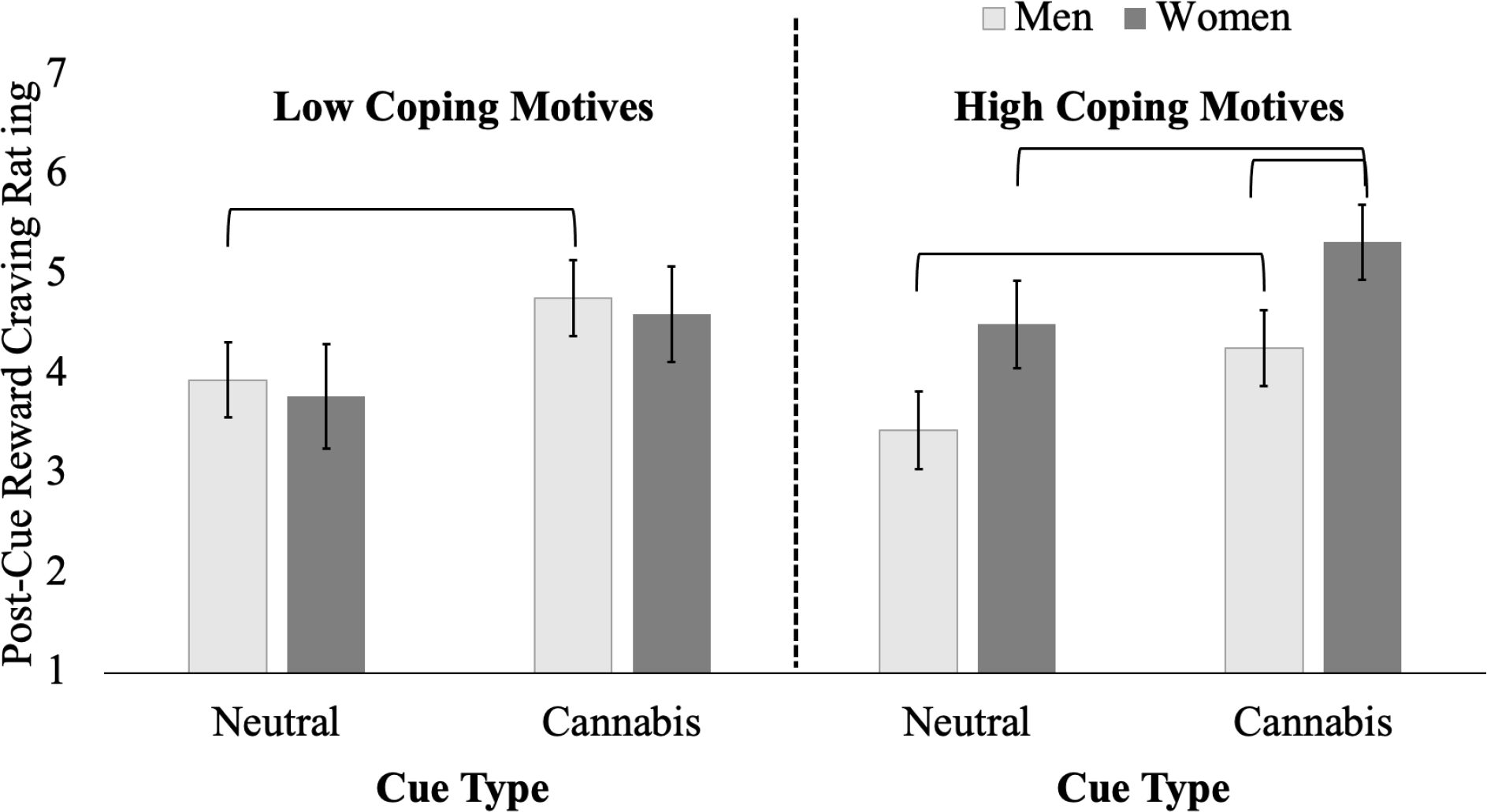
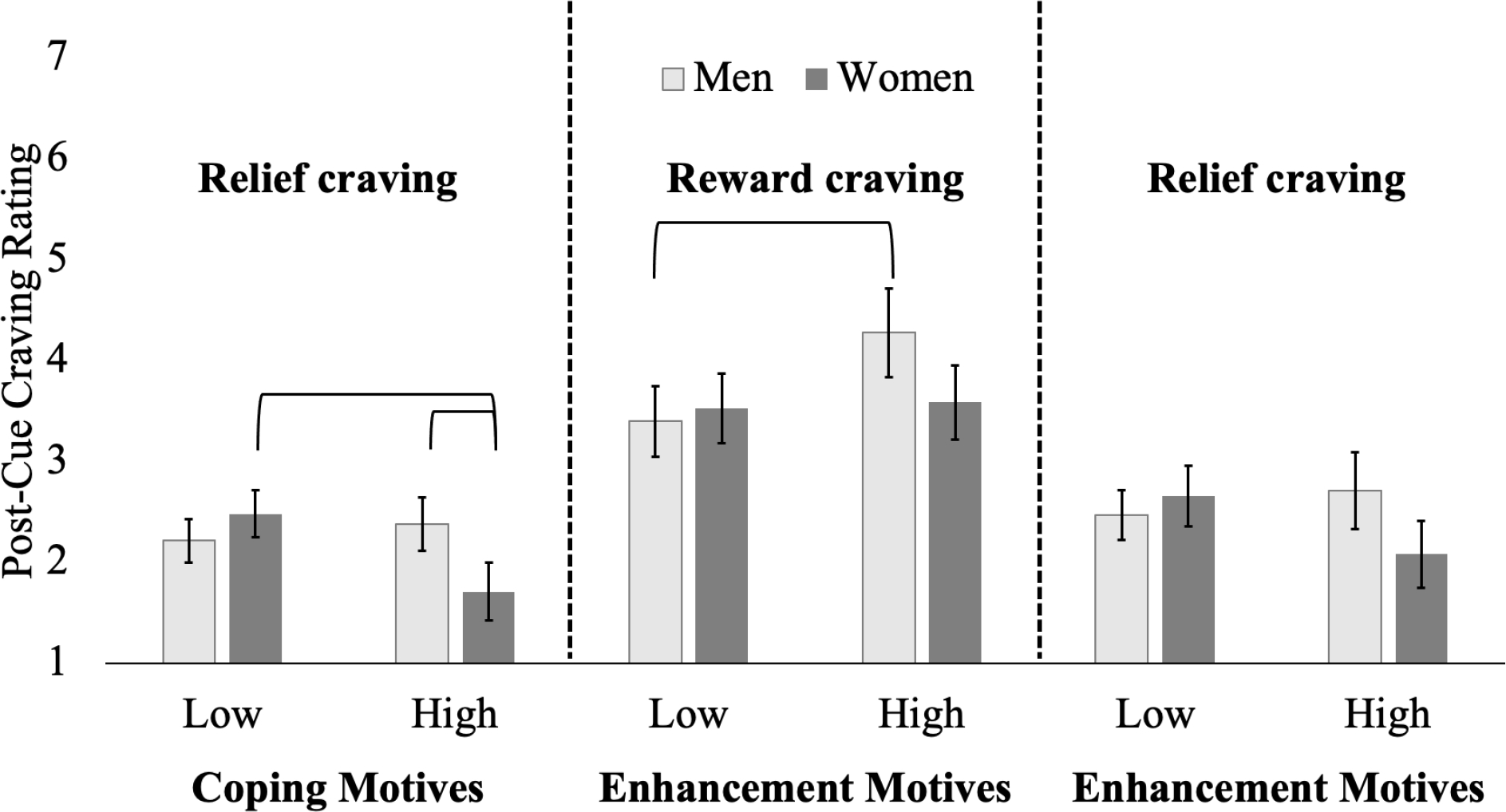
Results: Regardless of cue type, women with high coping motives (-) reported less postcue relief (-) craving, and men with high enhancement motives (+) reported more postcue reward (+) craving. High enhancement motives (+), regardless of sex/gender, were associated with elevated relief (-) craving reactivity to cannabis cues, and women with high coping motives (-) reported elevated reward (+) craving reactivity to cannabis cues.
Conclusions: Sex/gender differences in the relationships between cannabis motives and craving reactivity indicate the value of a more targeted examination of valence (±) of craving experiences in addition to motives for use. Higher levels of precision may better inform interventions for emerging adults at risk for experiencing cannabis-related problems. (PsycInfo Database Record (c) 2023 APA, all rights reserved).
Figures
References
-
- Blevins CE, Abrantes AM, Anderson BJ, Caviness CM, Herman DS, & Stein MD (2018). A longitudinal evaluation of the role of alcohol self-concept in alcohol use, motives, negative affect, and alcohol-related problems among emerging adults: Alcohol Self-Concept Among Emerging Adults. The American Journal on Addictions, 27(6), 501–508. 10.1111/ajad.12768 - DOI - PubMed
MeSH terms
Grants and funding
LinkOut - more resources
Full Text Sources