Telomerase Upregulation Induces Progression of Mouse BrafV600E-Driven Thyroid Cancers and Triggers Nontelomeric Effects
- PMID: 37478162
- PMCID: PMC11193891
- DOI: 10.1158/1541-7786.MCR-23-0144
Telomerase Upregulation Induces Progression of Mouse BrafV600E-Driven Thyroid Cancers and Triggers Nontelomeric Effects
Abstract
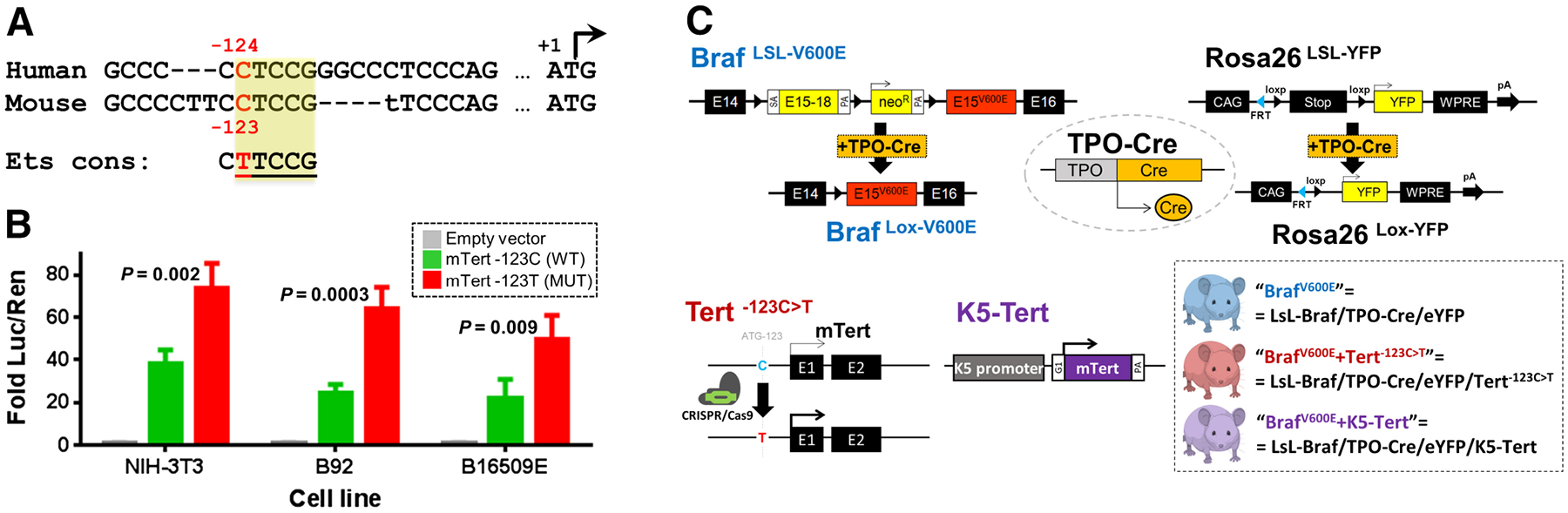
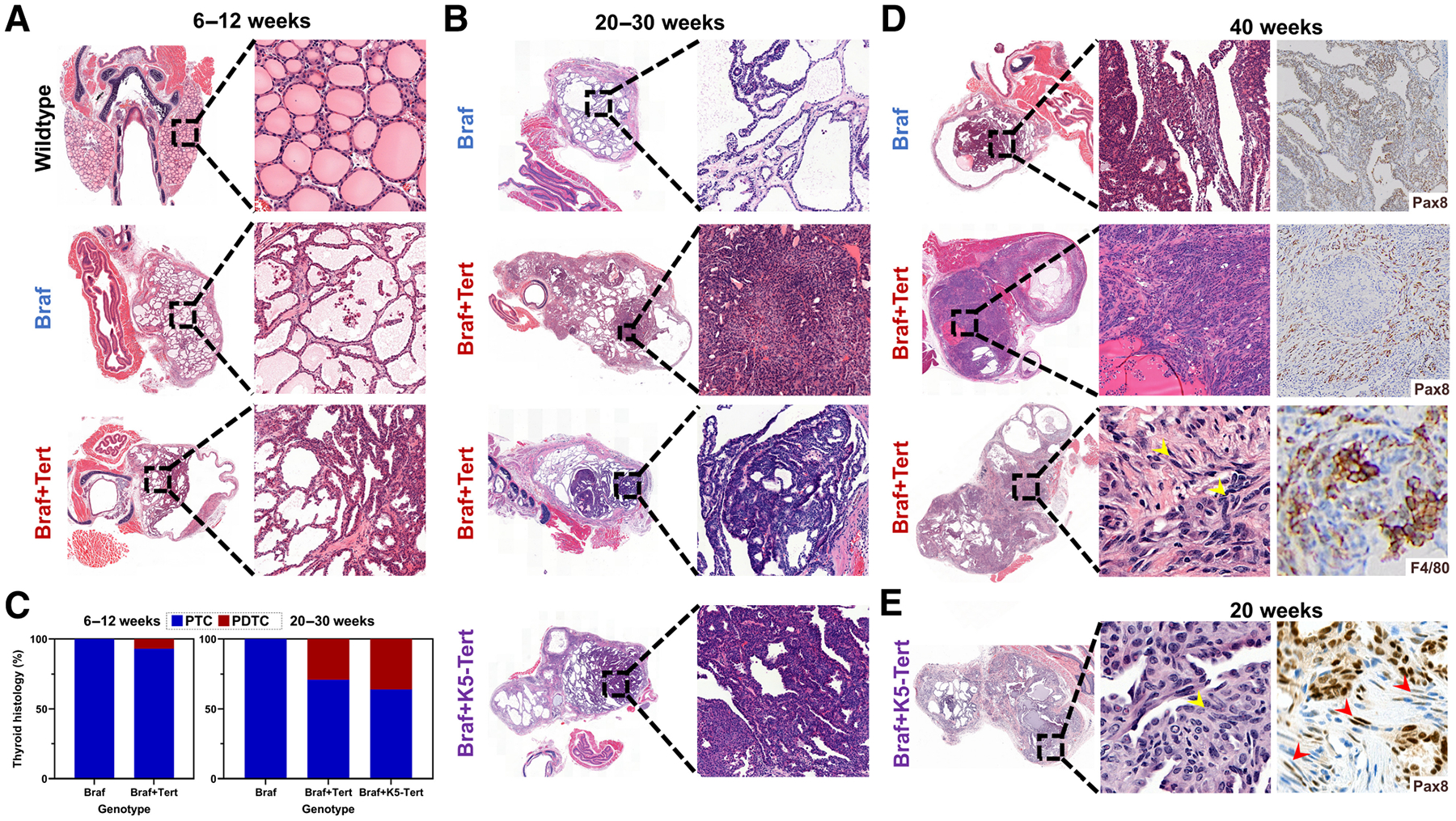
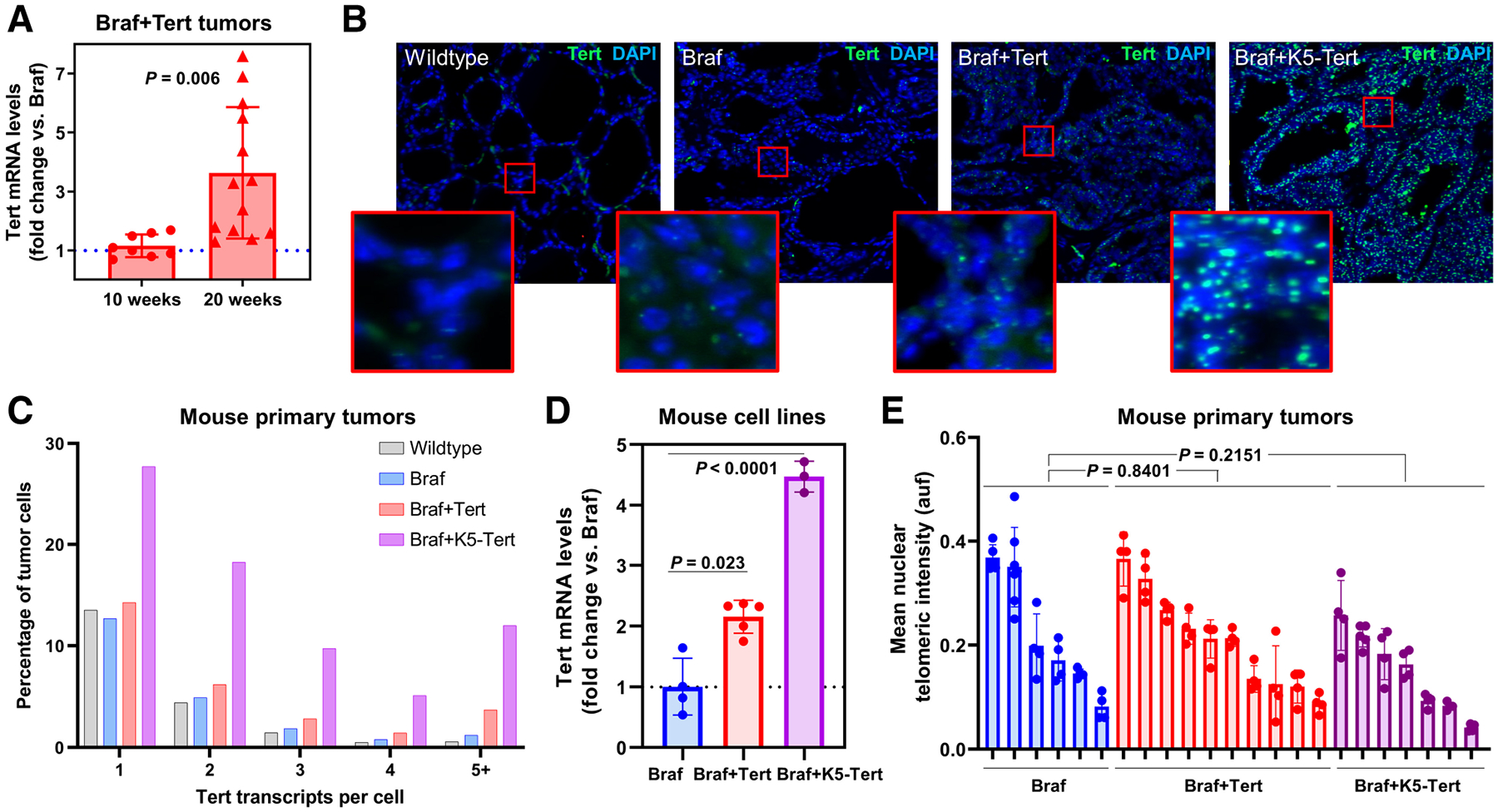
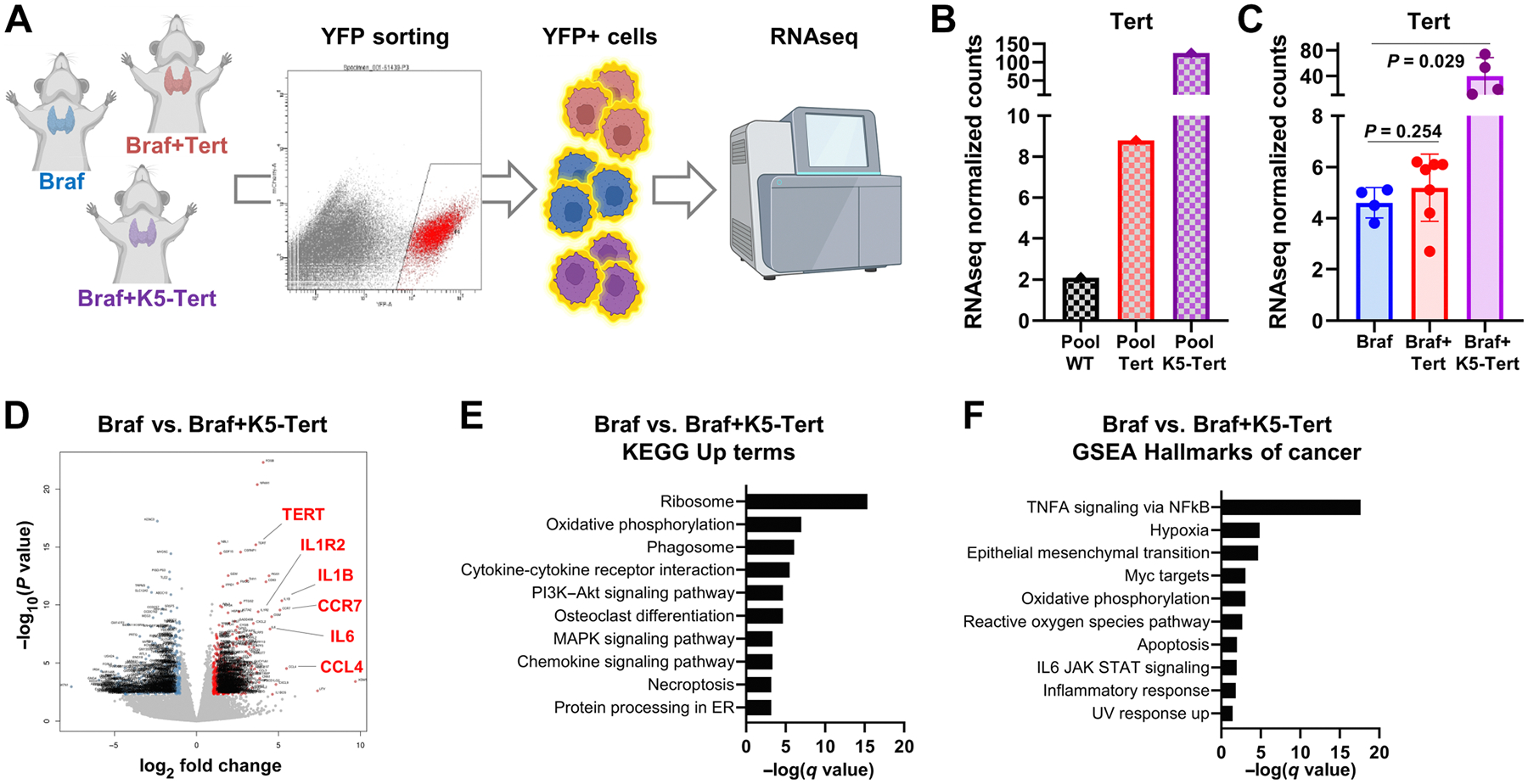
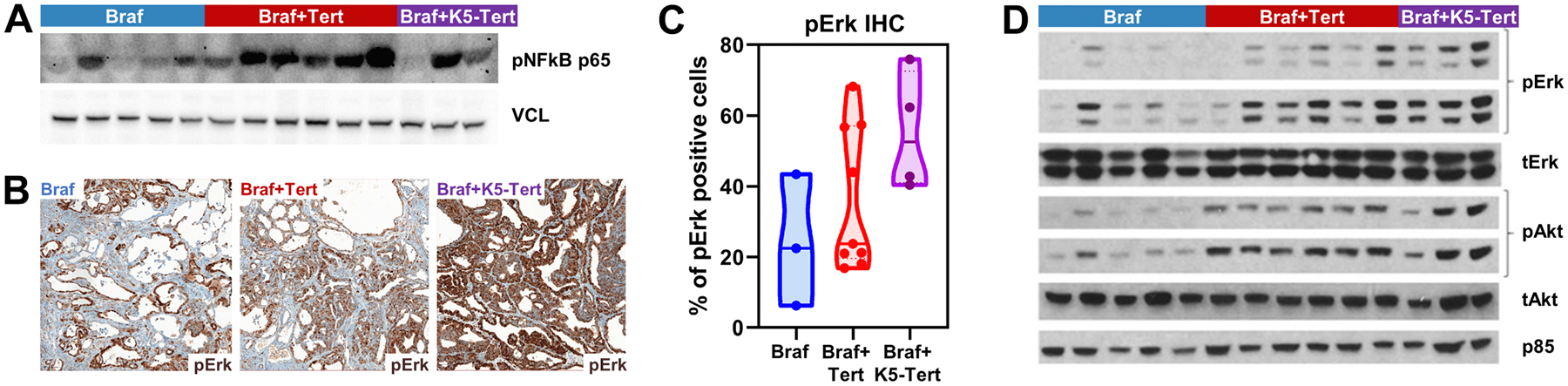
Mutations in the promoter of the telomerase reverse transcriptase (TERT) gene are the paradigm of a cross-cancer alteration in a noncoding region. TERT promoter mutations (TPM) are biomarkers of poor prognosis in cancer, including thyroid tumors. TPMs enhance TERT transcription, which is otherwise silenced in adult tissues, thus reactivating a bona fide oncoprotein. To study TERT deregulation and its downstream consequences, we generated a Tert mutant promoter mouse model via CRISPR/Cas9 engineering of the murine equivalent locus (Tert-123C>T) and crossed it with thyroid-specific BrafV600E-mutant mice. We also employed an alternative model of Tert overexpression (K5-Tert). Whereas all BrafV600E animals developed well-differentiated papillary thyroid tumors, 29% and 36% of BrafV600E+Tert-123C>T and BrafV600E+K5-Tert mice progressed to poorly differentiated cancers at week 20, respectively. Tert-upregulated tumors showed increased mitosis and necrosis in areas of solid growth, and older animals displayed anaplastic-like features, that is, spindle cells and macrophage infiltration. Murine TPM increased Tert transcription in vitro and in vivo, but temporal and intratumoral heterogeneity was observed. RNA-sequencing of thyroid tumor cells showed that processes other than the canonical Tert-mediated telomere maintenance role operate in these specimens. Pathway analysis showed that MAPK and PI3K/AKT signaling, as well as processes not previously associated with this tumor etiology, involving cytokine, and chemokine signaling, were overactivated. These models constitute useful preclinical tools to understand the cell-autonomous and microenvironment-related consequences of Tert-mediated progression in advanced thyroid cancers and other aggressive tumors carrying TPMs.
Implications: Telomerase-driven cancer progression activates pathways that can be dissected and perhaps therapeutically exploited.
©2023 American Association for Cancer Research.
Figures
Update of
-
Telomerase reactivation induces progression of mouse Braf V600E -driven thyroid cancers without telomere lengthening.bioRxiv [Preprint]. 2023 Jan 24:2023.01.24.525280. doi: 10.1101/2023.01.24.525280. bioRxiv. 2023. Update in: Mol Cancer Res. 2023 Nov 1;21(11):1163-1175. doi: 10.1158/1541-7786.MCR-23-0144. PMID: 36747657 Free PMC article. Updated. Preprint.
References
-
- Horn S, Figl A, Rachakonda PS, Fischer C, Sucker A, Gast A, et al. TERT promoter mutations in familial and sporadic melanoma. Science 2013;339:959–61. - PubMed
Publication types
MeSH terms
Substances
Grants and funding
LinkOut - more resources
Full Text Sources
Medical
Molecular Biology Databases
Research Materials