


How do spine surgeons cope with psychological distress: results of a cross-sectional study
- PMID: 37481596
- PMCID: PMC10363079
- DOI: 10.1007/s10143-023-02088-z
How do spine surgeons cope with psychological distress: results of a cross-sectional study
Abstract
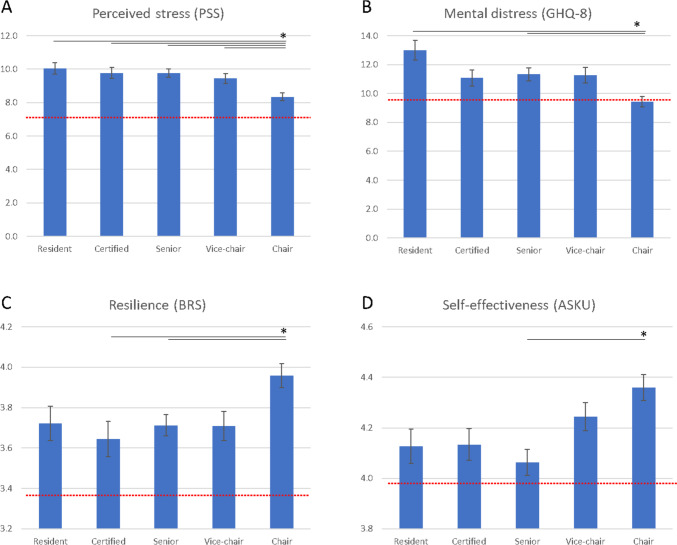
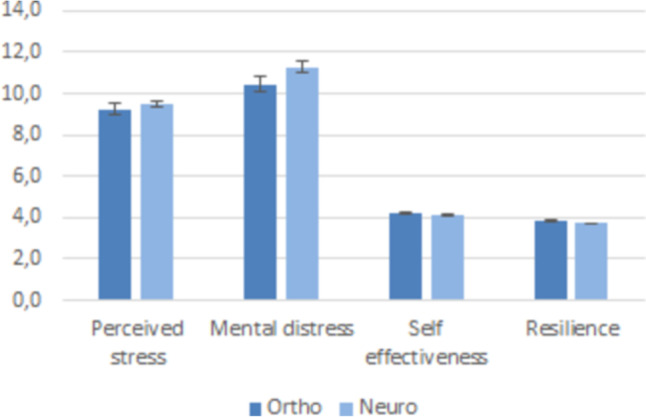
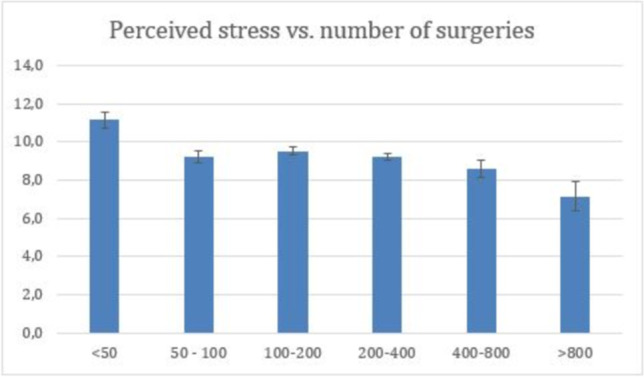
Cross Sectional Study/Online Survey. In this study, we sought to assess stress, psychological distress, resilience, and coping strategies among spine surgeons in German-speaking countries. Recent studies have reported high rates of stress and burnout among surgeons. A survey via Survey Monkey™ was conducted among spine surgeons practicing in German-speaking countries using validated questionnaires for perceived stress, mental burden, resilience, and quality of life. Data on working situation and demographics were also collected. 582 surgeons responded to the survey, representing 15% of those surveyed. 79% of respondents were satisfied with their professional success. Mental burden was higher than in the general population, as was perceived stress. Chairpersons were exposed to the lowest levels of perceived stress and mental burden. Mental distress was high (GHQ ≥ 12) in 59% of residents and 27% chairpersons. Self-reported psychological resilience was higher than levels found in the general population and highest among chairpersons. Quality of life was comparable to levels reported in the general population. There were statistically significant correlations between perceived stress and mental burden scores (r s = 0.65, p < 0.001). Career level (senior physicians vs. residents, OR 0.26; 95% CI 0.10-0.66), perceived stress (OR 1.54; 95% CI 1.33-1.77), self-reported resilience (OR 0.53; 95% CI 0.33-0.84), and mental composite score (SOR 0.86; 95% CI 0.83-0.90) were predictors of high mental burden. There was no interaction between perceived stress and resilience on mental burden (p = 0.835). Spine surgeons are exposed to higher levels of stress than the general population, which are associated with higher mental distress. More professional experience and higher levels of psychological resilience are associated with lower levels of stress.
Keywords: Burnout; Coping; Depression; Mental health; Psychological stress; Quality of life; Resilience; Surgeons; Survey; Working conditions.
© 2023. The Author(s).
Conflict of interest statement
The authors have no competing interests as defined by Springer, or other interests that might be perceived to influence the results and/or discussion reported in this paper.
The authors report no conflicts of interest.
Figures


References
MeSH terms
LinkOut - more resources
Full Text Sources
