


Computerized working memory training for hypertensive individuals with executive function impairment: a randomized clinical trial
- PMID: 37483358
- PMCID: PMC10361818
- DOI: 10.3389/fnins.2023.1185768
Computerized working memory training for hypertensive individuals with executive function impairment: a randomized clinical trial
Abstract
Background: Hypertension is associated with working memory (WM) impairment. However, the benefits of Cogmed WM training for the hypertensive population are unknown. Therefore, we aimed to evaluate Cogmed's effects on the WM performance of hypertensive individuals with executive function (EF) impairment.
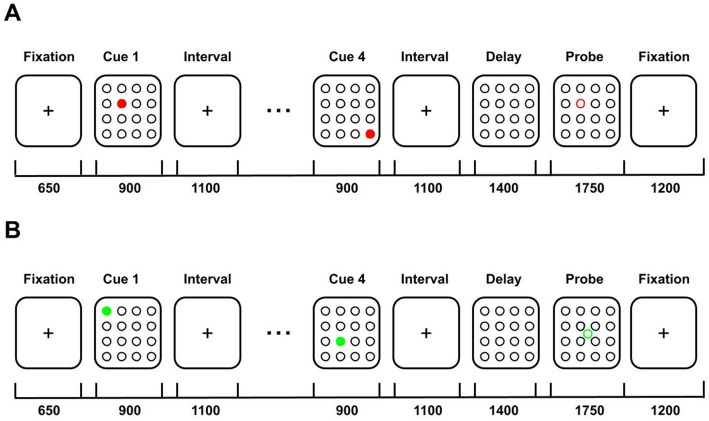
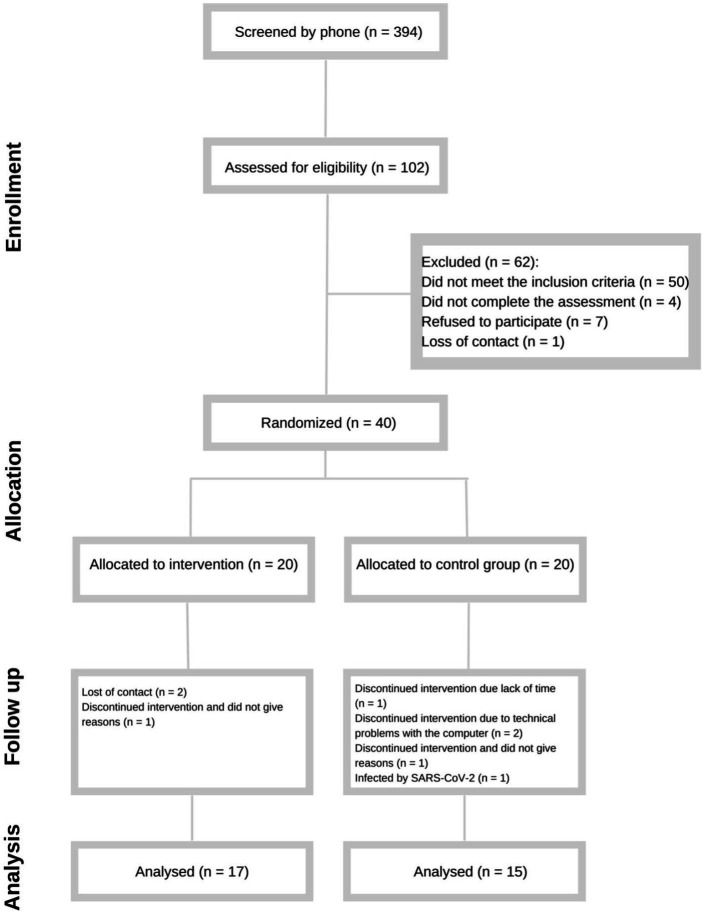
Methods: We included 40 hypertensive patients (aged 40-70 years, 68% female) with EF impairment. They were randomized in a 1:1 ratio to receive 10 weeks of adaptive Cogmed training or a non-adaptive control training based on online games. The primary outcome was the WM performance. The secondary outcomes were verbal memory, visuospatial ability, executive function, global cognition, and the neuronal activity measured using functional magnetic resonance imaging (fMRI) under two WM task conditions: low (memorization of 4 spatial locations) and high (memorization of 6 spatial locations). An intention-to-treat (ITT) and per-protocol (PP) analysis were performed.
Results: Cogmed did not show a significant effect on WM or any other cognitive outcome post-training. However, under the WM-low load and WM-high load conditions of the fMRI, respectively, the Cogmed group had an activation decrease in the right superior parietal lobe (ITT and PP analyses) and left inferior frontal lobe (PP analysis) in comparison to the control group.
Conclusion: The Cogmed showed no effects on the WM performance of hypertensive individuals with EF impairment. However, activation decreases were observed in frontoparietal areas related to the WM network, suggesting a more efficient neuronal activity after training.
Keywords: cognitive dysfunction; executive function; hypertension; magnetic resonance imaging; rehabilitation.
Copyright © 2023 Paradela, Cabella, Nucci, Ferreira, Torres, Martino, Consolim-Colombo, Bortolotto, da Costa and Irigoyen.
Conflict of interest statement
The authors declare that the research was conducted in the absence of any commercial or financial relationships that could be construed as a potential conflict of interest.
Figures

References
-
- Anderson P. J., Lee K. J., Roberts G., Spencer-Smith M. M., Thompson D. K., Seal M. L., et al. . (2018). Long-term academic functioning following Cogmed working memory training for children born extremely preterm: a randomized controlled trial. J. Pediatr. 202, 92–97.e4. doi: 10.1016/j.jpeds.2018.07.003, PMID: - DOI - PubMed
LinkOut - more resources
Full Text Sources
Miscellaneous
