


Subtractive proteomics analysis to uncover the potent drug targets for distinctive drug design of Candidaauris
- PMID: 37484251
- PMCID: PMC10361121
- DOI: 10.1016/j.heliyon.2023.e17026
Subtractive proteomics analysis to uncover the potent drug targets for distinctive drug design of Candidaauris
Abstract
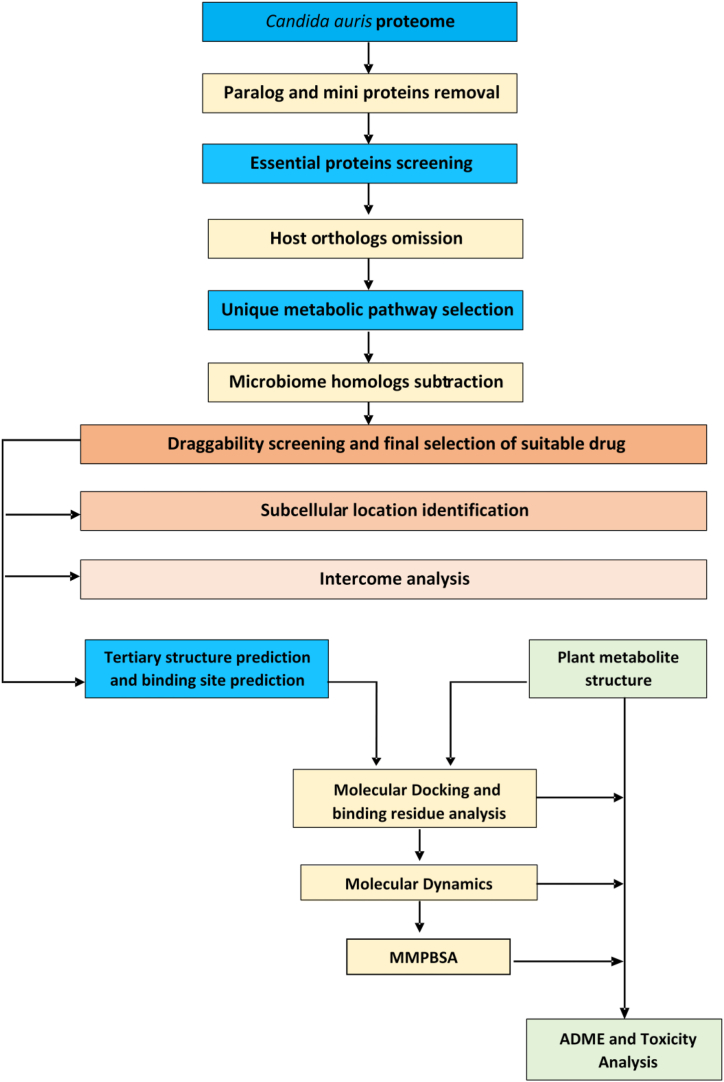
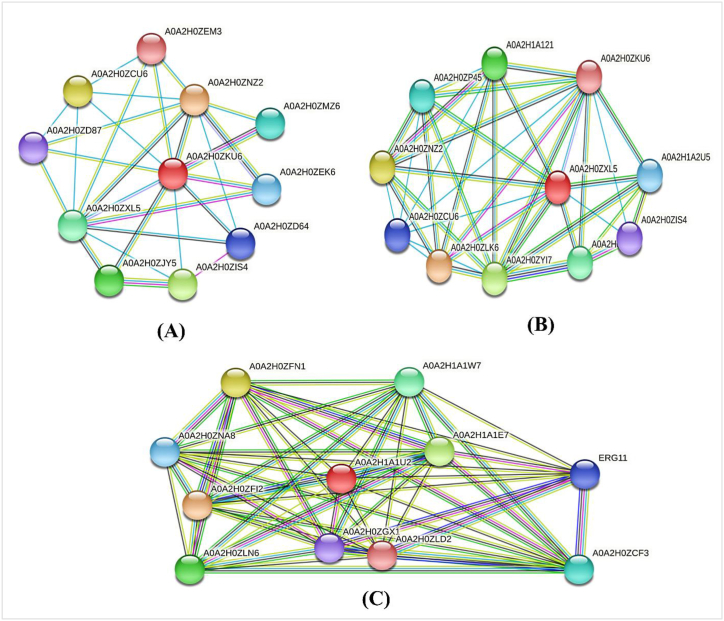
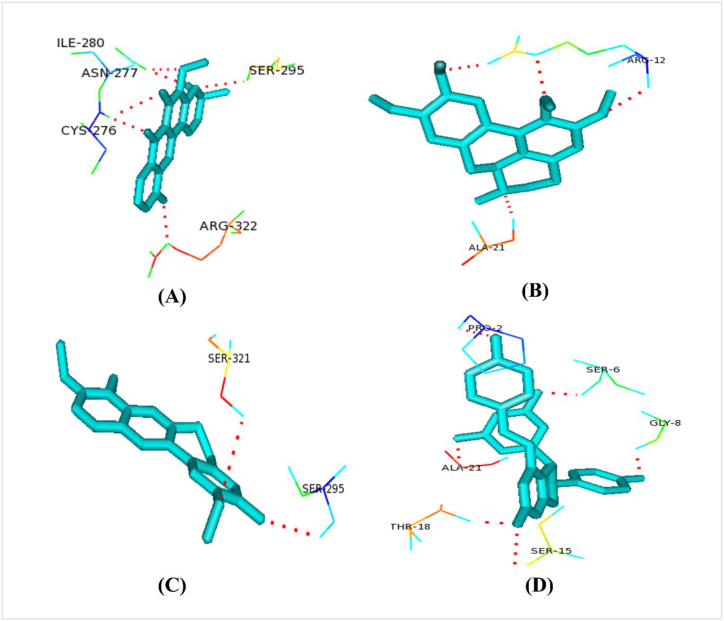
Candida auris is a serious health concern of the current world that possesses a serious global health threat and is emerging at a high rate. Available antifungal drugs are failing to combat this pathogen as they are growing resistant to those drugs and some strains have already shown resistance to all three available antifungal drugs in the market. Hence, finding alternative therapies is essential for saving lives from this enemy. To make the development of new treatments easier, we conducted some in silico study of this pathogen to discover possible targets for drug design and also recommended some possible metabolites to test in vivo circumstances. The complete proteome of the representative strain was retrieved, and the duplicate, non-essential, human homologous, non-metabolic, and druggable proteins were then eliminated. As a result, out of a total of 5441 C. auris proteins, we were able to isolate three proteins (XP 028890156.1, XP 028891672.1, and XP 028891858.1) that are crucial for the pathogen's survival as well as host-non-homolog, metabolic, and unrelated proteins to the human microbiome. Their subcellular locations and interactions with a large number of proteins (10 proteins) further point to them being good candidates for therapeutic targets. Following in silico docking of 29 putative antifungals of plant origin against the three proteins we chose, Caledonixanthone E, Viniferin, Glaucine, and Jatrorrhizine were discovered to be the most effective means of inhibiting those proteins since they displayed higher binding affinities (ranging from -28.97 kcal/mol to -51.99 kcal/mol) than the control fluconazole (which ranged between -28.84 kcal/mol and -41.15 kcal/mol). According to the results of MD simulations and MM-PBSA calculations, Viniferin and Caledonixanthone E are the most effective ligands for the proteins XP 028890156.1, XP 028891672.1, and XP 028891858.1. Furthermore, they were predicted to be safe and also showed proper ADME properties.
Keywords: Candida auris; Drug targets; In silico approach; MD simulation; Molecular docking; Potential drugs.
© 2023 The Authors.
Conflict of interest statement
The authors declare that they have no known competing financial interests or personal relationships that could have appeared to influence the work reported in this paper.
Figures






References
-
- Hata D.J., et al. Candida auris: an emerging yeast pathogen posing distinct challenges for laboratory diagnostics, treatment, and infection prevention. Arch. Pathol. Lab Med. 2020;144(1):107–114. - PubMed
LinkOut - more resources
Full Text Sources
