Exome Sequencing and the Identification of New Genes and Shared Mechanisms in Polymicrogyria
- PMID: 37486637
- PMCID: PMC10366952
- DOI: 10.1001/jamaneurol.2023.2363
Exome Sequencing and the Identification of New Genes and Shared Mechanisms in Polymicrogyria
Abstract
Importance: Polymicrogyria is the most commonly diagnosed cortical malformation and is associated with neurodevelopmental sequelae including epilepsy, motor abnormalities, and cognitive deficits. Polymicrogyria frequently co-occurs with other brain malformations or as part of syndromic diseases. Past studies of polymicrogyria have defined heterogeneous genetic and nongenetic causes but have explained only a small fraction of cases.
Objective: To survey germline genetic causes of polymicrogyria in a large cohort and to consider novel polymicrogyria gene associations.
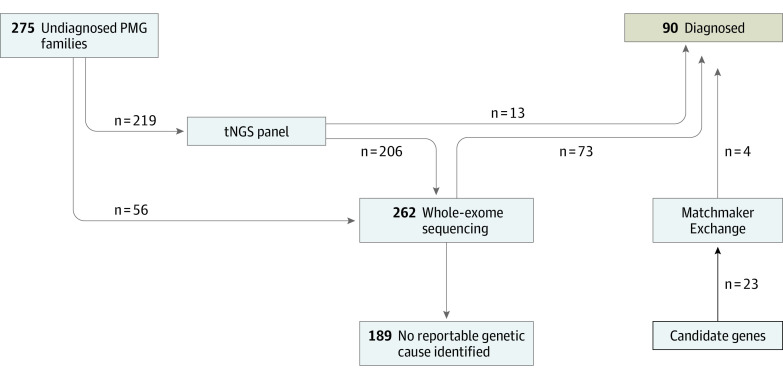
Design, setting, and participants: This genetic association study analyzed panel sequencing and exome sequencing of accrued DNA samples from a retrospective cohort of families with members with polymicrogyria. Samples were accrued over more than 20 years (1994 to 2020), and sequencing occurred in 2 stages: panel sequencing (June 2015 to January 2016) and whole-exome sequencing (September 2019 to March 2020). Individuals seen at multiple clinical sites for neurological complaints found to have polymicrogyria on neuroimaging, then referred to the research team by evaluating clinicians, were included in the study. Targeted next-generation sequencing and/or exome sequencing were performed on probands (and available parents and siblings) from 284 families with individuals who had isolated polymicrogyria or polymicrogyria as part of a clinical syndrome and no genetic diagnosis at time of referral from clinic, with sequencing from 275 families passing quality control.
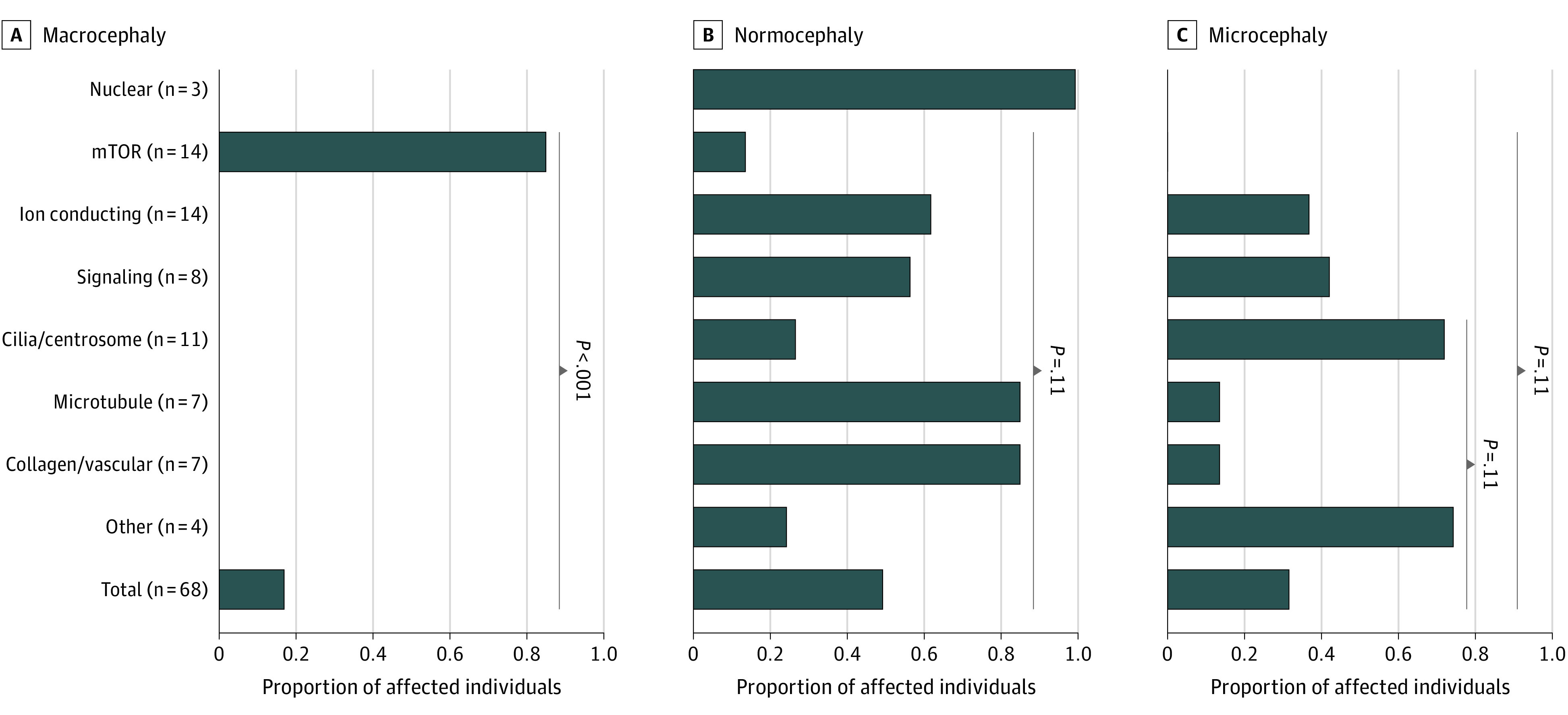
Main outcomes and measures: The number of families in whom genetic sequencing yielded a molecular diagnosis that explained the polymicrogyria in the family. Secondarily, the relative frequency of different genetic causes of polymicrogyria and whether specific genetic causes were associated with co-occurring head size changes were also analyzed.
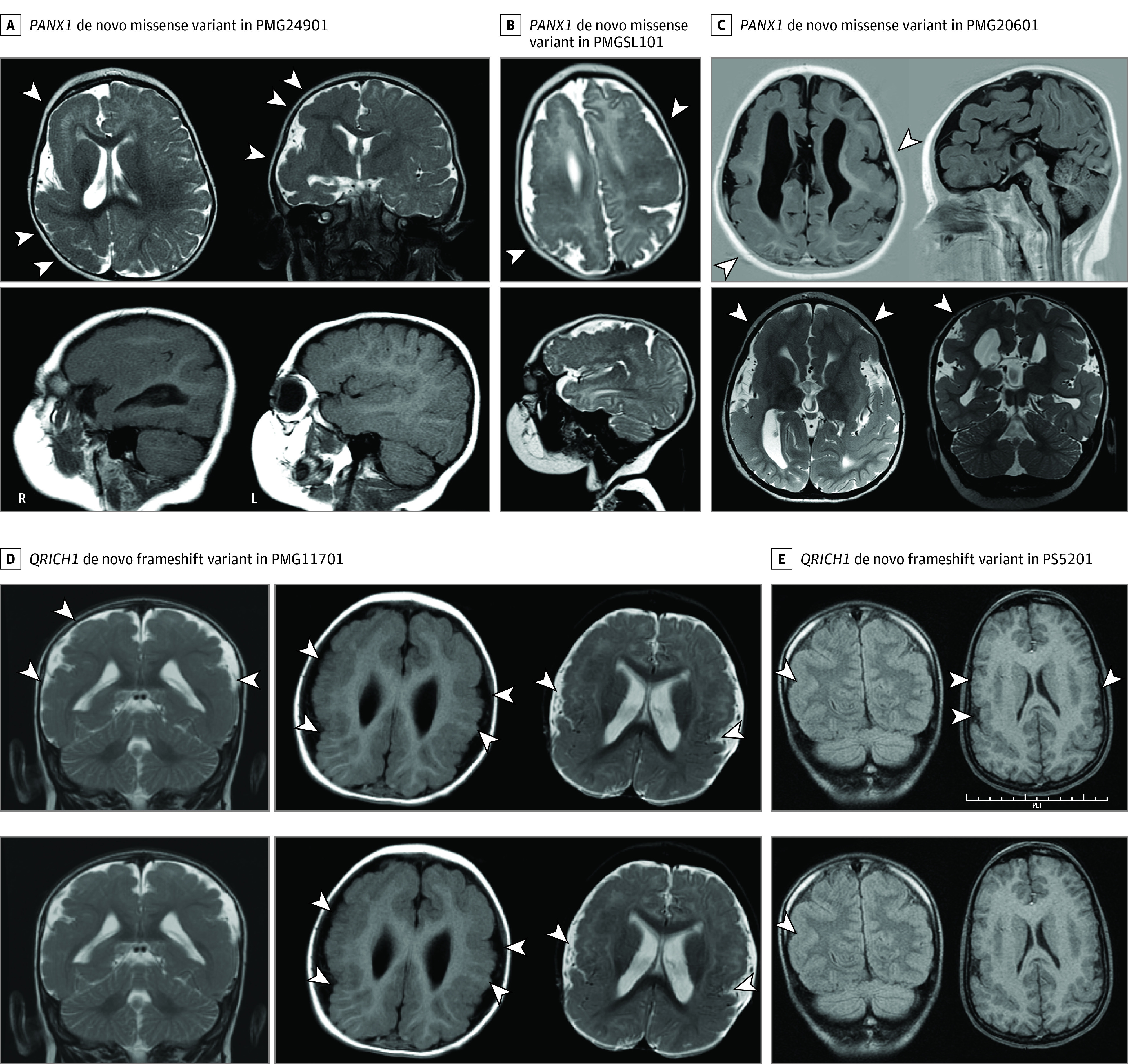
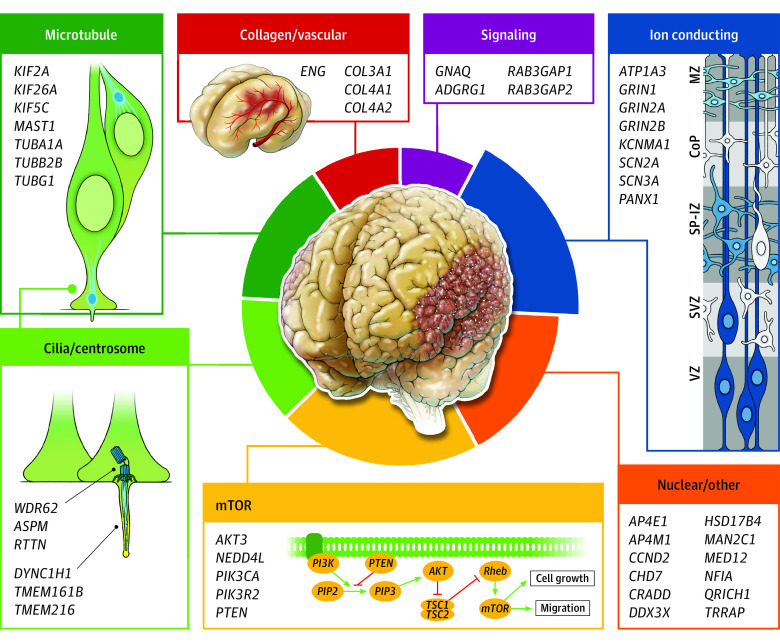
Results: In 32.7% (90 of 275) of polymicrogyria-affected families, genetic variants were identified that provided satisfactory molecular explanations. Known genes most frequently implicated by polymicrogyria-associated variants in this cohort were PIK3R2, TUBB2B, COL4A1, and SCN3A. Six candidate novel polymicrogyria genes were identified or confirmed: de novo missense variants in PANX1, QRICH1, and SCN2A and compound heterozygous variants in TMEM161B, KIF26A, and MAN2C1, each with consistent genotype-phenotype relationships in multiple families.
Conclusions and relevance: This study's findings reveal a higher than previously recognized rate of identifiable genetic causes, specifically of channelopathies, in individuals with polymicrogyria and support the utility of exome sequencing for families affected with polymicrogyria.
Conflict of interest statement
Figures
References
-
- Stutterd CA, Dobyns WB, Jansen A, Mirzaa G, Leventer RJ. Polymicrogyria overview. In: Adam MP, Mirzaa GM, Pagon RA, eds. GeneReviews. University of Washington; 2018. - PubMed
Publication types
MeSH terms
Substances
Grants and funding
LinkOut - more resources
Full Text Sources
Miscellaneous