Review
. 2023 Jul-Aug;21(4):358-369.
doi: 10.1370/afm.2995.

Comparative Efficacy of Pharmacological Treatments for Acne Vulgaris: A Network Meta-Analysis of 221 Randomized Controlled Trials

Affiliations
Review

Comparative Efficacy of Pharmacological Treatments for Acne Vulgaris: A Network Meta-Analysis of 221 Randomized Controlled Trials

Chung-Yen Huang et al. Ann Fam Med. 2023 Jul-Aug.

Abstract

Purpose: Acne is an extremely common skin disease with an estimated global prevalence of 9.4%. We aim to provide comprehensive comparisons of the common pharmacological treatments for acne.

Methods: Randomized controlled trials comparing the efficacy of pharmacological therapies for acne vulgaris in patients of any age and sex and with a treatment duration of >2 weeks were included. PubMed and Embase databases were searched from inception until February 2022. Our prespecified primary end points were mean percentage reduction in total, inflammatory, and noninflammatory lesions. Treatment ranking was determined by P values.

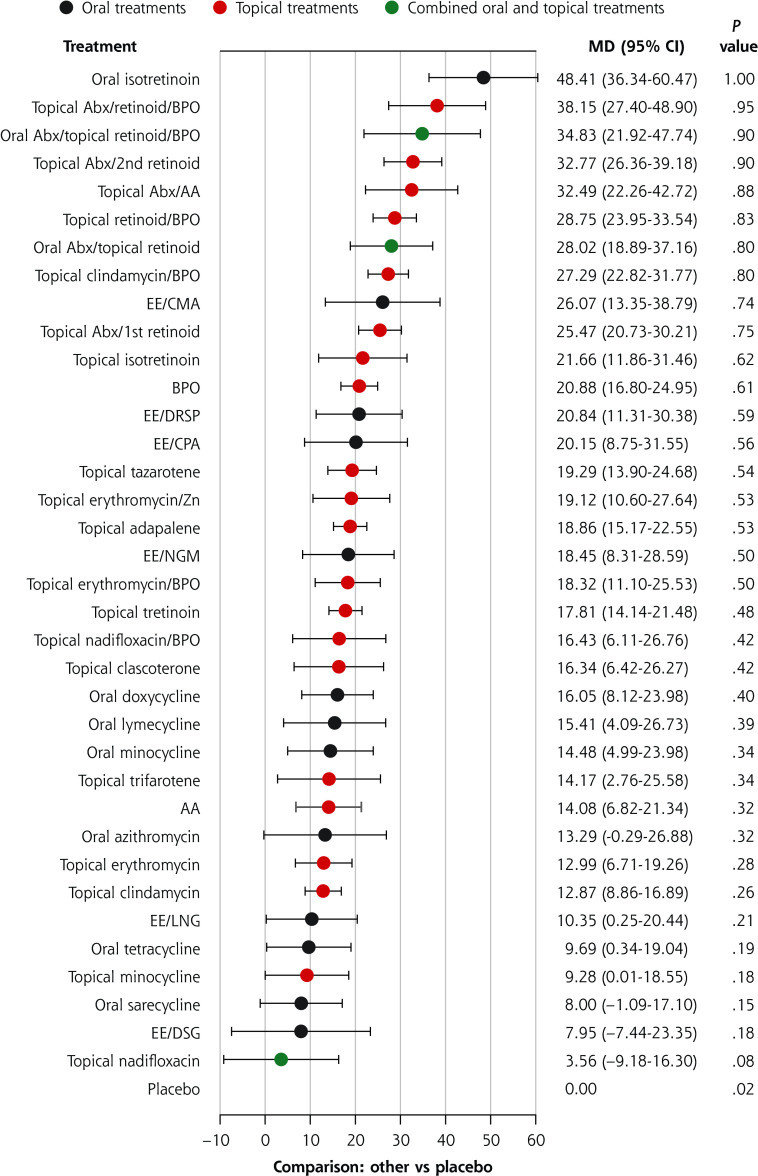
Results: There were 210 articles describing 221 trials and 37 interventions included in the analysis. Our primary analysis of percentage reduction in total lesion count had 65,601 patients enrolled. Across all trials, the mean age was 20.4 years. The median duration of treatment was 12 weeks. The median total, inflammatory, and noninflammatory lesion counts were 72, 27, and 44, respectively. The most effective treatment was oral isotretinoin (mean difference [MD] = 48.41; P = 1.00), followed by triple therapy containing a topical antibiotic, a topical retinoid, and benzoyl peroxide (BPO) (MD = 38.15; P = .95) and by triple therapy containing an oral antibiotic, a topical retinoid, and BPO (MD = 34.83; P = .90). For monotherapies, oral or topical antibiotics or topical retinoids have comparable efficacy for inflammatory lesions, while oral or topical antibiotics have less effect on noninflammatory lesions.

Conclusion: The most effective treatment for acne is oral isotretinoin, followed by triple therapies containing a topical retinoid, BPO, and an antibiotic. We present detailed comparisons of each intervention to serve as a practical database.

Keywords: acne vulgaris; anti-bacterial agents; drug therapy; network meta-analysis; retinoids.


Figures

Figure 1.
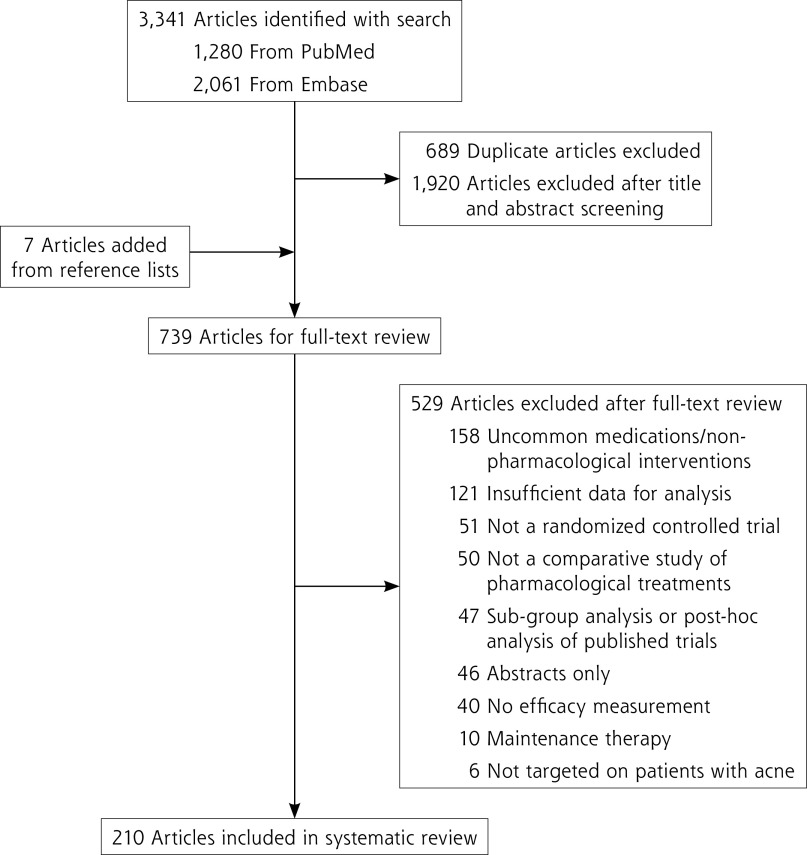
Figure 1.
Flow diagram of selection of included articles.
Figure 2a.
Figure 2a.
Estimates of the percentage reduction in total lesion count for different treatments compared with placebo in the primary analysis. AA = azelaic acid; Abx = antibiotic; BPO = benzoyl peroxide; CMA = chlormadinone acetate; CPA = cyproterone acetate; DRSP = drospirenone; DSG = desogestrel; EE = ethinyl estradiol; LNG = levonorgestrel; MD = mean difference; NGM = norgestimate; Zn = zinc. Note: Forest plots of MD and 95% CI in percentage reduction of compared with placebo in a random effects model.
Figure 2b.
Figure 2b.
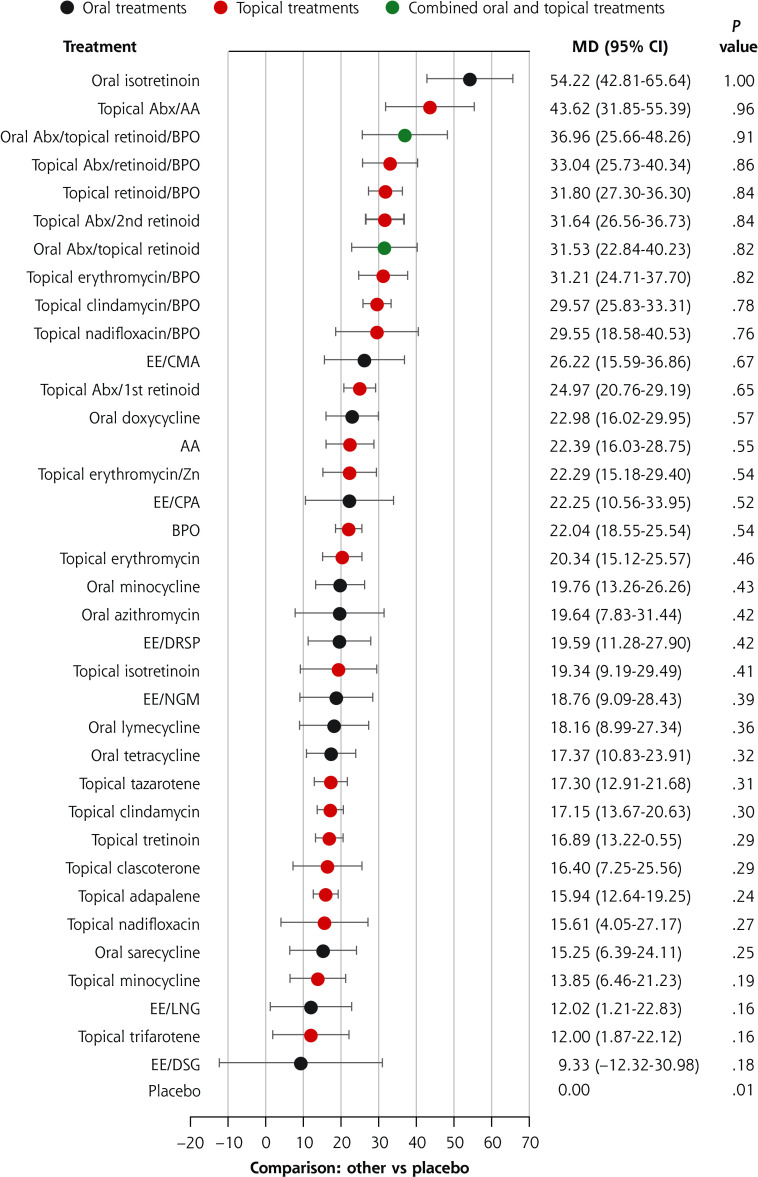
Estimates of the percentage reduction in inflammatory lesion count for different treatments compared with placebo in the primary analysis. AA = azelaic acid; Abx = antibiotic; BPO = benzoyl peroxide; CMA = chlormadinone acetate; CPA = cyproterone acetate; DRSP = drospirenone; DSG = desogestrel; EE = ethinyl estradiol; LNG = levonorgestrel; MD = mean difference; NGM = norgestimate; Zn = zinc. Note: Forest plots of MD and 95% CI in percentage reduction compared with placebo in a random effects model.
Figure 2c.
Figure 2c.
Estimates of the percentage reduction in noninflammatory lesion count for different treatments compared with placebo in the primary analysis. AA = azelaic acid; Abx = antibiotic; BPO = benzoyl peroxide; CMA = chlormadinone acetate; CPA = cyproterone acetate; DRSP = drospirenone; DSG = desogestrel; EE = ethinyl estradiol; LNG = levonorgestrel; MD = mean difference; NGM = norgestimate; Zn = zinc. Note: Forest plots of MD and 95% CI in percentage reduction compared with placebo in a random effects model.
Figure 3a.
Figure 3a.
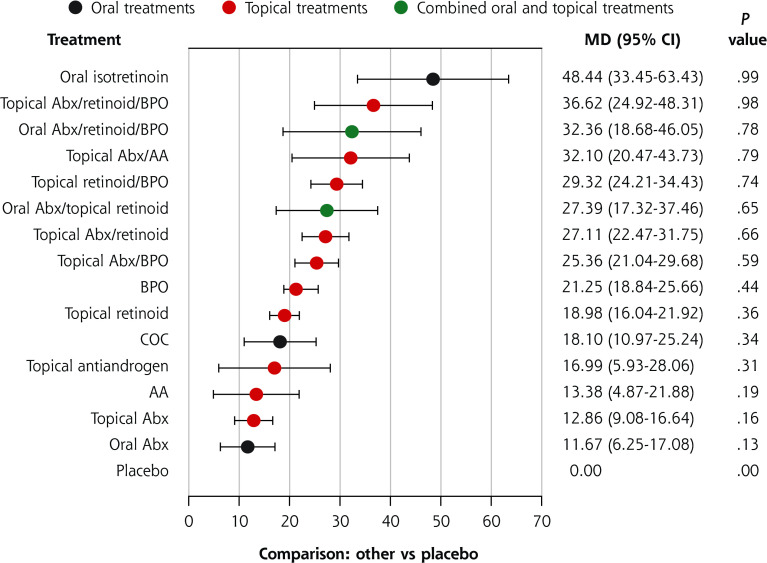
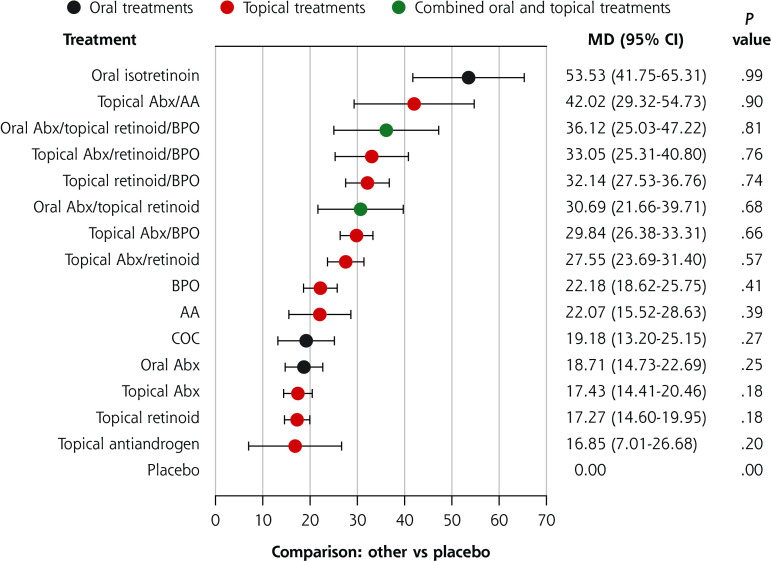
Forest plot estimates of the percentage reduction in total lesion count compared with placebo in the simplified network. AA = azelaic acid; Abx = antibiotic; BPO = benzoyl peroxide; COC = combination oral contraceptives; MD = mean difference. Note: Forest plots of MD and 95% CI in percentage reduction compared with placebo in a random effects model.
Figure 3b.
Figure 3b.
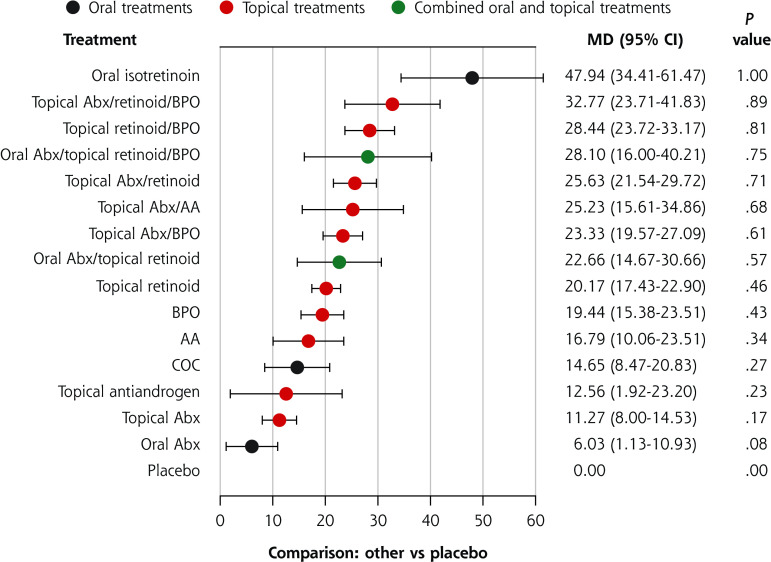
Estimates of the percentage reduction in inflammatory lesion count compared with placebo in the simplified network. AA = azelaic acid; Abx = antibiotic; BPO = benzoyl peroxide; COC = combination oral contraceptives; MD = mean difference. Note: Forest plots of MD and 95% CI in percentage reduction compared with placebo in a random effects model.
Figure 3c.
Figure 3c.
Estimates of the percentage reduction in noninflammatory lesion count compared with placebo in the simplified network. AA = azelaic acid; Abx = antibiotic; BPO = benzoyl peroxide; COC = combination oral contraceptives; MD = mean difference. Note: Forest plots of MD and 95% CI in percentage reduction compared with placebo in a random effects model.
Figure 4a.
Figure 4a.
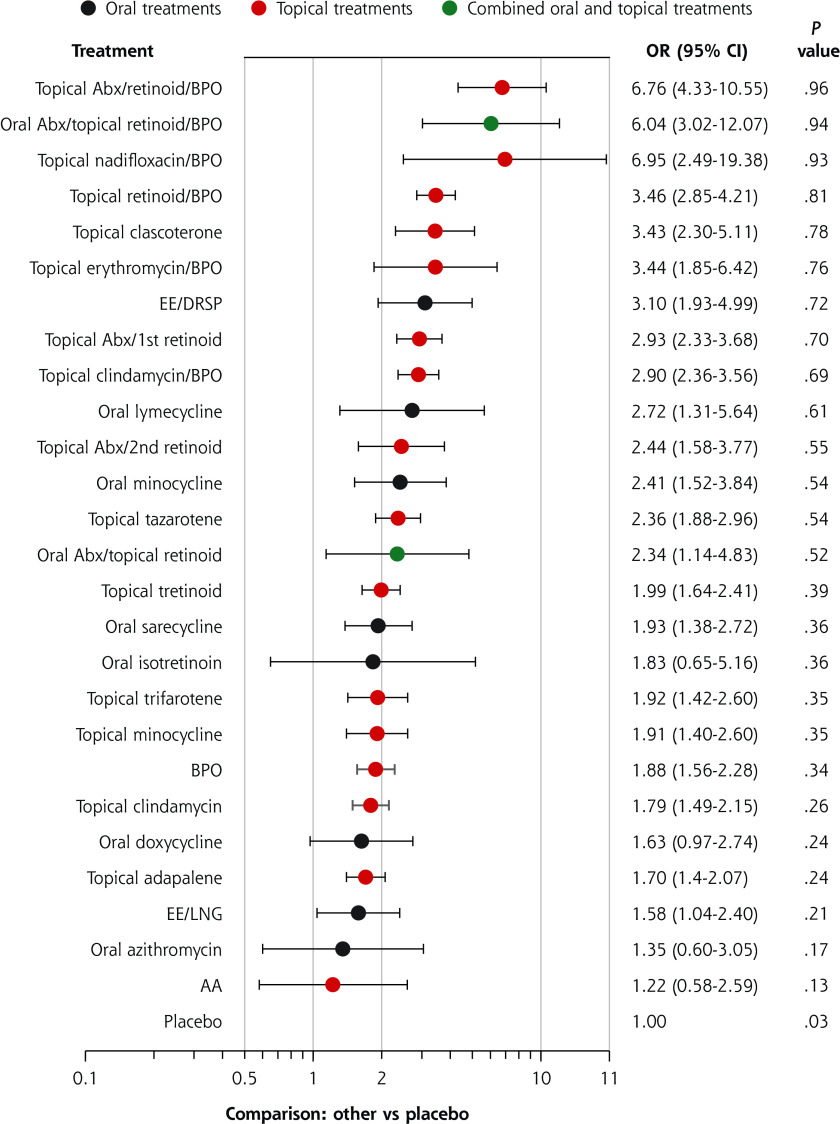
Estimates of the treatment success evaluated by Investigator’s Global Assessment compared with placebo. AA = azelaic acid; Abx = antibiotic; BPO = benzoyl peroxide; DRSP = drospirenone; EE = ethinyl estradiol; IGA = Investigator’s Global Assessment; LNG = levonorgestrel; OR = odds ratio. Note: Forest plots of OR and 95% CI for treatment success measured by IGA compared with placebo in a random effects model.
Figure 4b.
Figure 4b.
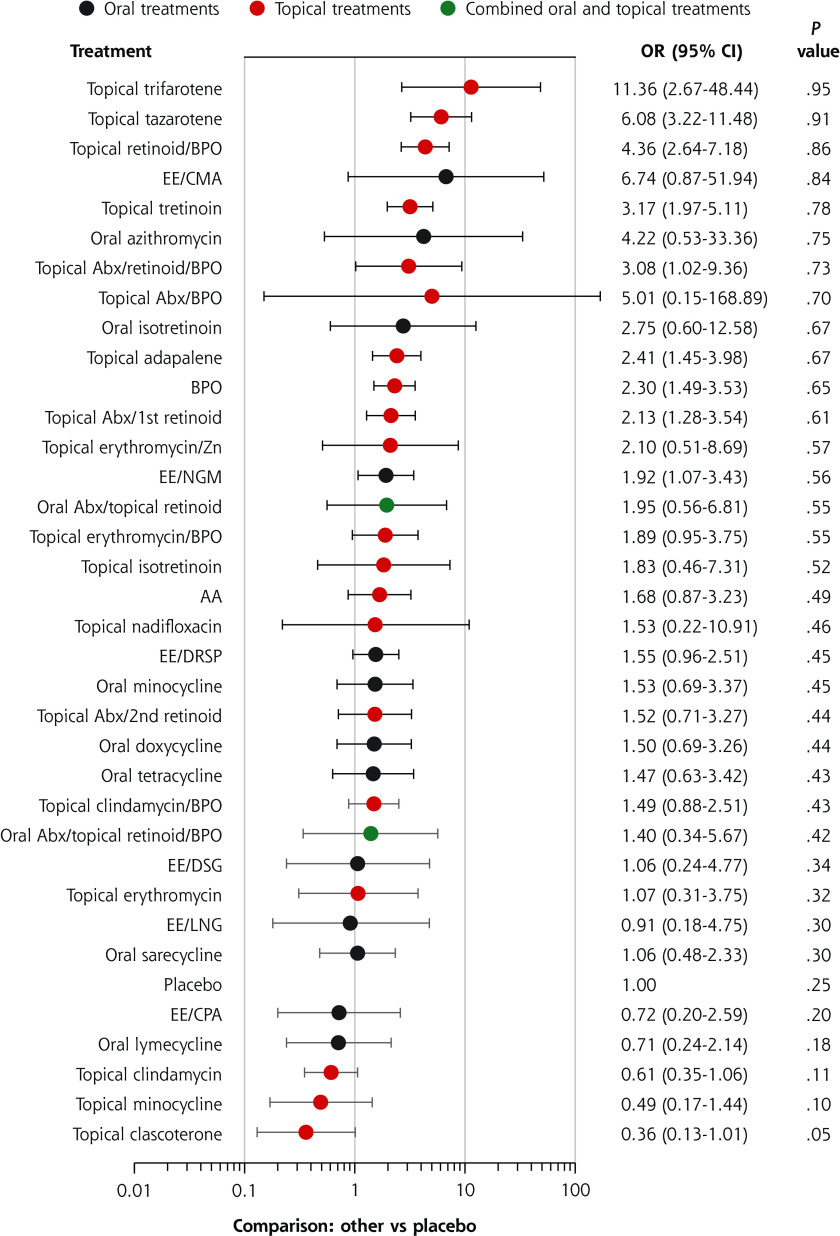
Estimates of the discontinuations due to adverse events compared with placebo. AA = azelaic acid; Abx = antibiotic; AE = adverse event; BPO = benzoyl peroxide; CMA = chlormadinone acetate; CPA = cyproterone acetate; DRSP = drospirenone; DSG = desogestrel; EE = ethinyl estradiol; LNG = levonorgestrel; NGM = norgestimate; OR = odds ratio; Zn = zinc. Note: Forest plots of OR and 95% CI for discontinuations due to AEs compared with placebo in a random effects model.
Figure 5a.
Figure 5a.
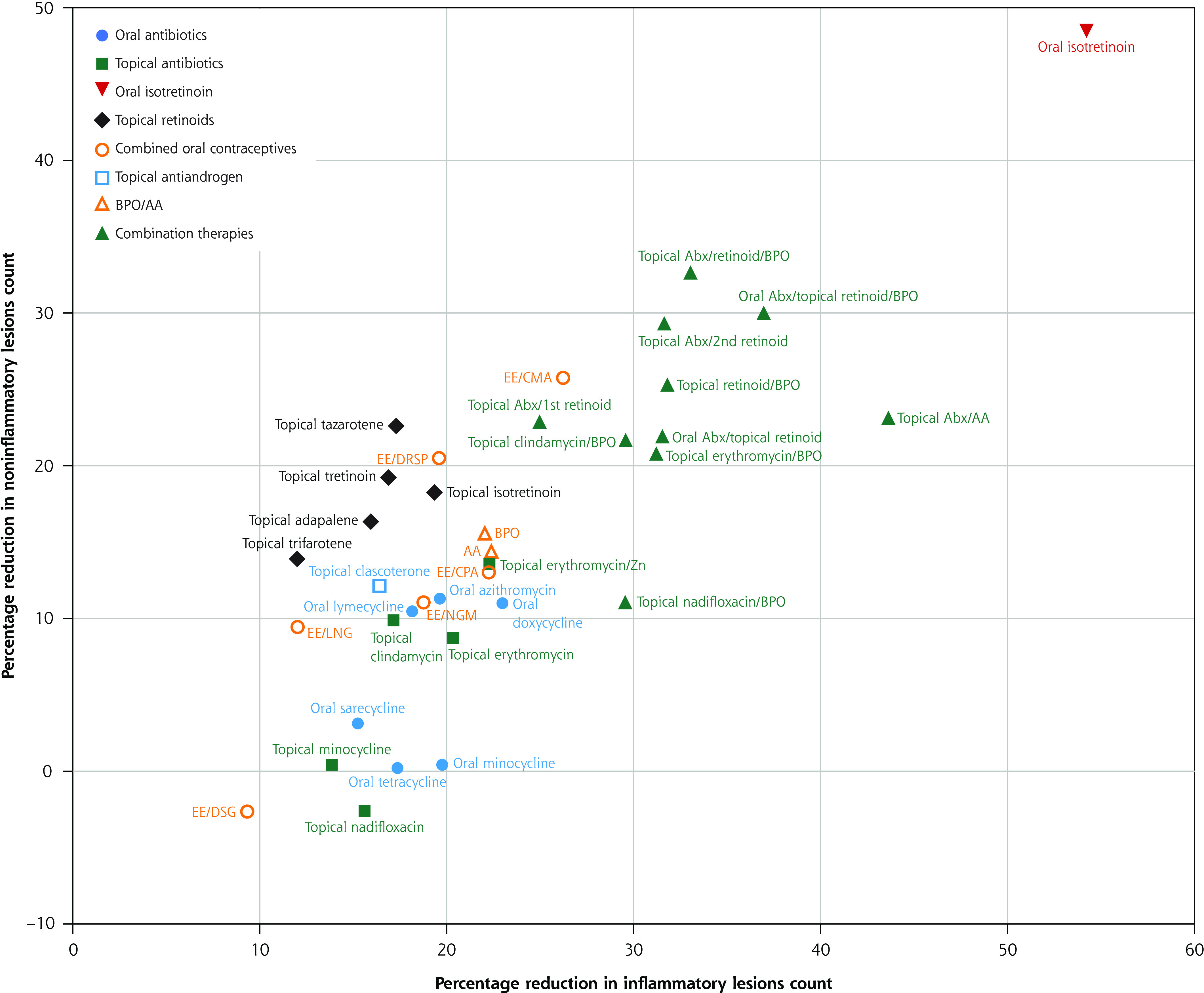
Biplots of reduction in inflammatory and noninflammatory lesion counts in the primary analysis. AA = azelaic acid; Abx = antibiotic; BPO = benzoyl peroxide; CMA = chlormadinone acetate; CPA = cyproterone acetate; DRSP = drospirenone; DSG = desogestrel; EE = ethinyl estradiol; LNG = levonorgestrel; NGM = norgestimate; Zn = zinc. Note: Percentage reduction in inflammatory lesion count (x axis) vs percentage reduction in noninflammatory lesion count (y axis) compared with placebo.
Figure 5b.
Figure 5b.
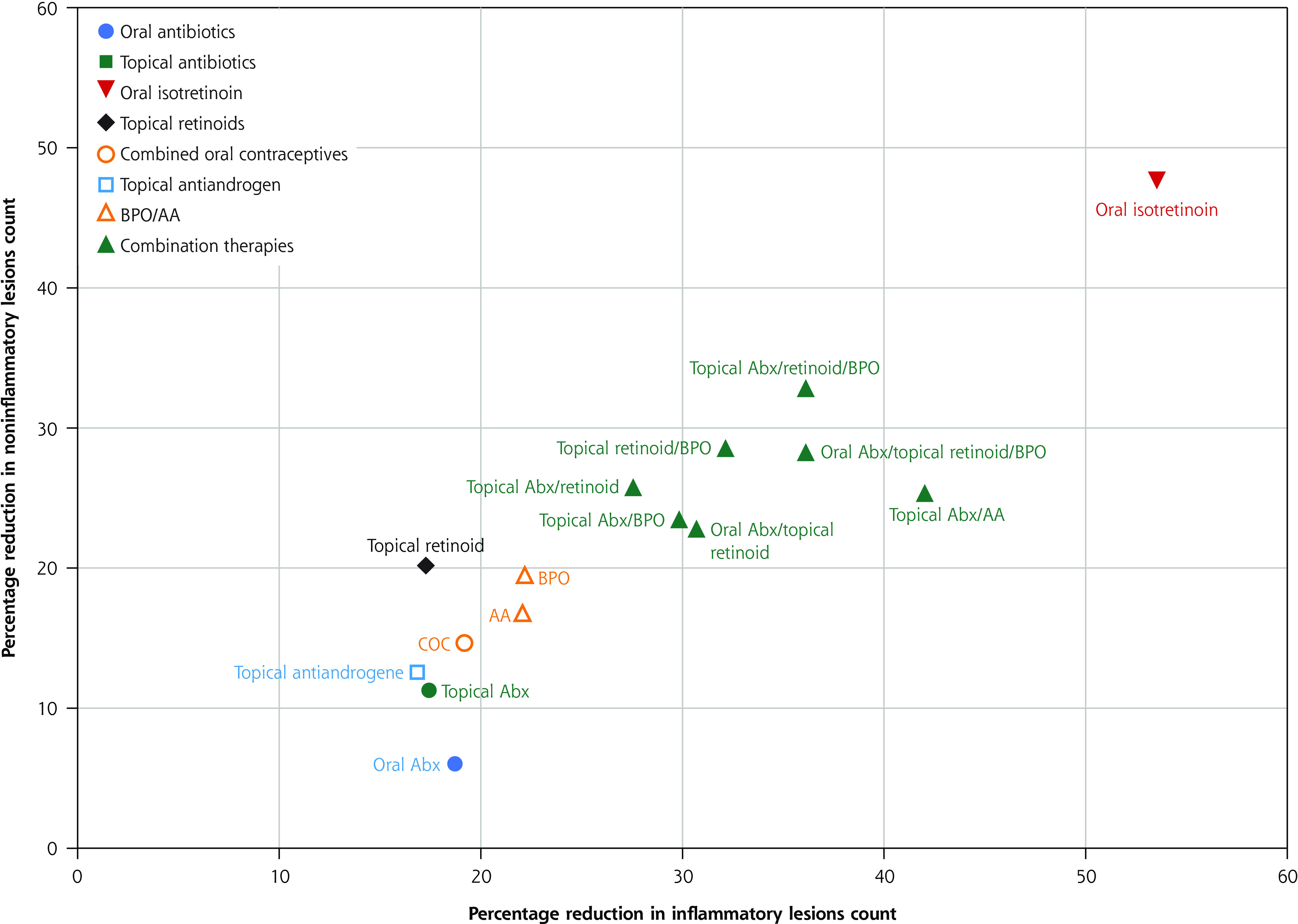
Bioplots of reduction in inflammatory and noninflammatory lesion counts in the simplified model. AA = azelaic acid; Abx = antibiotic; BPO = benzoyl peroxide; COC = combined oral contraceptives. Note: Percentage reduction in inflammatory lesion count (x axis) vs percentage reduction in noninflammatory lesion count (y axis) compared with placebo.

References

    1. Bhate K, Williams HC.. Epidemiology of acne vulgaris. Br J Dermatol. 2013; 168(3): 474-485. 10.1111/bjd.12149 - DOI - PubMed
    1. Bhate K, Williams HC.. Epidemiology of acne vulgaris. Br J Dermatol. 2013; 168(3): 474-485. 10.1111/bjd.12149 - DOI - PubMed
    1. Karimkhani C, Dellavalle RP, Coffeng LE, et al. . Global skin disease morbidity and mortality: an update from the global burden of disease study 2013. JAMA Dermatol. 2017; 153(5): 406-412. 10.1001/jamadermatol.2016.5538 - DOI - PMC - PubMed
    1. Shi Q, Tan L, Chen Z, et al. . Comparative efficacy of pharmacological and nonpharmacological interventions for acne vulgaris: a network meta-analysis. Front Pharmacol. 2020; 11: 592075. 10.3389/fphar.2020.592075 - DOI - PMC - PubMed
    1. Zhang M, Silverberg JI, Kaffenberger BH.. Prescription patterns and costs of acne/rosacea medications in Medicare patients vary by prescriber specialty. J Am Acad Dermatol. 2017; 77(3): 448-455.e2. 10.1016/j.jaad.2017.04.1127 - DOI - PMC - PubMed