


Investigating genetically stratified subgroups to better understand the etiology of alcohol misuse
- PMID: 37488169
- PMCID: PMC10827662
- DOI: 10.1038/s41380-023-02174-0
Investigating genetically stratified subgroups to better understand the etiology of alcohol misuse
Abstract
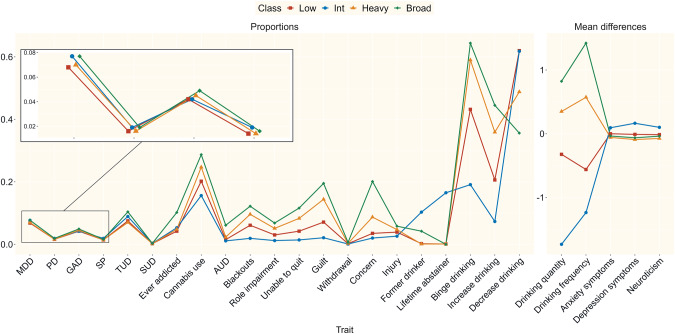
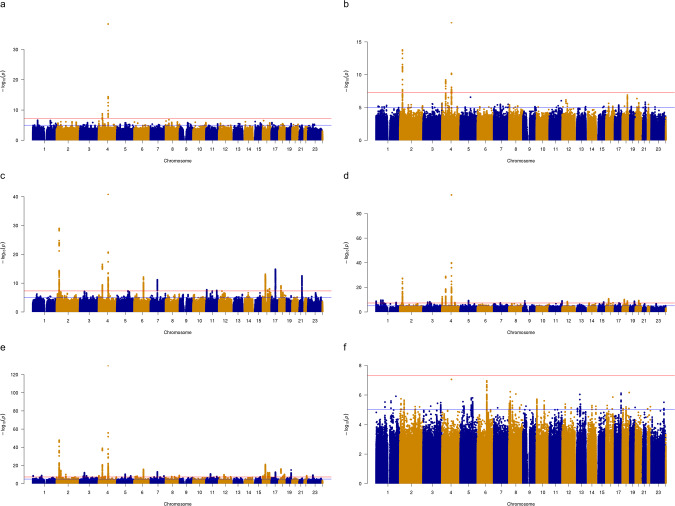
Alcohol misuse (AM) is highly prevalent and harmful, with theorized subgroups differing on internalizing and externalizing dimensions. Despite known heterogeneity, genome-wide association studies (GWAS) are usually conducted on unidimensional phenotypes. These approaches have identified important genes related to AM but fail to capture a large part of the heritability, even with recent increases in sample sizes. This study aimed to address phenotypic heterogeneity in GWAS to aid gene finding and to uncover the etiology of different types of AM. Genetic and phenotypic data from 410,414 unrelated individuals of multiple ancestry groups (primarily European) in the UK Biobank were obtained. Mixture modeling was applied to measures of alcohol misuse and internalizing/externalizing psychopathology to uncover phenotypically homogenous subclasses, which were carried forward to GWAS and functional annotation. A four-class model emerged with "low risk", "internalizing-light/non-drinkers", "heavy alcohol use-low impairment", and "broad high risk" classes. SNP heritability ranged from 3 to 18% and both known AM signals and novel signals were captured by genomic risk loci. Class comparisons showed distinct patterns of regional brain tissue enrichment and genetic correlations with internalizing and externalizing phenotypes. Despite some limitations, this study demonstrated the utility of genetic research on homogenous subclasses. Not only were novel genetic signals identified that might be used for follow-up studies, but addressing phenotypic heterogeneity allows for the discovery and investigation of differential genetic vulnerabilities in the development of AM, which is an important step towards the goal of personalized medicine.
© 2023. The Author(s).
Conflict of interest statement
The authors declare no competing interests.
Figures
References
Publication types
MeSH terms
Grants and funding
LinkOut - more resources
Full Text Sources
Medical
