. 2023 Jul:889:503649.
doi: 10.1016/j.mrgentox.2023.503649. Epub 2023 May 20.

Error-corrected duplex sequencing enables direct detection and quantification of mutations in human TK6 cells with strong inter-laboratory consistency

Affiliations

Error-corrected duplex sequencing enables direct detection and quantification of mutations in human TK6 cells with strong inter-laboratory consistency

Eunnara Cho et al. Mutat Res Genet Toxicol Environ Mutagen. 2023 Jul.

Abstract

Error-corrected duplex sequencing (DS) enables direct quantification of low-frequency mutations and offers tremendous potential for chemical mutagenicity assessment. We investigated the utility of DS to quantify induced mutation frequency (MF) and spectrum in human lymphoblastoid TK6 cells exposed to a prototypical DNA alkylating agent, N-ethyl-N-nitrosourea (ENU). Furthermore, we explored appropriate experimental parameters for this application, and assessed inter-laboratory reproducibility. In two independent experiments in two laboratories, TK6 cells were exposed to ENU (25-200 µM) and DNA was sequenced 48, 72, and 96 h post-exposure. A DS mutagenicity panel targeting twenty 2.4-kb regions distributed across the genome was used to sample diverse, genome-representative sequence contexts. A significant increase in MF that was unaffected by time was observed in both laboratories. Concentration-response in the MF from the two laboratories was strongly positively correlated (r = 0.97). C:G>T:A, T:A>C:G, T:A>A:T, and T:A>G:C mutations increased in consistent, concentration-dependent manners in both laboratories, with high proportions of C:G>T:A at all time points. The consistent results across the three time points suggest that 48 h may be sufficient for mutation analysis post-exposure. The target sites responded similarly between the two laboratories and revealed a higher average MF in intergenic regions. These results, demonstrating remarkable reproducibility across time and laboratory for both MF and spectrum, support the high value of DS for characterizing chemical mutagenicity in both research and regulatory evaluation.

Keywords: Error-corrected next-generation sequencing; In vitro; Mutagenesis; Mutation spectrum; N-ethyl-N-nitrosourea.


Conflict of interest statement

Declaration of Competing Interest EC, CDS, MR, AW, CLY, FM, LR, KLW, and SLSR declare that they have no conflict of interest. EKS, JY, THS, PV, FYL, CCV, and JJS are employees and equity holders at TwinStrand Biosciences, Inc. and are authors on one or more duplex sequencing-related patents.

Figures
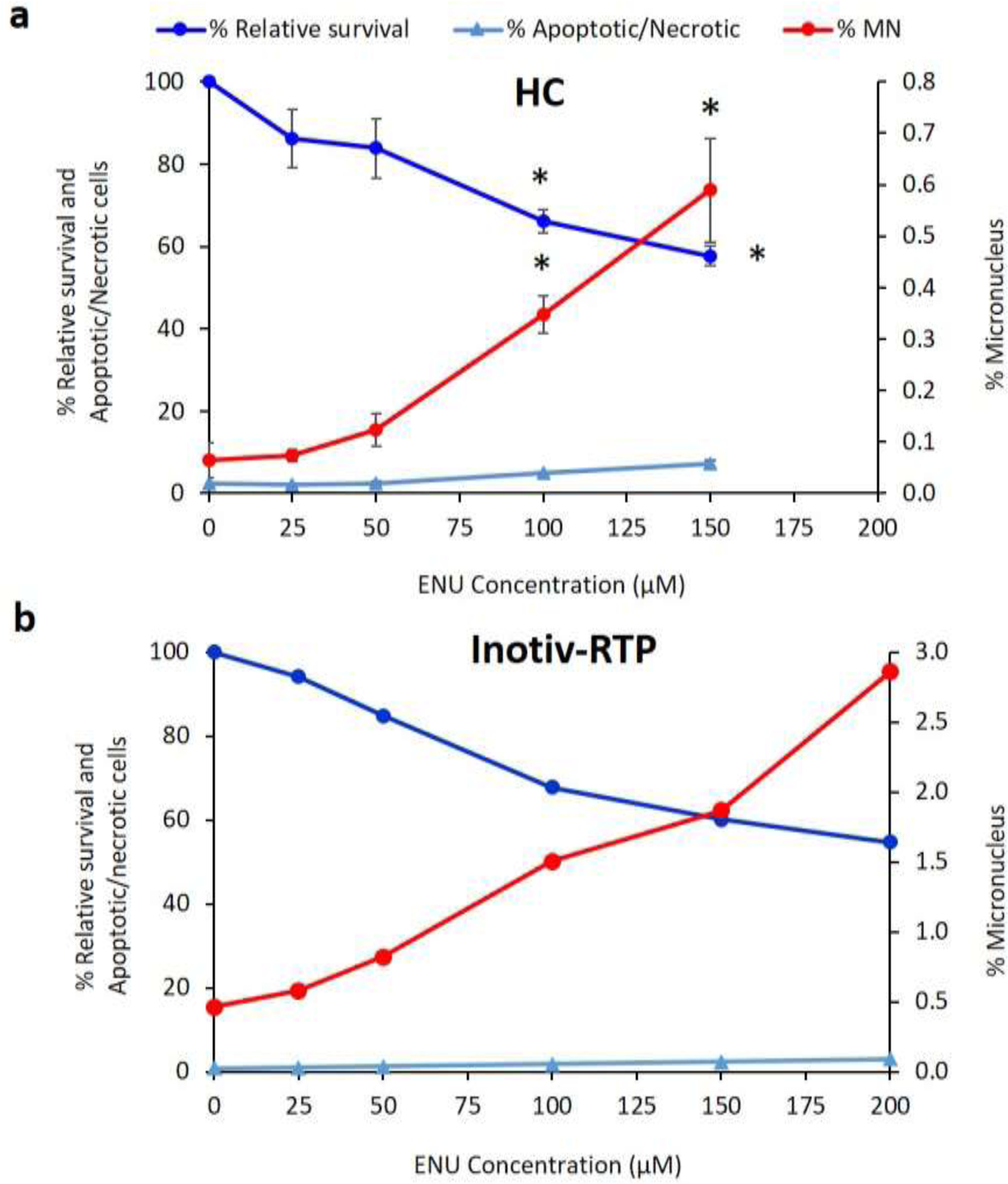
Figure 1.
Figure 1.
Micronucleus measurement in TK6 cells exposed to ENU in two different laboratories, HC (top) and Inotiv-RTP (bottom), using the In Vitro MicroFlow® assay (Litron Laboratories) on a flow cytometer. Percentage micronucleus (%MN) was measured 24h after exposure (HC: n=4; Inotiv-RTP: n=2). Relative survival was measured as the ratio between nuclei and counting beads relative to that of the vehicle control. The error bars in the HC plot represent standard error. Asterisk (*) indicates p-value<0.0001 in one-way ANOVA with post-hoc Dunnett’s test.
Figure 2.
Figure 2.
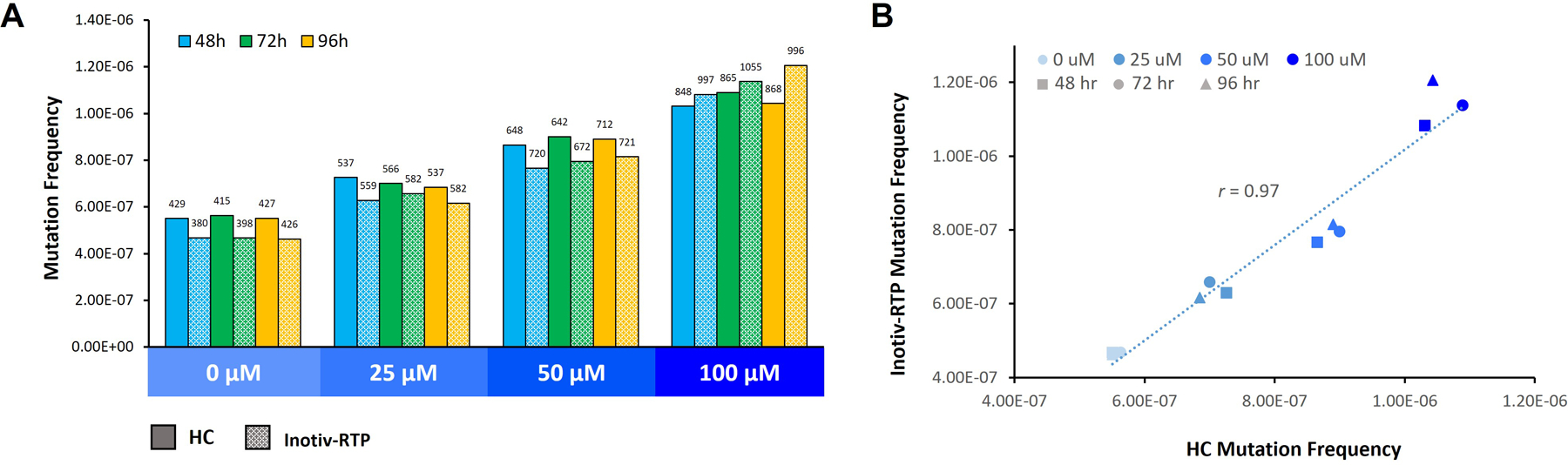
A. Mutation frequency in TK6 cells exposed to ENU measured by Duplex Sequencing (TwinStrand Biosciences). B. Linear correlation of mutation frequency measured at HC and Inotiv-RTP. Cells were sampled after 48, 72, and 96 h following the initial exposure (n=2/ concentration and time point). Library construction and sequencing were completed by TwinStrand. Numbers above the bars represent non-normalized mutation counts. Frequency was determined by dividing the counts by the total number of BP sequenced. There was a significant concentration main effect (Holm-Sidak adjusted p-value < 0.0001) and concentration by lab interaction (Holm-Sidak adjusted p-value < 0.0001). There was no statistically significant difference in mutation frequency across the three time points.
Figure 3.
Figure 3.
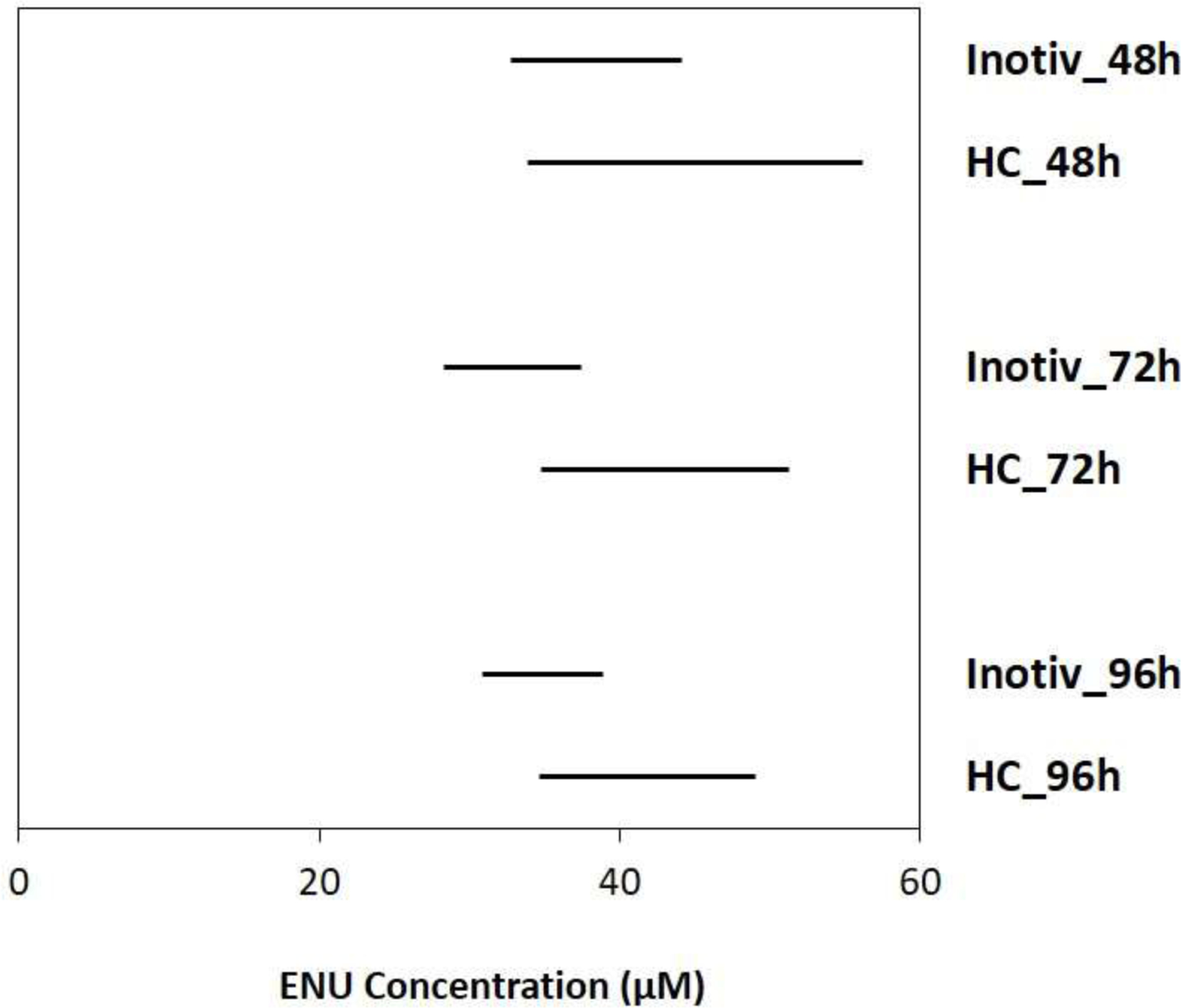
Benchmark concentration confidence intervals (lower = BMCL; upper = BMCU) of ENU that induced a 50% increase in mutation frequency 48, 72, and 96h following the initial exposure in TK6 cells at HC and Inotiv-RTP. BMC modeling was performed using the Hill model. The bars represent the 90% confidence interval of BMC50.
Figure 4.
Figure 4.
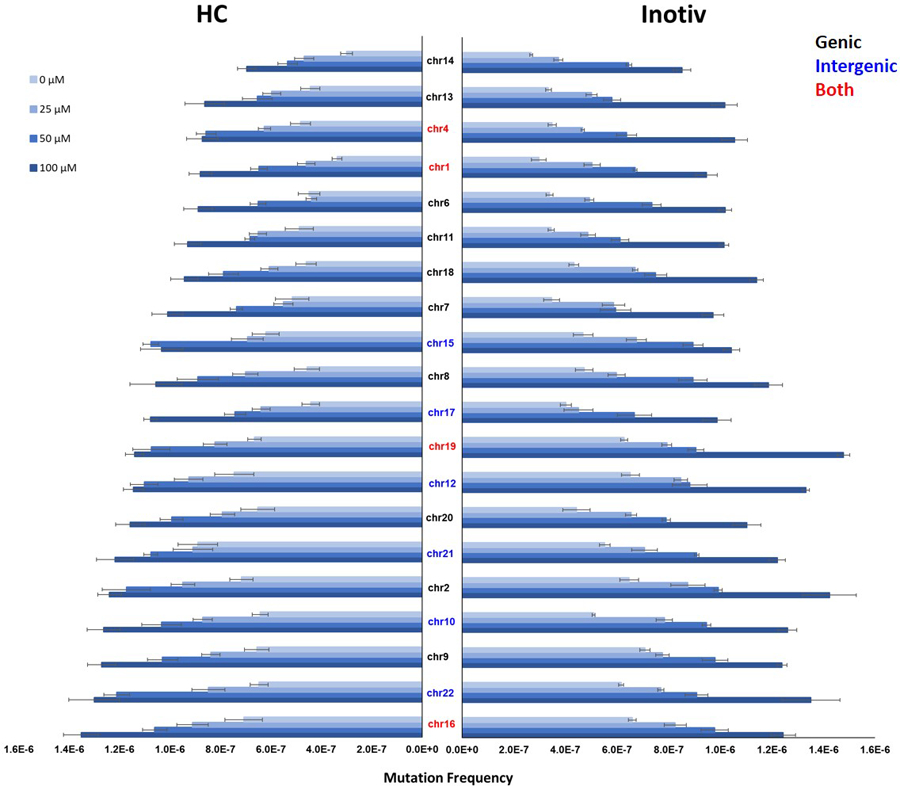
Mutation frequency in the 20 target sites of the Duplex Sequencing human mutagenicity panel measured in TK6 cells exposed to ENU at HC (left) and Inotiv-RTP (right). The mutation frequency at 48, 72, and 96 h were averaged (n=2 at each time point; n=6 in total). The target sites are listed on the Y-axis. Black indicates genic sites, blue indicates intergenic sites, and red indicates targets that include both genic and intergenic sequences. The target sites are ordered according to mutation frequency in HC samples at 100 μM from the lowest (top) to highest (bottom). Error bars represent standard error.
Figure 5.
Figure 5.
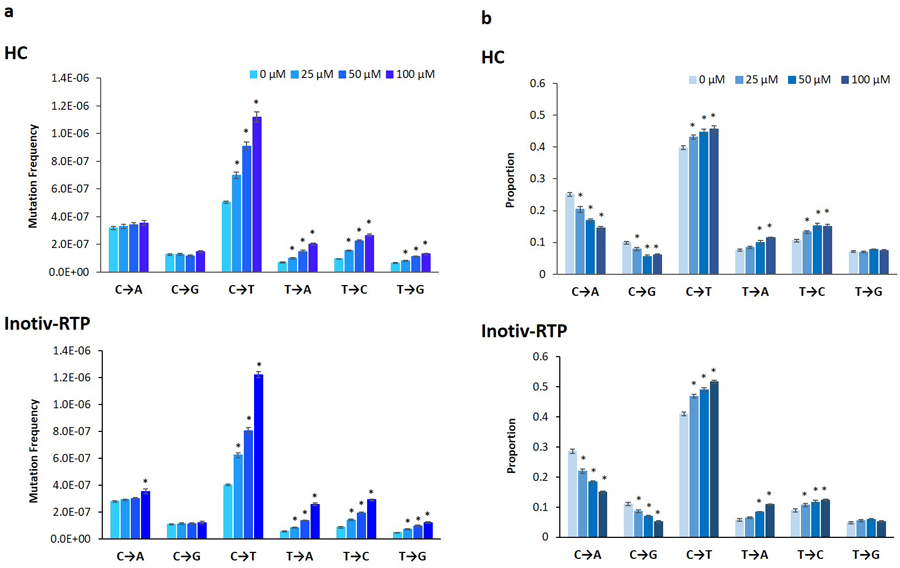
Frequencies (A) and proportions (B) of individual base substitution types in TK6 cells exposed to ENU at HC and Inotiv-RTP measured by Duplex Sequencing (TwinStrand Biosciences). Cells were sampled 48, 72, and 96 h following the initial exposure (n=2). The mutation proportions and frequency at the three time points were averaged (n=6 in total). The error bars represent standard error and asterisk (*) indicates statistical significance (p-value <0.05) in ANOVA with post-hoc Dunnett’s test.
Figure 6.
Figure 6.
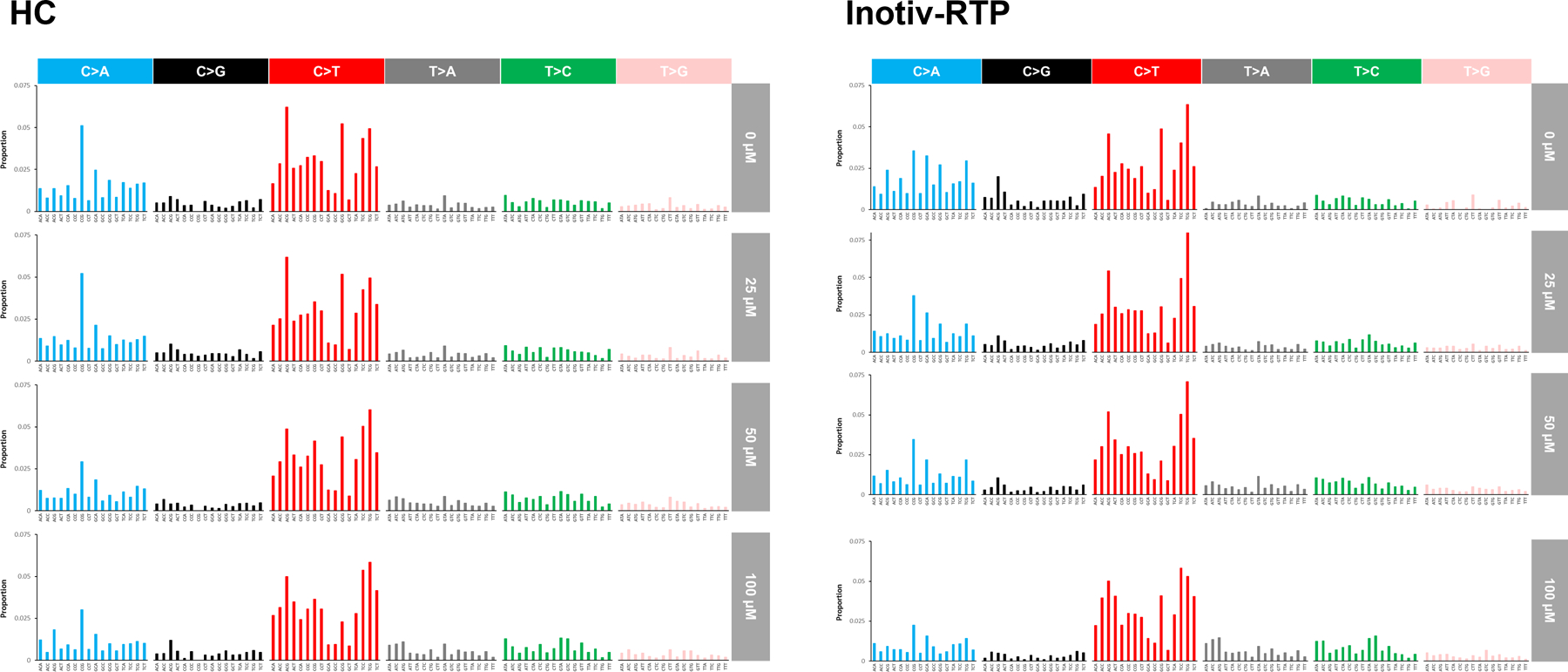
Trinucleotide mutation spectra in TK6 cells exposed to ENU at HC and Inotiv-RTP. Mutation frequency measured at 48, 72, and 96 h were averaged for each concentration.

References

    1. OECD, Test No. 476: In Vitro Mammalian Cell Gene Mutation Tests using the Hprt and xprt genes, in: Paris, France, 2016.
    1. OECD, Test No. 490: In Vitro Mammalian Cell Gene Mutation Tests Using the Thymidine Kinase Gene, OECD Publishing, Paris, France, 2016.
    1. OECD, Test No. 471: Bacterial Reverse Mutation Test, in: OECD Publishing, Paris, France, 2020.
    1. Salk JJ, Kennedy SR, Next-generation genotoxicity: Using modern sequencing technologies to assess somatic mutagenesis and cancer risk, Environ Mol Mutagen 61 (2020) 135–151. - PMC - PubMed
    1. Beal MA, Meier MJ, LeBlanc DP, Maurice C, O’Brien JM, Yauk CL, Marchetti F, Chemically induced mutations in a MutaMouse reporter gene inform mechanisms underlying human cancer mutational signatures, Commun Biol 3 (2020) 438. - PMC - PubMed

LinkOut - more resources