


Past climate-driven range shifts structuring intraspecific biodiversity levels of the giant kelp (Macrocystis pyrifera) at global scales
- PMID: 37491385
- PMCID: PMC10368654
- DOI: 10.1038/s41598-023-38944-7
Past climate-driven range shifts structuring intraspecific biodiversity levels of the giant kelp (Macrocystis pyrifera) at global scales
Abstract
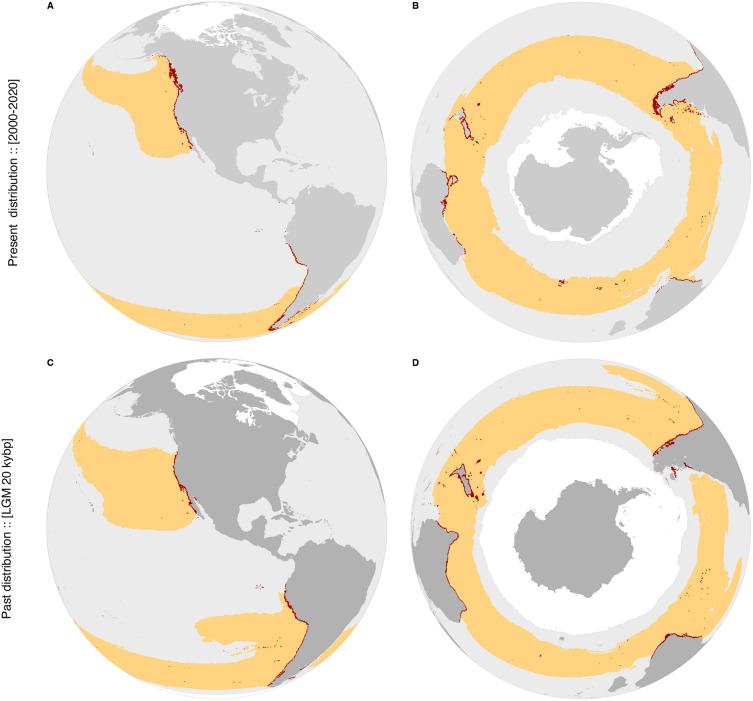
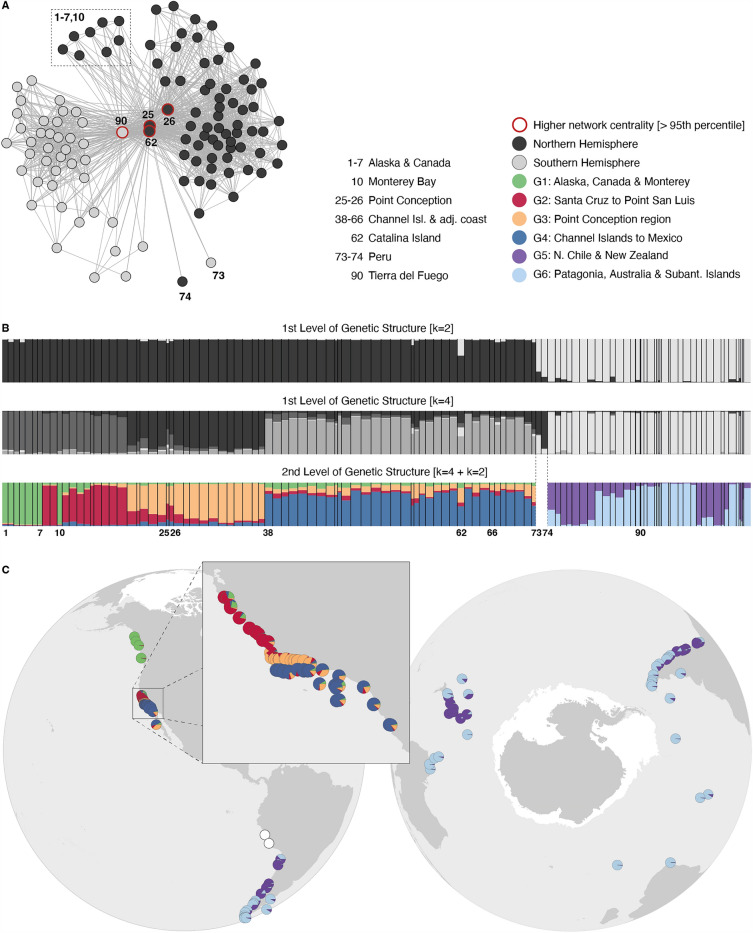
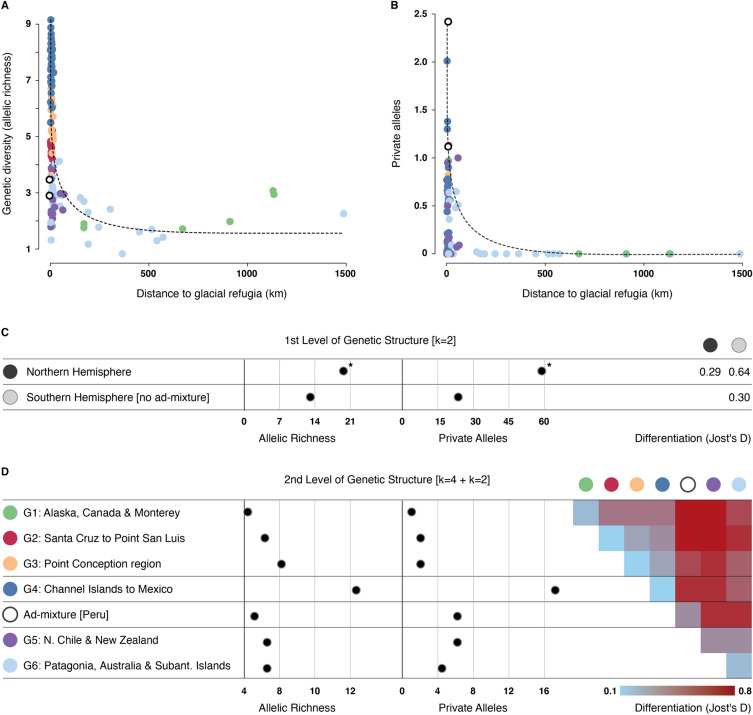
The paradigm of past climate-driven range shifts structuring the distribution of marine intraspecific biodiversity lacks replication in biological models exposed to comparable limiting conditions in independent regions. This may lead to confounding effects unlinked to climate drivers. We aim to fill in this gap by asking whether the global distribution of intraspecific biodiversity of giant kelp (Macrocystis pyrifera) is explained by past climate changes occurring across the two hemispheres. We compared the species' population genetic diversity and structure inferred with microsatellite markers, with range shifts and long-term refugial regions predicted with species distribution modelling (SDM) from the last glacial maximum (LGM) to the present. The broad antitropical distribution of Macrocystis pyrifera is composed by six significantly differentiated genetic groups, for which current genetic diversity levels match the expectations of past climate changes. Range shifts from the LGM to the present structured low latitude refugial regions where genetic relics with higher and unique diversity were found (particularly in the Channel Islands of California and in Peru), while post-glacial expansions following ~ 40% range contraction explained extensive regions with homogenous reduced diversity. The estimated effect of past climate-driven range shifts was comparable between hemispheres, largely demonstrating that the distribution of intraspecific marine biodiversity can be structured by comparable evolutionary forces across the global ocean. Additionally, the differentiation and endemicity of regional genetic groups, confers high conservation value to these localized intraspecific biodiversity hotspots of giant kelp forests.
© 2023. The Author(s).
Conflict of interest statement
The authors declare no competing interests.
Figures
References
-
- Provan J. The effects of past, present and future climate change on range-wide genetic diversity in northern North Atlantic marine species. Front. Biogeogr. 2013;5:60–66. doi: 10.21425/F55114732. - DOI
-
- Assis J, et al. Past climate changes and strong oceanographic barriers structured low-latitude genetic relics for the golden kelp Laminaria ochroleuca. J. Biogeogr. 2018;45:2326–2336. doi: 10.1111/jbi.13425. - DOI
-
- Clark PU, Mix AC. Ice sheets and sea level of the last glacial maximum. Quat. Sci. Rev. 2002;21:1–7. doi: 10.1016/S0277-3791(01)00118-4. - DOI
Publication types
MeSH terms
Associated data
LinkOut - more resources
Full Text Sources
Miscellaneous
