NCSTN In-Frame Deletion in Maltese Patients With Hidradenitis Suppurativa
- PMID: 37494055
- PMCID: PMC10372757
- DOI: 10.1001/jamadermatol.2023.2227
NCSTN In-Frame Deletion in Maltese Patients With Hidradenitis Suppurativa
Abstract
Importance: Hidradenitis suppurativa (HS) is a complex trait that has a monogenic etiology in a subset of patients. Variation in genes that encode proteins of the γ secretase complex, particularly NCSTN, account for few patients who exhibit familial forms of HS. Thus far, extensive genotype-phenotype correlations have been lacking.
Objective: To establish the prevalence of the NCSTN:c.671_682del variant and explore potential genotype-phenotype associations in an ethnically Maltese HS cohort.
Design, setting, and participants: This cross-sectional study conducted from December 2021 to September 2022 included patients 18 years or older with a diagnosis of HS as defined by recurrent nodules, abscesses, and/or draining tunnels in typical (axilla, breast, groin, buttock, thighs, and inframammary folds) and less typical (scalp, ear pinnae, neck, arms, antecubital fossae) sites who were recruited from the sole national dermatology reference center servicing the Maltese archipelago. Clinical examination and targeted genetic analysis for an NCSTN deletion that was originally identified through whole-exome sequencing in a family with multigenerational disease were performed.
Exposure: Recruited patients were phenotyped and genotyped for the NCSTN:c.671_682del variant.
Main outcome and measures: To determine the prevalence of the NCSTN:c.671_682del variant and establish possible genotype-phenotype associations in the ethnically Maltese HS cohort.
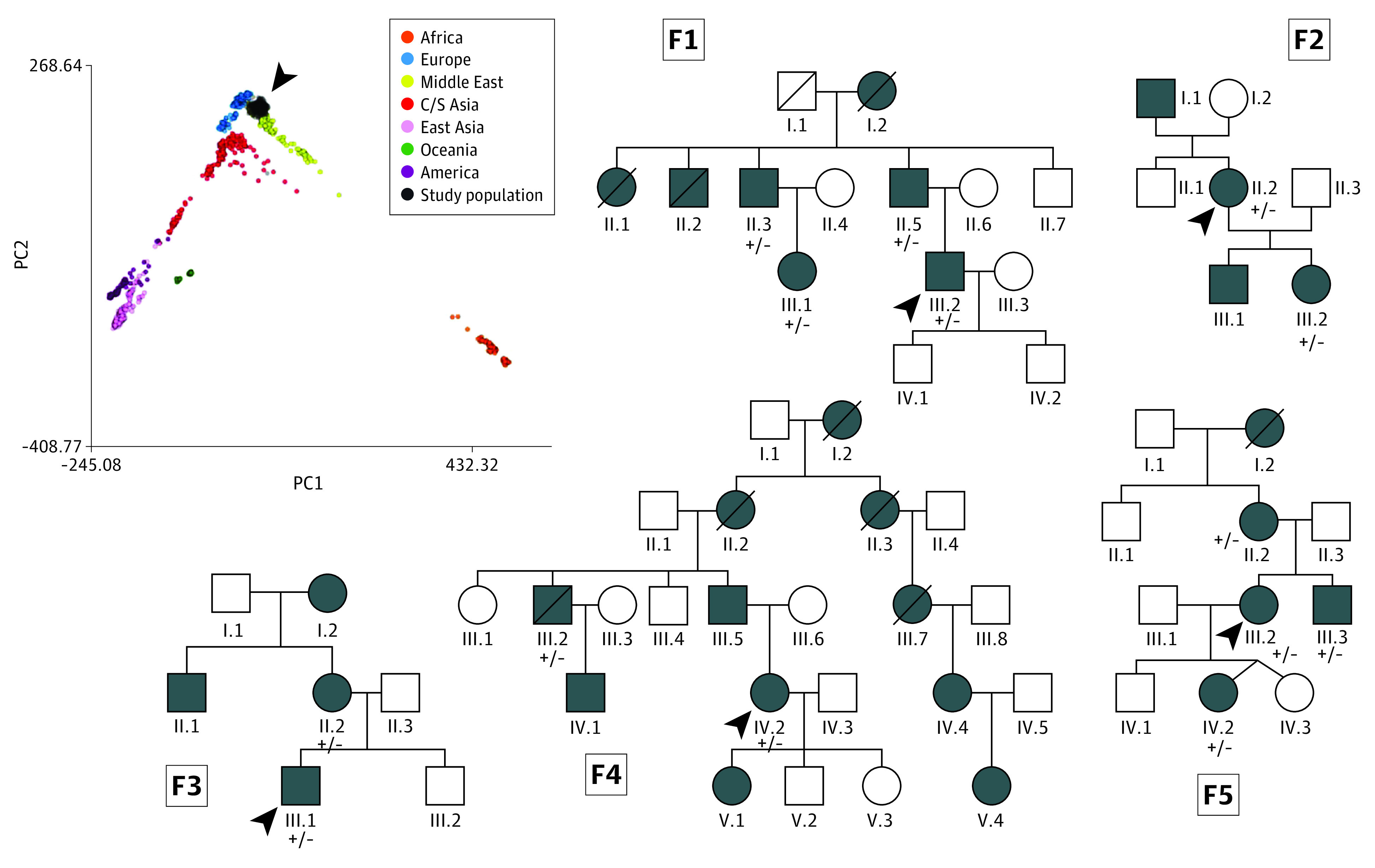
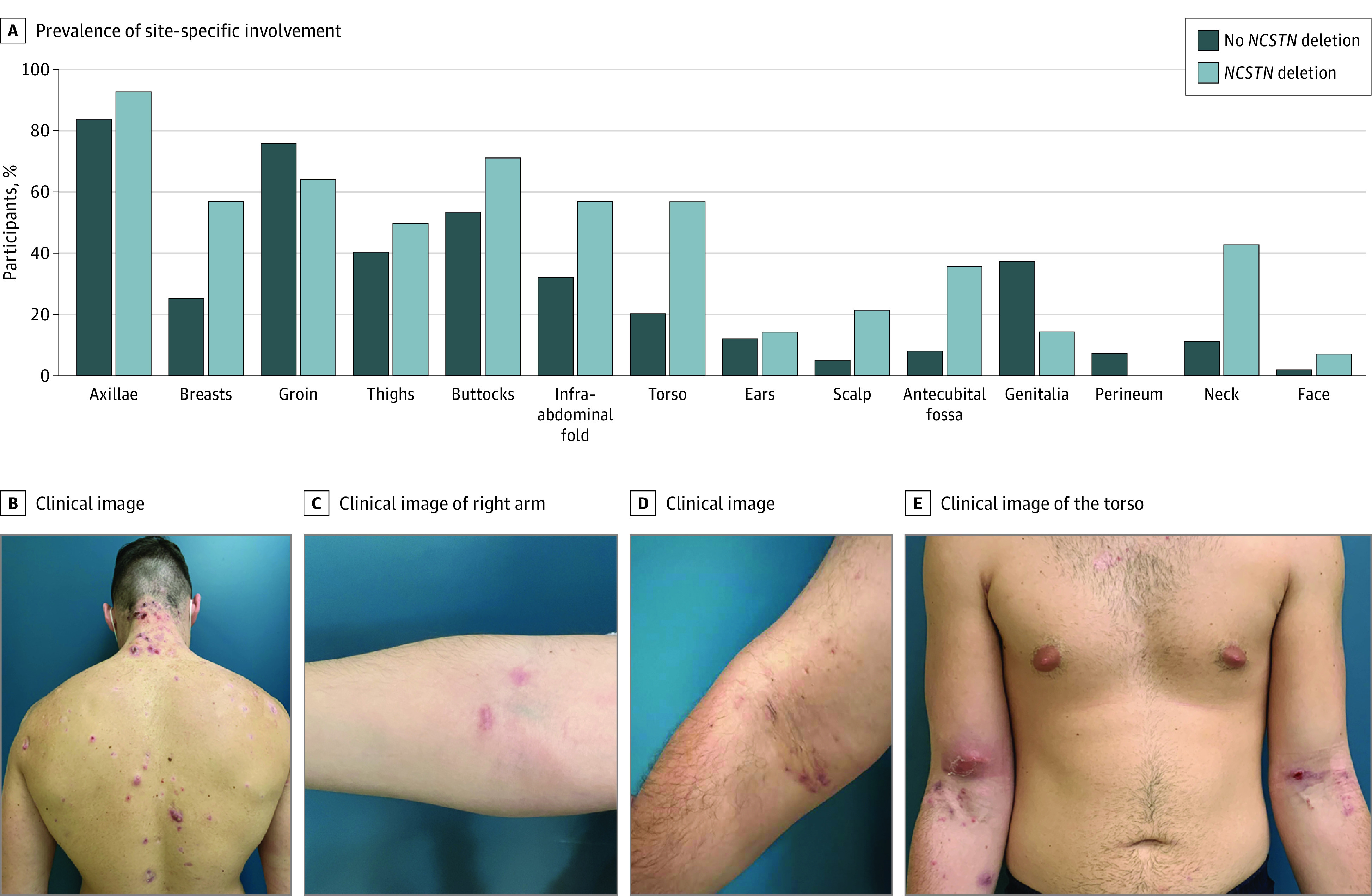
Results: A total of 113 patients with HS (56 women [49.6%]) met the inclusion criteria and were enrolled in this study. The median age of disease onset was 18 years (range, 7-62 years), and the median International Hidradenitis Suppurativa Severity Score System score was 4.39 (range, 1.0-64.0). The NCSTN variant was identified in the heterozygous state in 14 patients (12.4%) from 5 unrelated, nonconsanguineous families of Maltese ethnicity. The variant was not identified in an ethnically matched reference genomic data set of disease-free individuals. Variant carriers manifested HS symptoms earlier and were more likely to exhibit a distinctive HS phenotype, which was characterized by involvement of the scalp, neck, torso, and antecubital fossae. Despite manifesting similar clinical disease severity, variant carriers were more likely to require treatment with adalimumab.
Conclusions and relevance: The results of this cross-sectional study suggest that monogenic variation in NCSTN is associated with HS in a subset of patients who have a distinct, atypical phenotype.
Conflict of interest statement
Figures
Comment in
-
Advances Toward the Clinical Translation of Hidradenitis Suppurativa Genetic Studies.JAMA Dermatol. 2023 Sep 1;159(9):913-915. doi: 10.1001/jamadermatol.2023.2205. JAMA Dermatol. 2023. PMID: 37494029 No abstract available.
References
Publication types
MeSH terms
Substances
LinkOut - more resources
Full Text Sources
Medical
Miscellaneous