


Factors Influencing Nutritional Intake and Interests in Educational Content of Athletes and Sport Professionals Toward the Development of a Clinician-Supported Mobile App to Combat Relative Energy Deficiency in Sport: Formative Research and a Description of App Functions
- PMID: 37494083
- PMCID: PMC10413240
- DOI: 10.2196/45098
Factors Influencing Nutritional Intake and Interests in Educational Content of Athletes and Sport Professionals Toward the Development of a Clinician-Supported Mobile App to Combat Relative Energy Deficiency in Sport: Formative Research and a Description of App Functions
Abstract
Background: Relative energy deficiency in sport (RED-S) as a consequence of athlete malnutrition remains a prominent issue. However, it remains underrecognized, in part due to the perceived outward health of athletes. The Eat2Win app was designed to combat RED-S and athlete malnutrition by providing education, behavior modification, and direct communication with expert sports dietitians to athletes and sport professionals (professionals who work with athletes, eg, sport coaches and athletic trainers).
Objective: The purpose of this formative research was to gain critical insight on motivators and barriers to optimal nutritional intake from both the athletes' and sport professionals' perspectives. Additionally, since these 2 groups represent the primary end users of an app aimed at improving athlete nutrition and reducing the risk of RED-S, a secondary objective was to gain insight on the preferences and perceptions of app-based educational content and functionality.
Methods: An electronic survey was developed by an interdisciplinary team of experts. Survey questions were established based upon prevailing literature, professional dietetic field experience, and app design considerations to obtain respondent knowledge on key sports nutrition topics along with motivations and barriers to meal choices. Additionally, the survey included questions about the development of an integrative, clinician-support app aimed at addressing RED-S. These questions included preferences for educational content, modes of in-app information, and communication delivery for the target population (app end users: athletes and sport professionals). The survey was distributed through Research Electronic Data Capture (REDCap) to athletes and sport professionals using targeted email, social media, and community engagement campaigns. The electronic survey was available from May 4 to August 2, 2022.
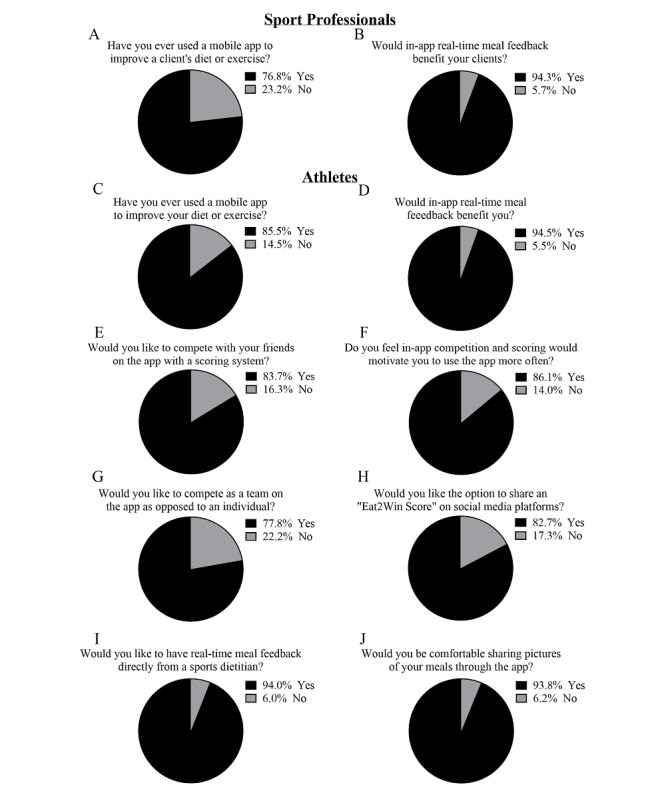
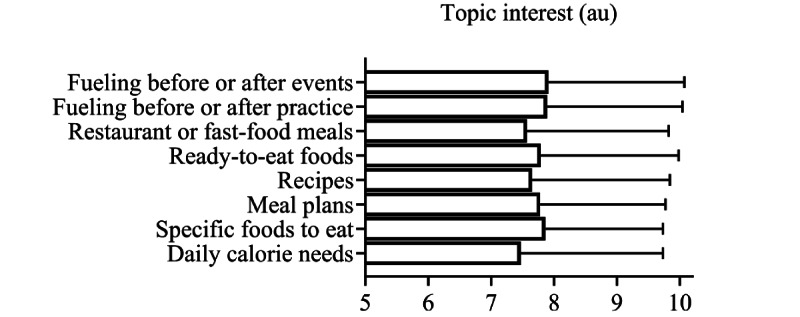
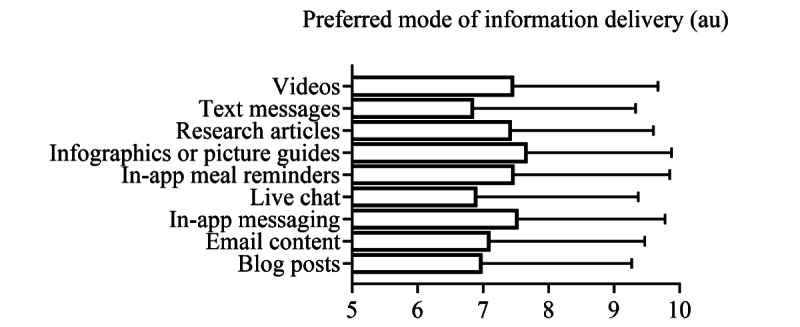
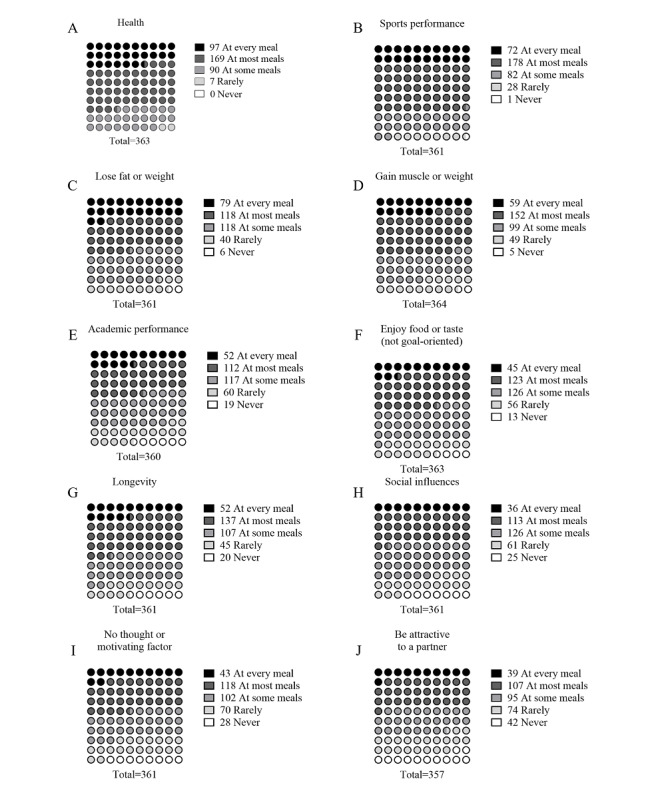
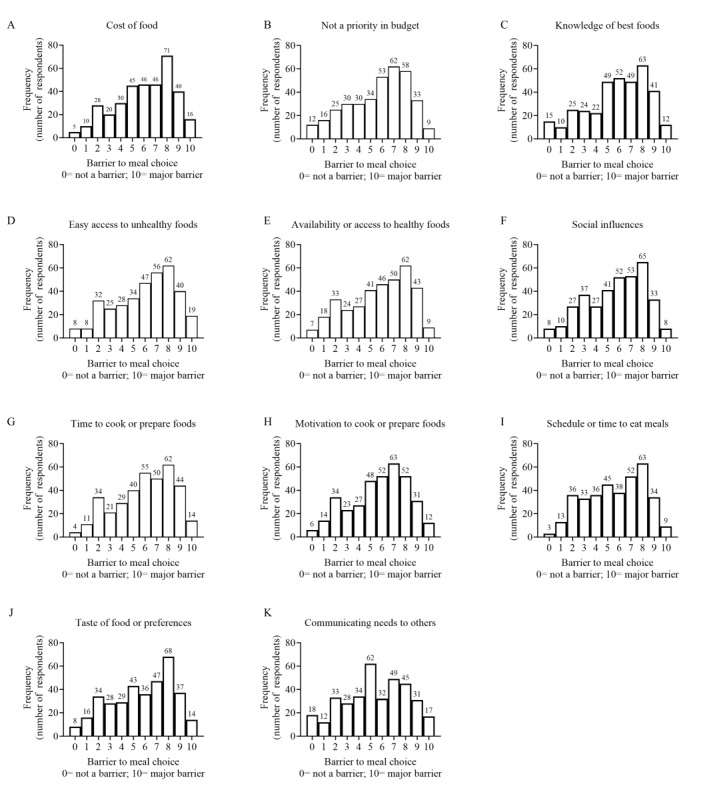
Results: Survey respondents (n=1352) included athletes and professionals who work with athletes from a variety of settings, like high school, collegiate, professional, and club sports. Respondents reported high interest in 8 core sports nutrition topics. The preferred modes of information and communication delivery were visual formats (eg, videos and infographics) and in-app alerts (eg, direct messaging and meal reminders). Only athlete respondents were asked about motivators and barriers that influence meal choices. "Health" and "sports performance" were the highest scoring motivators, while the highest scoring barriers were "cost of food," "easy access to unhealthy food," and "time to cook or prepare food." Notably, survey respondents provided positive feedback and interest using a novel function of the app: real-time meal feedback through food photography.
Conclusions: The Eat2Win app is designed to combat RED-S and athlete malnutrition. Results from this study provide critical information on end-user opinions and preferences and will be used to further develop the Eat2Win app. Future research will aim to determine whether the Eat2Win app can prevent RED-S and the risk of athlete malnutrition to improve both health and performance.
Keywords: RED-S; dietitian; mHealth; malnutrition; mobile health; performance; relative energy deficiency in sport; sports nutrition; technology.
©Jacob T Mey, Christine A Karpinski, Shengping Yang, Joseph D Madere, Tavis Piattoly, Ronnie Harper, John P Kirwan. Originally published in JMIR Formative Research (https://formative.jmir.org), 26.07.2023.
Conflict of interest statement
Conflicts of Interest: RH and TP are co-owners of My Sports Dietitian.
Figures
References
-
- Mountjoy M, Sundgot-Borgen J, Burke L, Carter S, Constantini N, Lebrun C, Meyer N, Sherman R, Steffen K, Budgett R, Ljungqvist A. The IOC consensus statement: beyond the female athlete triad—relative energy deficiency in sport (RED-S) Br J Sports Med. 2014;48(7):491–497. doi: 10.1136/bjsports-2014-093502. https://bjsm.bmj.com/content/48/7/491 48/7/491 - DOI - PubMed
-
- Yeager KK, Agostini R, Nattiv A, Drinkwater B. The female athlete triad: disordered eating, amenorrhea, osteoporosis. Med Sci Sports Exerc. 1993;25(7):775–777. doi: 10.1249/00005768-199307000-00003. https://journals.lww.com/acsm-msse/Citation/1993/07000/The_female_athlet... - DOI - PubMed
-
- Elliott-Sale KJ, Tenforde AS, Parziale AL, Holtzman B, Ackerman KE. Endocrine effects of relative energy deficiency in sport. Int J Sport Nutr Exerc Metab. 2018;28(4):335–349. doi: 10.1123/ijsnem.2018-0127. https://journals.humankinetics.com/doi/10.1123/ijsnem.2018-0127 ijsnem.2018-0127 - DOI - DOI - PubMed
Grants and funding
LinkOut - more resources
Full Text Sources
