


Portable digital devices for paediatric height and length measurement: A scoping review and target product profile matching analysis
- PMID: 37494355
- PMCID: PMC10370750
- DOI: 10.1371/journal.pone.0288995
Portable digital devices for paediatric height and length measurement: A scoping review and target product profile matching analysis
Abstract
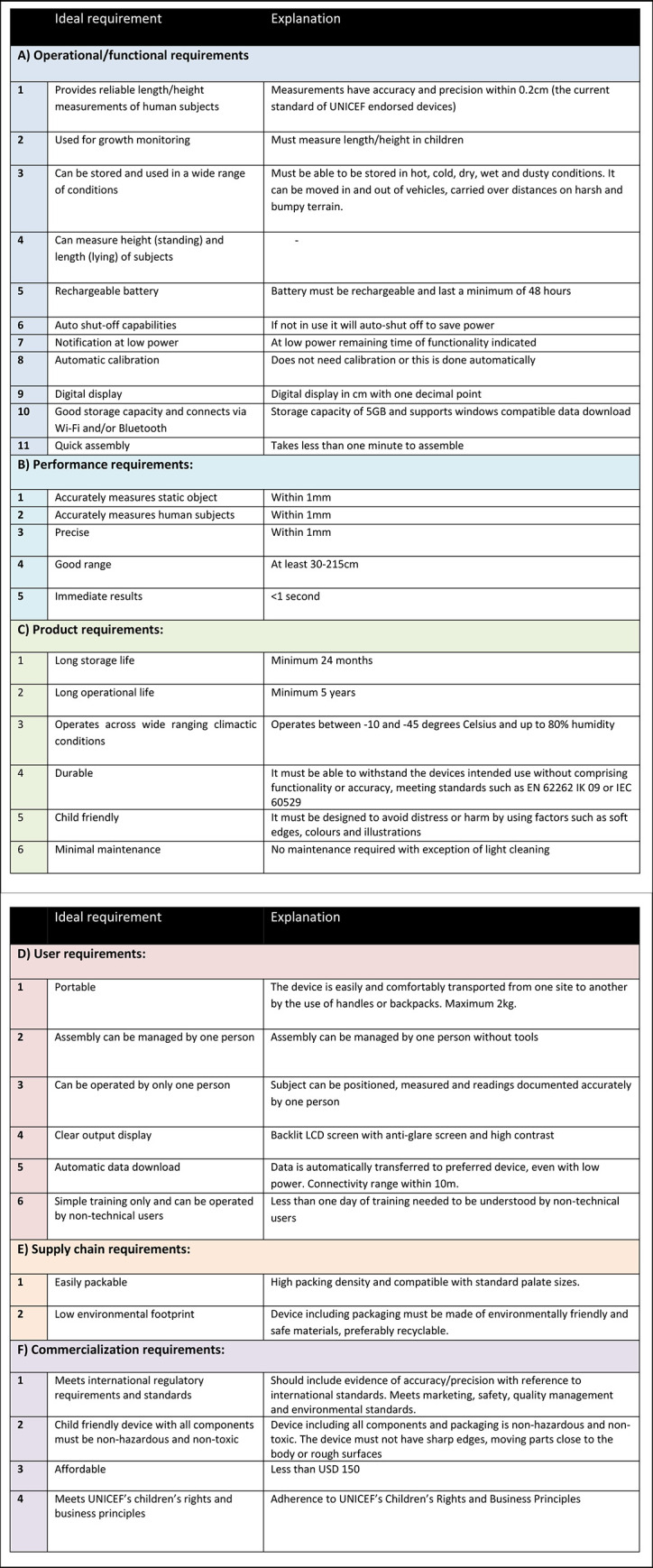
Background: Routine anthropometry of children, including length/height measurement, is an essential component of paediatric clinical assessments. UNICEF has called for the accelerated development of novel, digital height/length measurement devices to improve child nutrition and growth surveillance programs. This scoping review aimed to identify all digital, portable height/length measurement devices in the literature or otherwise available internationally. We also assessed identified devices against the UNICEF Target Product Profile (TPP) to identify those of highest potential for clinical and public health use.
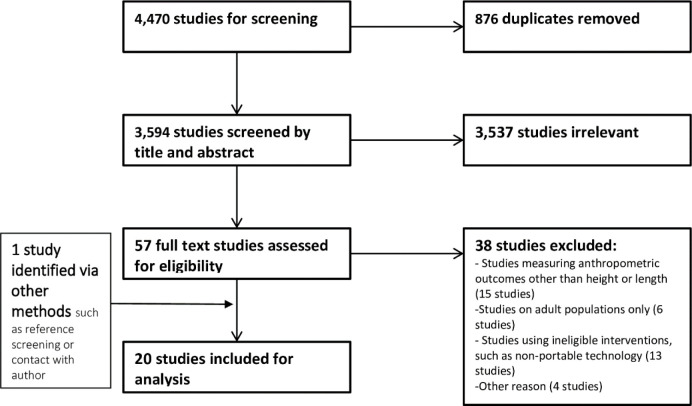
Method: We searched four databases (Medline, Embase, CINAHL and Global Health) and the grey literature between 1st January 1992 and 2nd February 2023. We looked for studies or reports on portable, digital devices for height or length measurement in children up to 18 years old. Citations were screened independently by two reviewers, with data extraction and quality assessment performed in duplicate and disagreements resolved. Devices were evaluated and scored against the 34 criteria of the UNICEF TPP.
Results: Twenty studies describing twelve height/length measurement devices were identified, most of which used prospective validation designs. Additional devices were found in the grey literature, but these did not report key performance data so were not included. Across the twelve devices, only 10 of 34 UNICEF criteria on average could be fully assessed. Six met UNICEF's ideal accuracy standard and one device met the minimum accuracy standard. The Leica DistoD2 device scored highest (41%), followed by Autoanthro in a controlled environment (33%) and GLM30 (32%). These devices may be high potential for further assessment and development, though further research is required.
Conclusion: While 12 portable, digital devices exist for child height/length measurement, insufficient data are available to fully assess whether they meet the industry's needs. Although some devices show promise, further research is needed to test the validity of these devices in varying contexts, and continued development and commercialization will be important to improve reliability and precision of these devices for widespread use.
Copyright: © 2023 Soller et al. This is an open access article distributed under the terms of the Creative Commons Attribution License, which permits unrestricted use, distribution, and reproduction in any medium, provided the original author and source are credited.
Conflict of interest statement
The authors have declared that no competing interests exist.
Figures
References
-
- Stunting, wasting, overweight and underweight [Website]. Geneva: World Health Organisation; [updated 2023; cited 2022 23rd January 2023]. Available from: https://apps.who.int/nutrition/landscape/help.aspx?menu=0&helpid=391&lan....
-
- unicef. Height/Length Measurement Devices Project. 2019.
-
- WHO. Malnutrition [Web Page]. Geneva: World Health Organisation; 2021. [updated 2022; cited 2022 3rd March 2023]. Available from: https://www.who.int/health-topics/malnutrition#tab=tab_1.
-
- Department of Nutrition for Health and Development WHO. Global Nutrition Targets 2025: Stunting Policy Brief. Geneva: World Health Organisation; 2014.
Publication types
MeSH terms
LinkOut - more resources
Full Text Sources
Miscellaneous
