


Neuroinvasion and anosmia are independent phenomena upon infection with SARS-CoV-2 and its variants
- PMID: 37495586
- PMCID: PMC10372078
- DOI: 10.1038/s41467-023-40228-7
Neuroinvasion and anosmia are independent phenomena upon infection with SARS-CoV-2 and its variants
Erratum in
-
Author Correction: Neuroinvasion and anosmia are independent phenomena upon infection with SARS-CoV-2 and its variants.Nat Commun. 2023 Dec 4;14(1):8024. doi: 10.1038/s41467-023-42800-7. Nat Commun. 2023. PMID: 38049391 Free PMC article. No abstract available.
Abstract
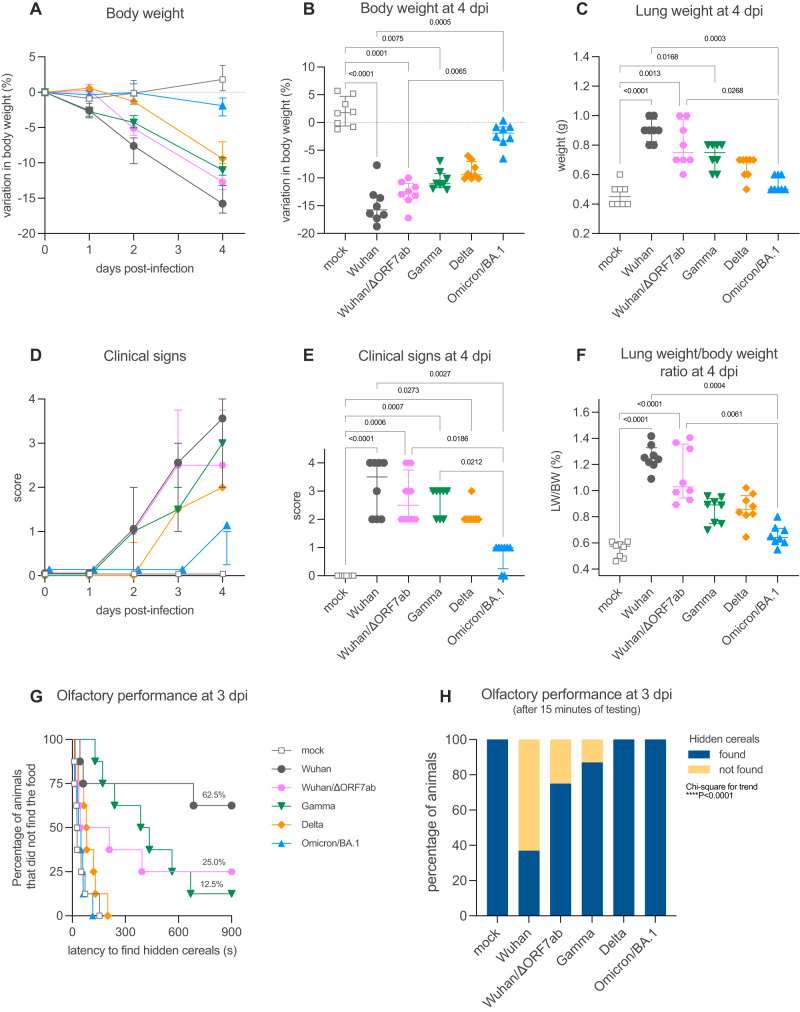
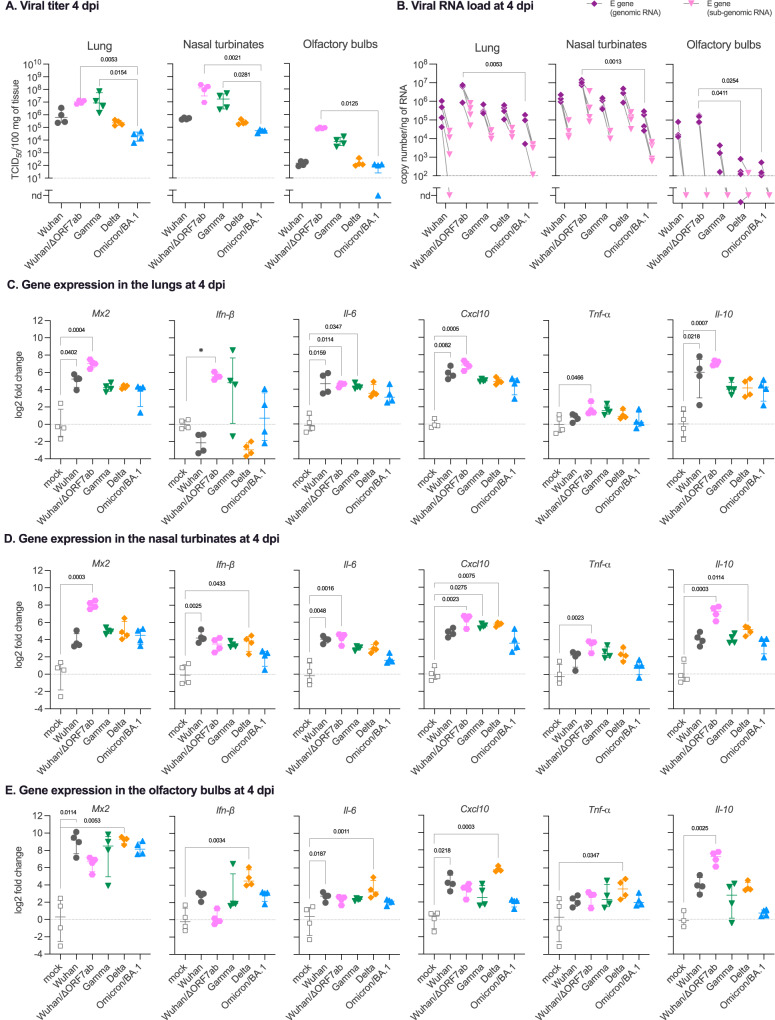
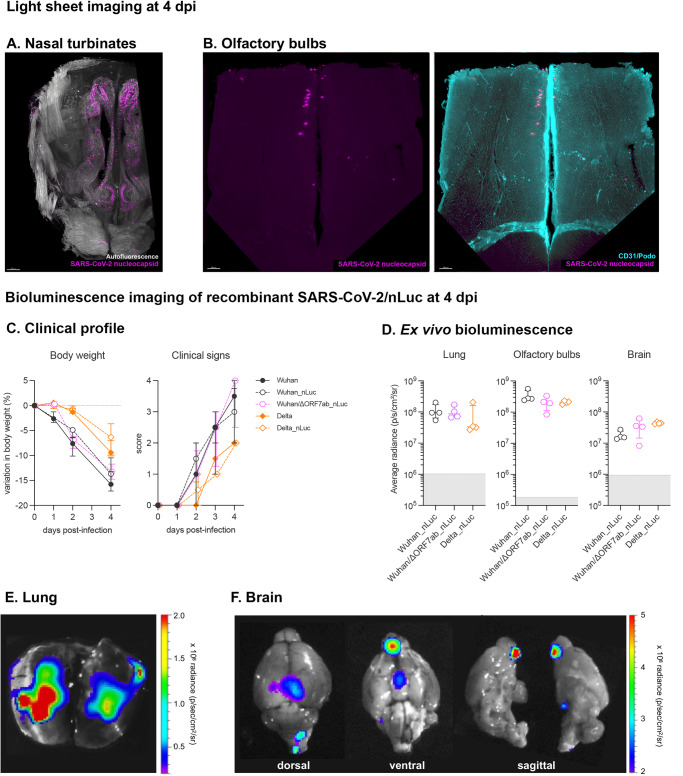
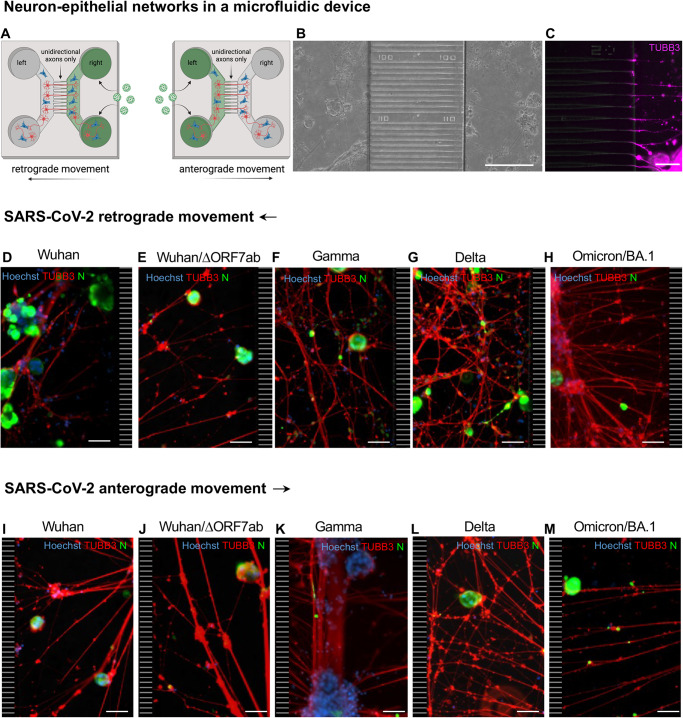
Anosmia was identified as a hallmark of COVID-19 early in the pandemic, however, with the emergence of variants of concern, the clinical profile induced by SARS-CoV-2 infection has changed, with anosmia being less frequent. Here, we assessed the clinical, olfactory and neuroinflammatory conditions of golden hamsters infected with the original Wuhan SARS-CoV-2 strain, its isogenic ORF7-deletion mutant and three variants: Gamma, Delta, and Omicron/BA.1. We show that infected animals develop a variant-dependent clinical disease including anosmia, and that the ORF7 of SARS-CoV-2 contributes to the induction of olfactory dysfunction. Conversely, all SARS-CoV-2 variants are neuroinvasive, regardless of the clinical presentation they induce. Taken together, this confirms that neuroinvasion and anosmia are independent phenomena upon SARS-CoV-2 infection. Using newly generated nanoluciferase-expressing SARS-CoV-2, we validate the olfactory pathway as a major entry point into the brain in vivo and demonstrate in vitro that SARS-CoV-2 travels retrogradely and anterogradely along axons in microfluidic neuron-epithelial networks.
© 2023. The Author(s).
Conflict of interest statement
The authors declare no competing interests.
Figures
References
-
- WHO. WHO Coronavirus Disease (COVID-19) Dashboard. https://covid19.who.int/ (2022).
Publication types
MeSH terms
LinkOut - more resources
Full Text Sources
Medical
Miscellaneous
