


Unraveling Impacts of Chamber-Specific Differences in Intercalated Disc Ultrastructure and Molecular Organization on Cardiac Conduction
- PMID: 37498248
- PMCID: PMC11102000
- DOI: 10.1016/j.jacep.2023.05.042
Unraveling Impacts of Chamber-Specific Differences in Intercalated Disc Ultrastructure and Molecular Organization on Cardiac Conduction
Abstract
Background: Propagation of action potentials through the heart coordinates the heartbeat. Thus, intercalated discs, specialized cell-cell contact sites that provide electrical and mechanical coupling between cardiomyocytes, are an important target for study. Impaired propagation leads to arrhythmias in many pathologies, where intercalated disc remodeling is a common finding, hence the importance and urgency of understanding propagation dependence on intercalated disc structure. Conventional modeling approaches cannot predict changes in propagation elicited by perturbations that alter intercalated disc ultrastructure or molecular organization, because of lack of quantitative structural data at subcellular through nano scales.
Objectives: This study sought to quantify intercalated disc structure at these spatial scales in the healthy adult mouse heart and relate them to chamber-specific properties of propagation as a precursor to understanding the effects of pathological intercalated disc remodeling.
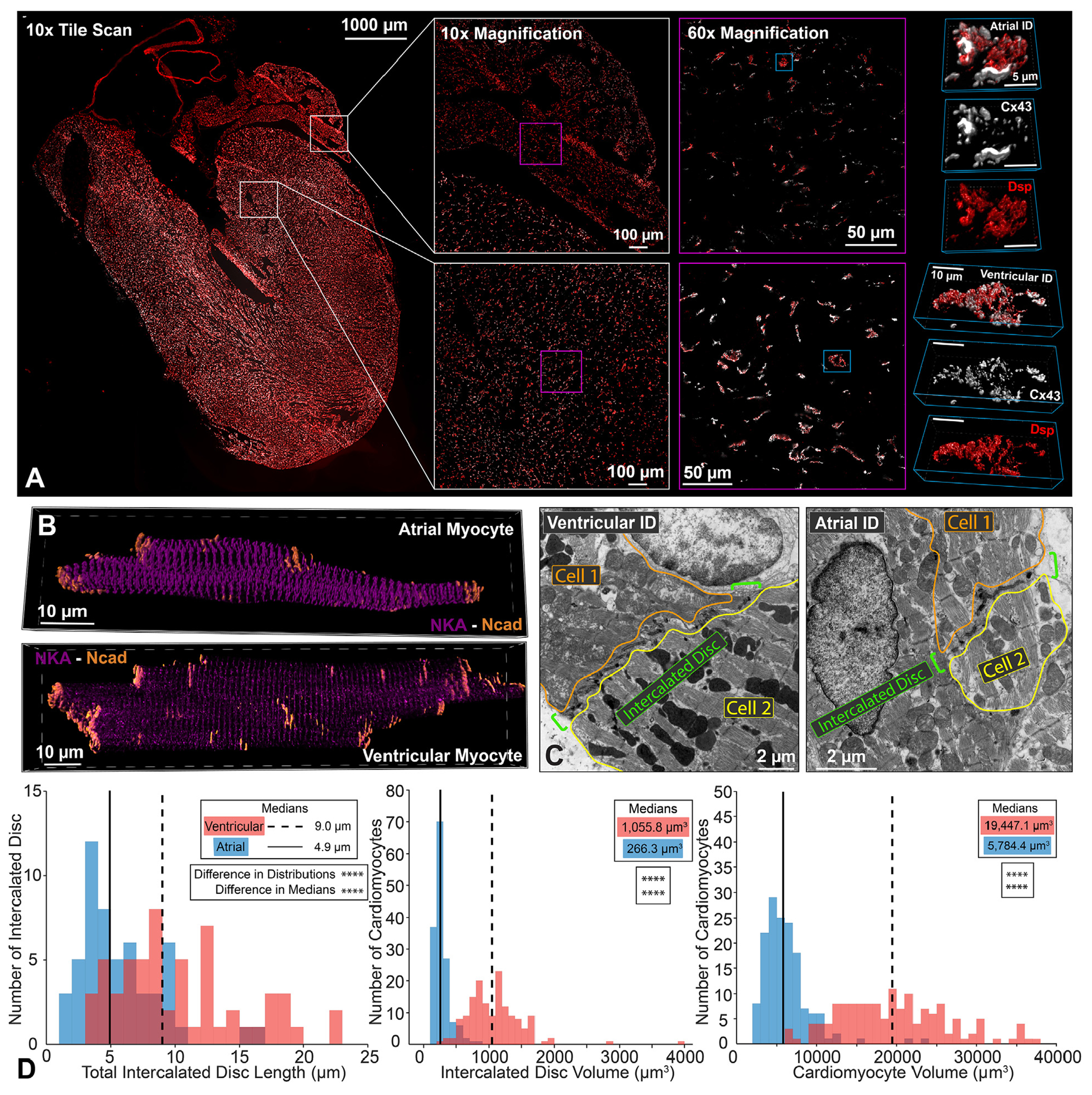
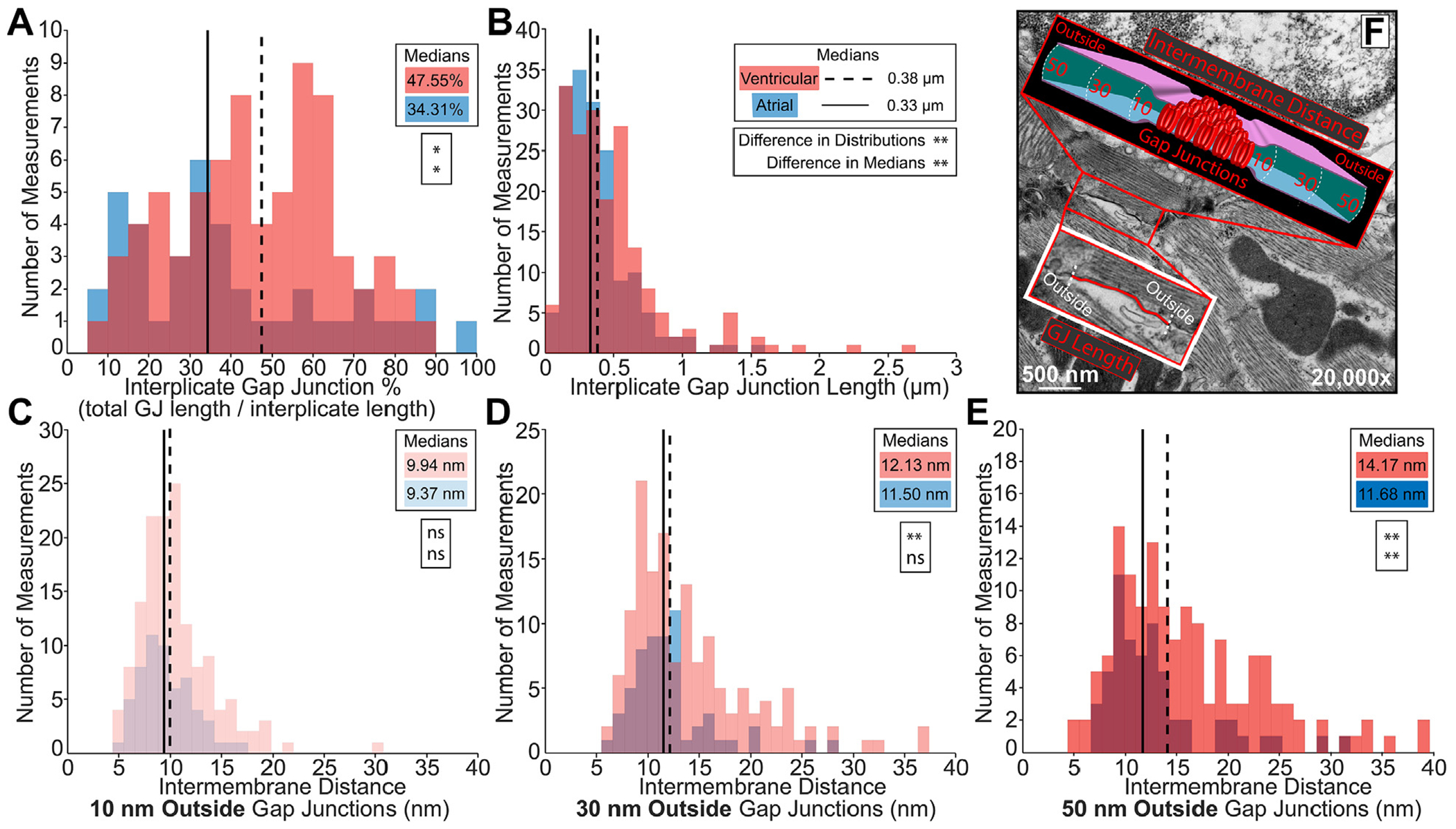
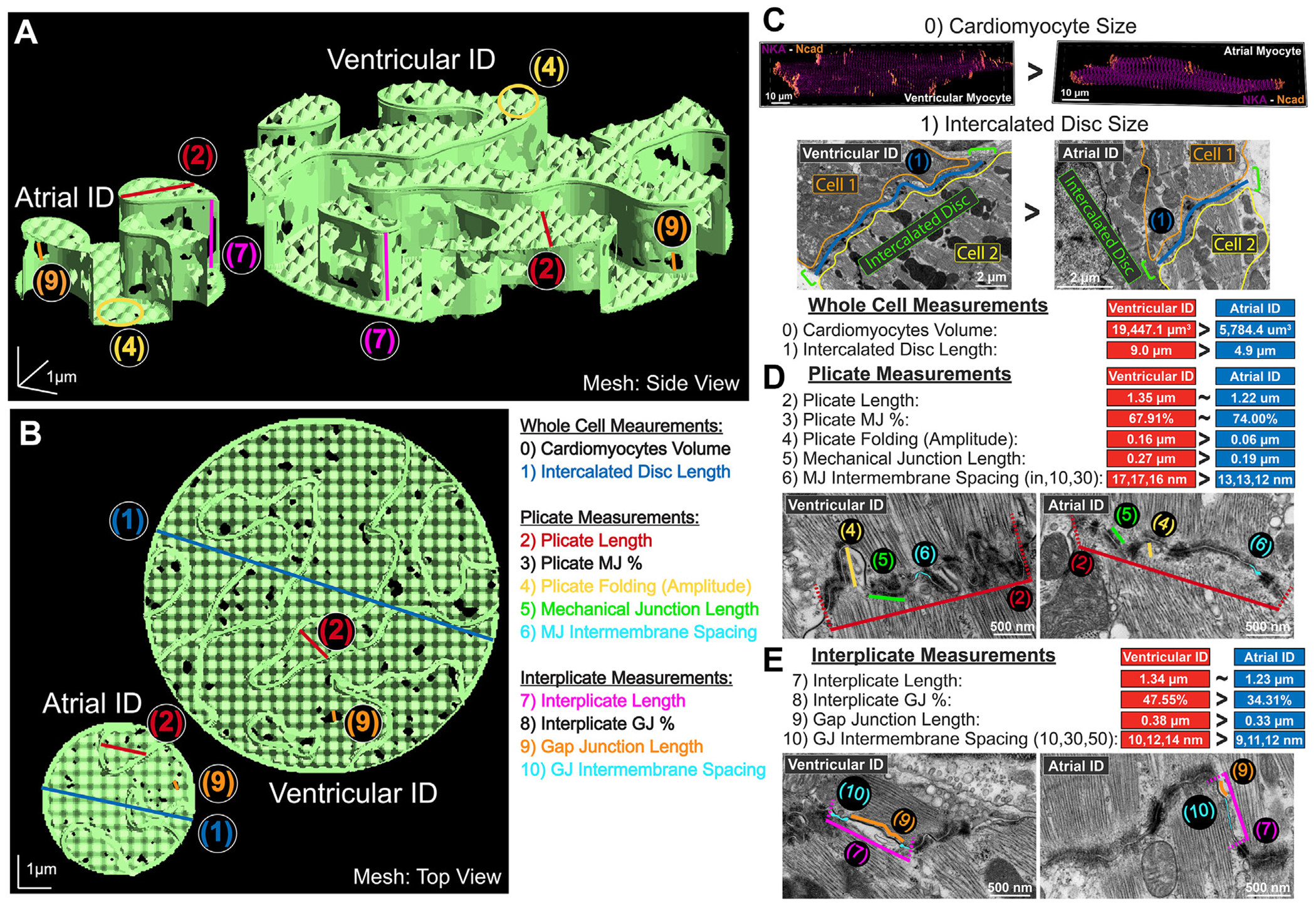
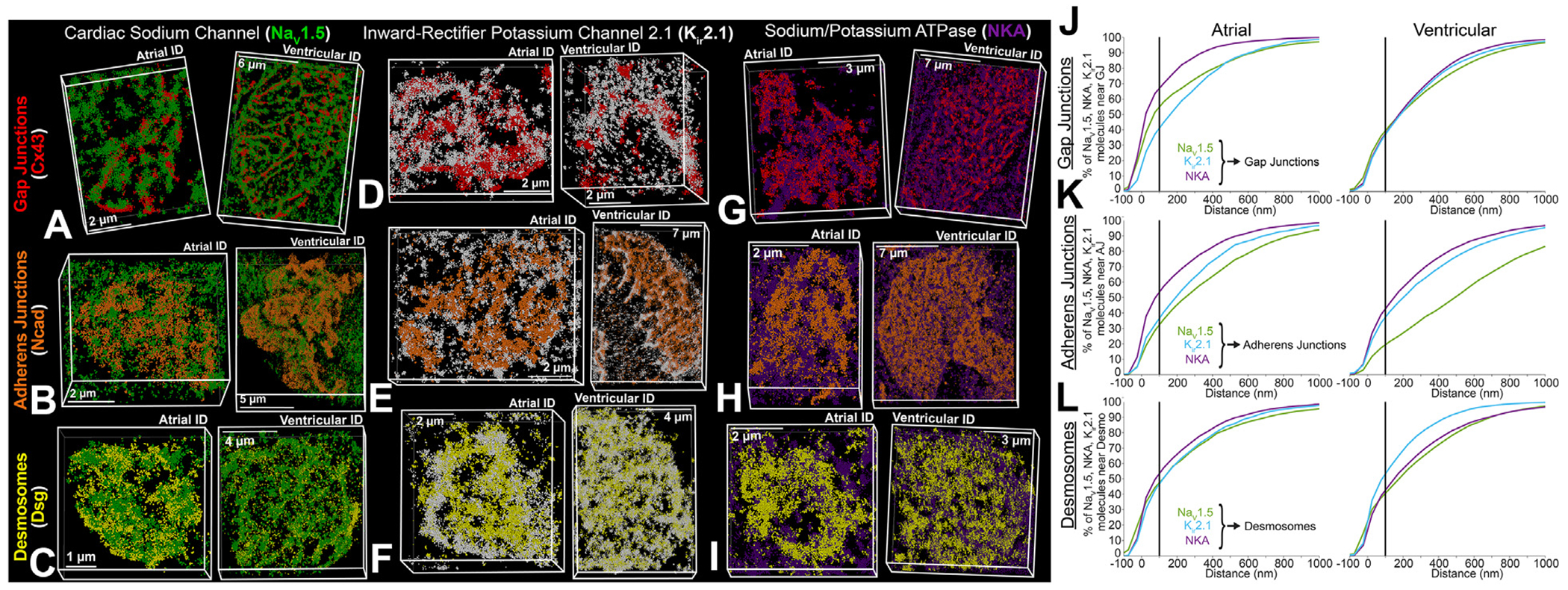
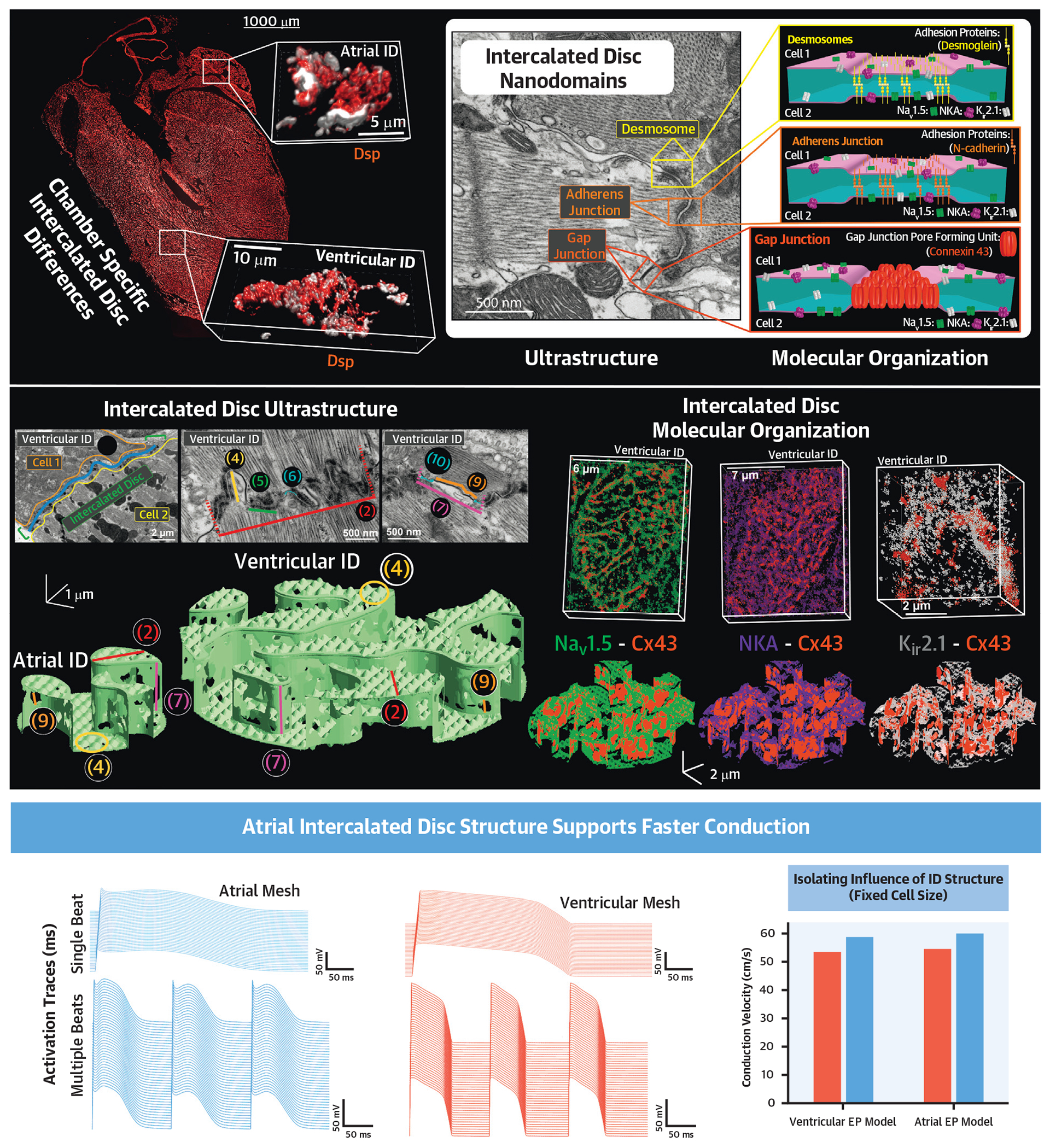
Methods: Using super-resolution light microscopy, electron microscopy, and computational image analysis, we provide here the first ever systematic, multiscale quantification of intercalated disc ultrastructure and molecular organization.
Results: By incorporating these data into a rule-based model of cardiac tissue with realistic intercalated disc structure, and comparing model predictions of electrical propagation with experimental measures of conduction velocity, we reveal that atrial intercalated discs can support faster conduction than their ventricular counterparts, which is normally masked by interchamber differences in myocyte geometry. Further, we identify key ultrastructural and molecular organization features underpinning the ability of atrial intercalated discs to support faster conduction.
Conclusions: These data provide the first stepping stone to elucidating chamber-specific effects of pathological intercalated disc remodeling, as occurs in many arrhythmic diseases.
Keywords: cardiac conduction; gap junctions; intercalated disc; ion channels; microscopy.
Copyright © 2023 American College of Cardiology Foundation. Published by Elsevier Inc. All rights reserved.
Conflict of interest statement
Funding Support and Author Disclosures This work was supported by National Institutes of Health R01 grants (HL148736 awarded to Dr Veeraraghavan, HL138003 awarded to Dr Weinberg, and R01HL155378 and R01 NS121234 awarded to Dr Radwański) as well as an American Heart Association grant (20TPA35460040) awarded to Dr Veeraraghavan, an American Heart Association Predoctoral Fellowship awarded to Dr Struckman, an American Heart Association Postdoctoral Fellowship awarded to Dr Moise, and a National Institutes of Health T32 (HL149637-02) and L40 (NS129034) awarded to Dr King. All other authors have reported that they have no relationships relevant to the contents of this paper to disclose.
Figures
Update of
-
Unraveling Chamber-specific Differences in Intercalated Disc Ultrastructure and Molecular Organization and Their Impact on Cardiac Conduction.bioRxiv [Preprint]. 2023 Mar 24:2023.02.13.528369. doi: 10.1101/2023.02.13.528369. bioRxiv. 2023. Update in: JACC Clin Electrophysiol. 2023 Dec;9(12):2425-2443. doi: 10.1016/j.jacep.2023.05.042. PMID: 36824727 Free PMC article. Updated. Preprint.
References
-
- Kleber AG, Rudy Y. Basic mechanisms of cardiac impulse propagation and associated arrhythmias. Physiol Rev. 2004;84:431–488. - PubMed
Publication types
MeSH terms
Grants and funding
LinkOut - more resources
Full Text Sources
Miscellaneous
