


Risk factors for human papillomavirus infection, cervical intraepithelial neoplasia and cervical cancer: an umbrella review and follow-up Mendelian randomisation studies
- PMID: 37501128
- PMCID: PMC10375747
- DOI: 10.1186/s12916-023-02965-w
Risk factors for human papillomavirus infection, cervical intraepithelial neoplasia and cervical cancer: an umbrella review and follow-up Mendelian randomisation studies
Abstract
Background: Persistent infection by oncogenic human papillomavirus (HPV) is necessary although not sufficient for development of cervical cancer. Behavioural, environmental, or comorbid exposures may promote or protect against malignant transformation. Randomised evidence is limited and the validity of observational studies describing these associations remains unclear.
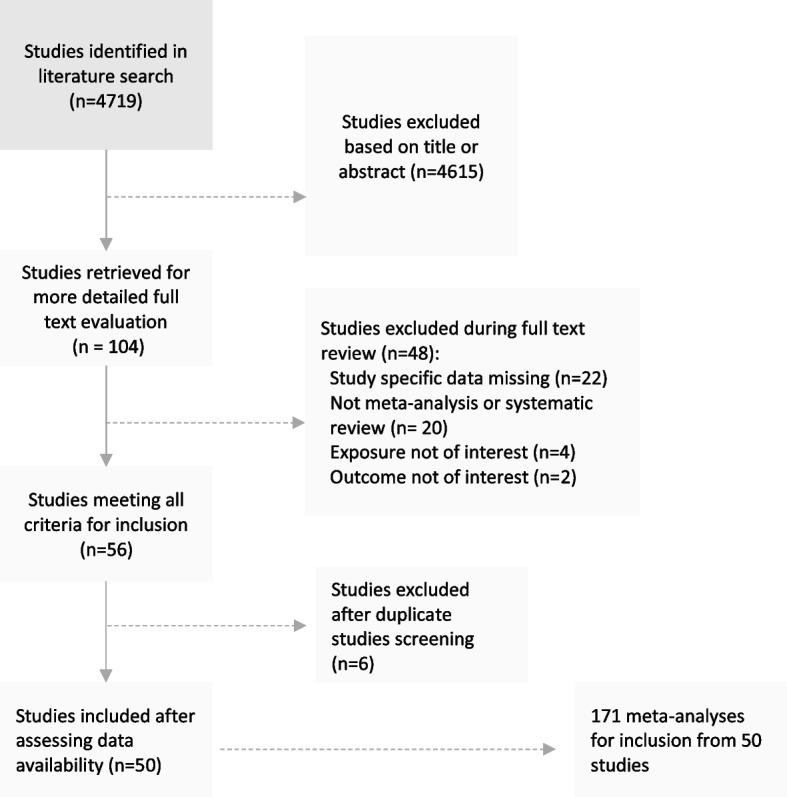
Methods: In this umbrella review, we searched electronic databases to identify meta-analyses of observational studies that evaluated risk or protective factors and the incidence of HPV infection, cervical intra-epithelial neoplasia (CIN), cervical cancer incidence and mortality. Following re-analysis, evidence was classified and graded based on a pre-defined set of statistical criteria. Quality was assessed with AMSTAR-2. For all associations graded as weak evidence or above, with available genetic instruments, we also performed Mendelian randomisation to examine the potential causal effect of modifiable exposures with risk of cervical cancer. The protocol for this study was registered on PROSPERO (CRD42020189995).
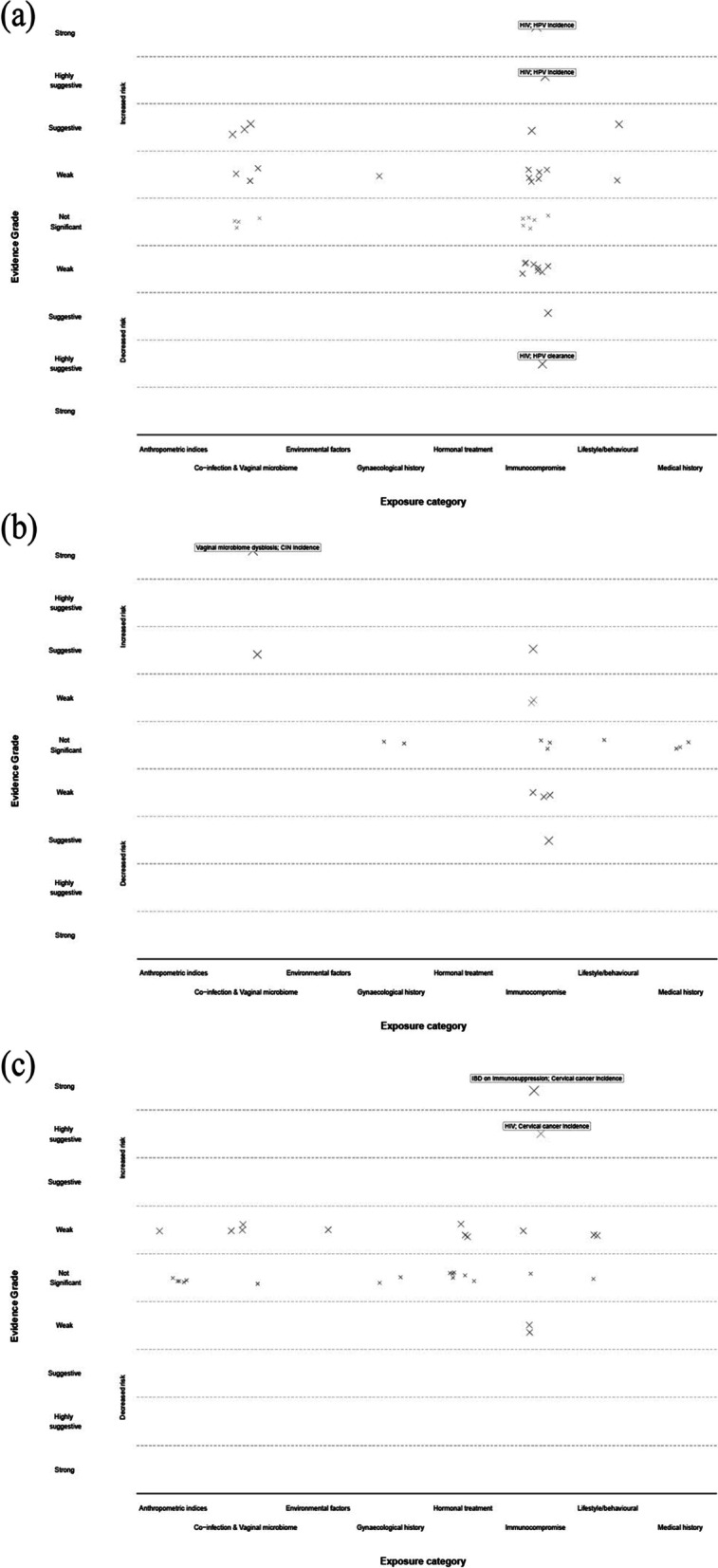
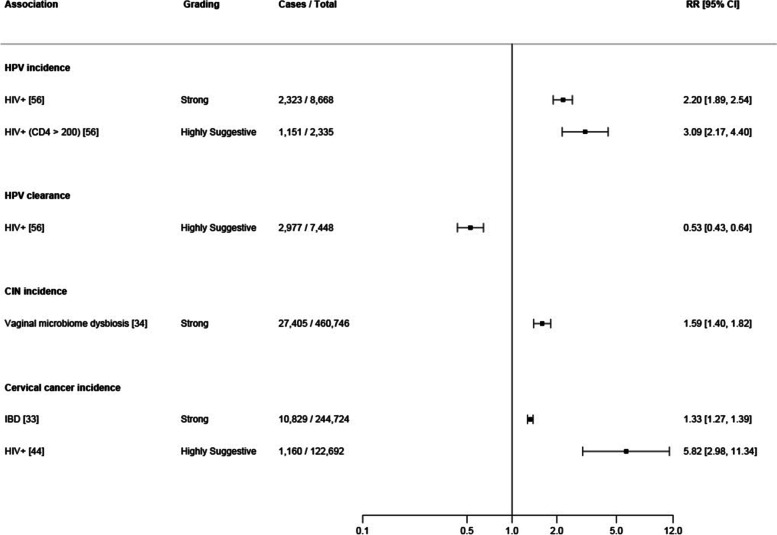
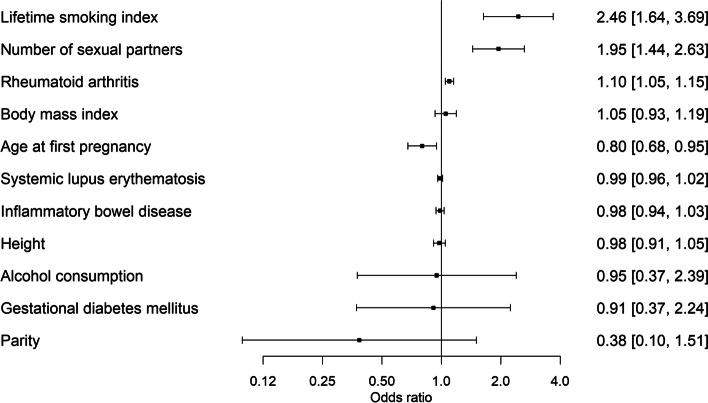
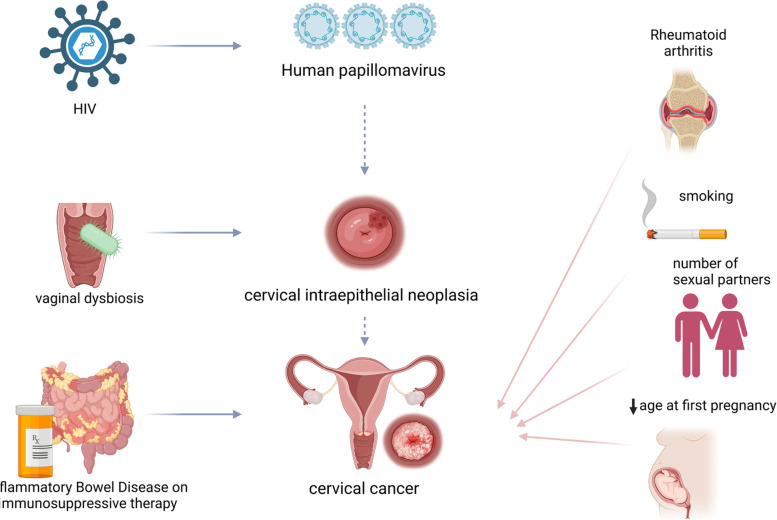
Results: We included 171 meta-analyses of different exposure contrasts from 50 studies. Systemic immunosuppression including HIV infection (RR = 2.20 (95% CI = 1.89-2.54)) and immunosuppressive medications for inflammatory bowel disease (RR = 1.33 (95% CI = 1.27-1.39)), as well as an altered vaginal microbiome (RR = 1.59 (95% CI = 1.40-1.81)), were supported by strong and highly suggestive evidence for an association with HPV persistence, CIN or cervical cancer. Smoking, number of sexual partners and young age at first pregnancy were supported by highly suggestive evidence and confirmed by Mendelian randomisation.
Conclusions: Our main analysis supported the association of systemic (HIV infection, immunosuppressive medications) and local immunosuppression (altered vaginal microbiota) with increased risk for worse HPV and cervical disease outcomes. Mendelian randomisation confirmed the link for genetically predicted lifetime smoking index, and young age at first pregnancy with cervical cancer, highlighting also that observational evidence can hide different inherent biases. This evidence strengthens the need for more frequent HPV screening in people with immunosuppression, further investigation of the vaginal microbiome and access to sexual health services.
Keywords: CIN; Cervical cancer; Cervical intraepithelial neoplasia; HPV; Mendelian randomisation; Microbiome; Umbrella.
© 2023. The Author(s).
Conflict of interest statement
The authors declare that they have no competing interests.
Figures
References
-
- Bowden SJ, Kyrgiou M. Human papillomavirus. Obstet Gynaecol Reprod Med. 2020;30(4):109–118. doi: 10.1016/j.ogrm.2020.02.003. - DOI
-
- Appleby P, Beral V, Berrington de González A, Colin D, Franceschi S, Goodill A, et al. Carcinoma of the cervix and tobacco smoking: collaborative reanalysis of individual data on 13,541 women with carcinoma of the cervix and 23,017 women without carcinoma of the cervix from 23 epidemiological studies. Int J Cancer. 2006;118(6):1481–95. doi: 10.1002/ijc.21493. - DOI - PubMed
