


"Treated like a Human Being": perspectives of people who inject drugs attending low-threshold HCV treatment at a syringe service program in New York City
- PMID: 37501180
- PMCID: PMC10375754
- DOI: 10.1186/s12954-023-00831-9
"Treated like a Human Being": perspectives of people who inject drugs attending low-threshold HCV treatment at a syringe service program in New York City
Abstract
Background: Hepatitis C virus (HCV) treatment can effectively cure HCV among people who inject drugs (PWID). Perspectives of PWID treated in innovative models can reveal program features that address barriers to treatment, and guide implementation of similar models.
Methods: We interviewed 29 participants in the intervention arm of a randomized trial. The trial enrolled PWID with HCV in New York City from 2017 to 2020 and tested the effectiveness of a low-threshold HCV treatment model at a syringe services program. Participants were purposively sampled and interviewed in English or Spanish. The interview guide focused on prior experiences with HCV testing and treatment, and experiences during the trial. Interviews were inductively coded and analyzed using thematic analysis.
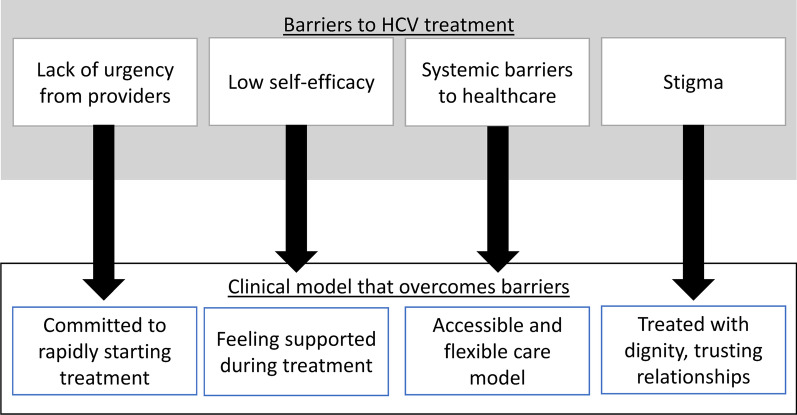
Results: Before enrollment, participants reported being tested for HCV in settings such as prison, drug treatment, and emergency rooms. Treatment was delayed because of not being seen as urgent by providers. Participants reported low self-efficacy, competing priorities, and systemic barriers to treatment such as insurance, waiting lists, and criminal-legal interactions. Stigma was a major factor. Treatment during the trial was facilitated through respect from staff, which overcame stigma. The flexible care model (allowing walk-ins and missed appointments) helped mitigate logistical barriers. The willingness of the staff to address social determinants of health was highly valued.
Conclusion: Our findings highlight the need for low-threshold programs with nonjudgmental behavior from program staff, and flexibility to adapt to participants' needs. Social determinants of health remain a significant barrier, but programs' efforts to address these factors can engender trust and facilitate treatment. Trial registration NCT03214679.
Keywords: Clinical trial; Hepatitis C; Low-threshold; Stigma; Substance use disorder; Treatment uptake.
© 2023. The Author(s).
Conflict of interest statement
Drs Kapadia, Eckhardt and Marks report research grants from Gilead Sciences Inc during the conduct of this study. Dr. Aponte-Melendez reports research grants from AbbVie Inc. All other authors report no potential conflicts of interest.
Figures
References
-
- AASLD-IDSA. Recommendations for testing, managing, and treating hepatitis C; 2022. Retrieved January 7, 2022, from https://www.hcvguidelines.org/.
-
- Behrends CN, Lu X, Corry GJ, LaKosky P, Prohaska SM, Glick SN, et al. Harm reduction and health services provided by syringe services programs in 2019 and subsequent impact of COVID-19 on services in 2020. Drug Alcohol Depend. 2022;232:109323. doi: 10.1016/j.drugalcdep.2022.109323. - DOI - PMC - PubMed
Publication types
MeSH terms
Associated data
Grants and funding
LinkOut - more resources
Full Text Sources
Medical
