


Follow-up of the re-evaluation of indigo carmine (E 132) as a food additive
- PMID: 37502014
- PMCID: PMC10369292
- DOI: 10.2903/j.efsa.2023.8103
Follow-up of the re-evaluation of indigo carmine (E 132) as a food additive
Abstract
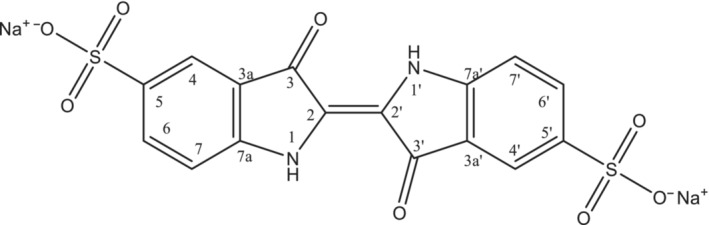
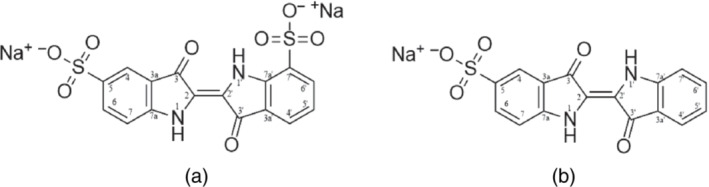
Indigo carmine (E 312) was re-evaluated in 2014 by the EFSA Panel on Food Additives and Nutrient sources added to Food (ANS). The ANS Panel confirmed the acceptable daily intake (ADI) of 5 mg/kg body weight (bw) per day for indigo carmine allocated by JECFA (1975). The ANS Panel indicated that the ADI was applicable to a material with a purity of 93% pure colouring and manufactured using processes resulting in comparable residuals as material used in the Borzelleca et al. studies (1985, 1986) and Borzelleca and Hogan (1985) which were the basis for deriving the ADI. The ANS Panel considered that any extension of the ADI to indigo carmine of lower purity and/or manufactured using a different process would require new data to address the adverse effects on the testes observed in the Dixit and Goyal (2013) study. Following a European Commission call for data to submit data to fill the data gaps, an IBO submitted technical and toxicological data. Considering the technical data, the EFSA Panel on Food Additives and Flavourings (FAF Panel) recommended some modifications of the existing EU specifications for E 132, mainly to lower the limits for toxic elements. Considering the toxicological data, an IBO has submitted a 56-day dietary study to address the adverse effects on testes using a material with 88% purity. The results of this study submitted did not confirm the severe adverse effects observed in the Dixit and Goyal study. Considering all the available information, the Panel confirmed the ADI of 5 mg/kg bw per day for indigo carmine (E 132) disodium salts, meeting the proposed revisions of the specifications (85% minimum for the colouring matter). The Panel concluded that there is no safety concern for the use of indigo carmine (E 132) disodium salts at the reported use levels and submitted analytical data.
Keywords: E 132; EINECS 212‐728‐8; FD&C Blue No. 2; Indigo Carmine; Indigotine; aniline; disodium 3,3‐dioxo‐2,2‐bi‐indolylidene‐5,5‐disulfonate; food additive.
© 2023 European Food Safety Authority. EFSA Journal published by Wiley‐VCH GmbH on behalf of European Food Safety Authority.
Figures
References
-
- Dixit A and Goyal RP, 2013. Evaluation of Reproductive toxicity caused by Indigo carmine on male swiss albino mice. Pharmacology Online, 1, 218–224. Available online: https://www.researchgate.net/publication/287328182_Evaluation_of_Reprodu...
LinkOut - more resources
Full Text Sources
Miscellaneous