


This is a preprint.
Genomic characterization of the C. tuberculostearicum species complex, a ubiquitous member of the human skin microbiome
- PMID: 37502876
- PMCID: PMC10370181
- DOI: 10.1101/2023.06.16.545375
Genomic characterization of the C. tuberculostearicum species complex, a ubiquitous member of the human skin microbiome
Update in
-
Genomic characterization of the C. tuberculostearicum species complex, a prominent member of the human skin microbiome.mSystems. 2023 Dec 21;8(6):e0063223. doi: 10.1128/msystems.00632-23. Epub 2023 Nov 10. mSystems. 2023. PMID: 38126779 Free PMC article.
Abstract
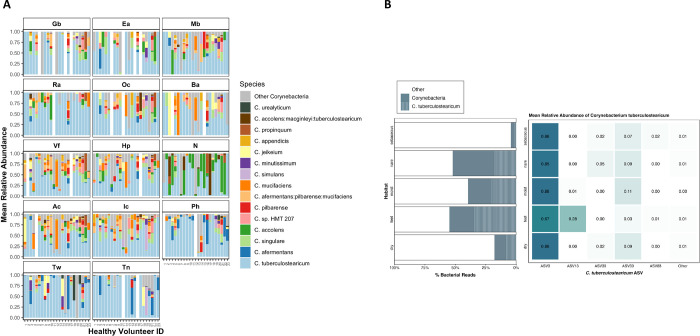
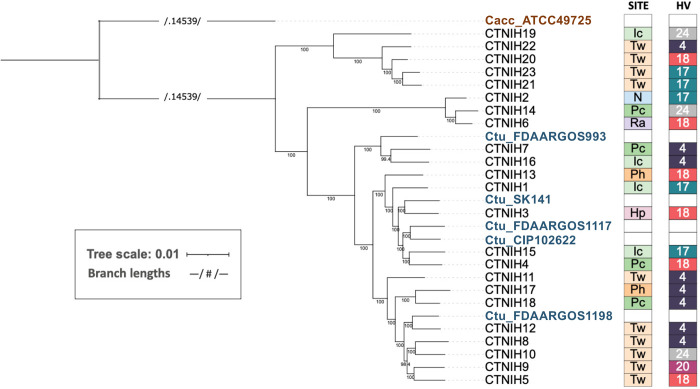
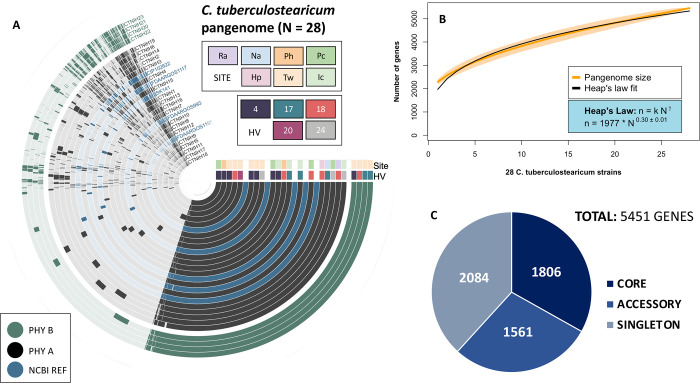
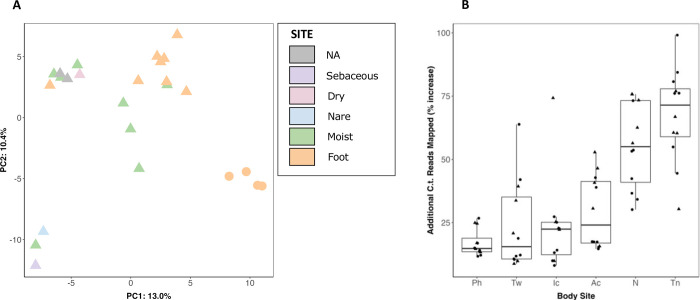
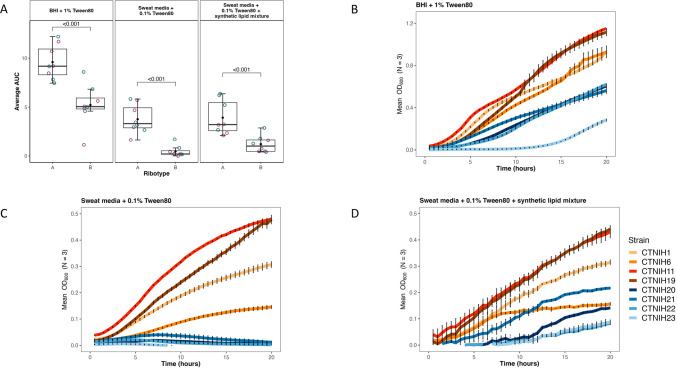
Corynebacterium is a predominant genus in the skin microbiome, yet its genetic diversity on skin is incompletely characterized and lacks a comprehensive set of reference genomes. Our work aims to investigate the distribution of Corynebacterium species on the skin, as well as to expand the existing genome reference catalog to enable more complete characterization of skin metagenomes. We used V1-V3 16S rRNA gene sequencing data from 14 body sites of 23 healthy volunteers to characterize Corynebacterium diversity and distribution across healthy human skin. Corynebacterium tuberculostearicum is the predominant species found on human skin and we identified two distinct C. tuberculostearicum ribotypes (A & B) that can be distinguished by variation in the 16S rRNA V1-V3 sequence. One is distributed across all body sites and the other found primarily on the feet. We performed whole genome sequencing of 40 C. tuberculostearicum isolates cultured from the skin of five healthy individuals across seven skin sites. We generated five closed genomes of diverse C. tuberculostearicum which revealed that C. tuberculostearicum isolates are largely syntenic and carry a diversity of methylation patterns, plasmids and CRISPR/Cas systems. The pangenome of C. tuberculostearicum is open with a core genome size of 1806 genes and a pangenome size of 5451 total genes. This expanded pangenome enabled the mapping of 24% more C. tuberculostearicum reads from shotgun metagenomic datasets derived from skin body sites. Finally, while the genomes from this study all fall within a C. tuberculostearicum species complex, the ribotype B isolates may constitute a new species.
Figures
References
-
- Kong HH, Oh J, Deming C, Conlan S, Grice EA, Beatson MA, Nomicos E, Polley EC, Komarow HD, NISC Comparative Sequence Program, Murray PR, Turner ML, Segre JA. 2012. Temporal shifts in the skin microbiome associated with disease flares and treatment in children with atopic dermatitis. Genome Res 22:850–859. - PMC - PubMed
Publication types
LinkOut - more resources
Full Text Sources
