This is a preprint.
Investigating Environmental Determinants of Soil-Transmitted Helminths Transmission using GPS Tracking and Metagenomics Technologies
- PMID: 37503260
- PMCID: PMC10371187
- DOI: 10.1101/2023.07.17.23292808
Investigating Environmental Determinants of Soil-Transmitted Helminths Transmission using GPS Tracking and Metagenomics Technologies
Update in
-
Investigating Environmental Determinants of Hookworm Transmission using GPS Tracking and Metagenomics Technologies.Am J Trop Med Hyg. 2024 Dec 31;112(3):561-570. doi: 10.4269/ajtmh.24-0384. Print 2025 Mar 5. Am J Trop Med Hyg. 2024. PMID: 39813691 Free PMC article.
Abstract
Background: The Global Health community aims to eliminate soil-transmitted helminth (STH) infections by 2030. Current preventive methods such as Mass Drug Administration, WASH practices, and health education needs to be complimented to halt transmission. We tracked the movement of hookworm-infected and non-infected persons and investigated soil factors in the places they frequented within an endemic community to further understand the role of human movement and sources of infections.
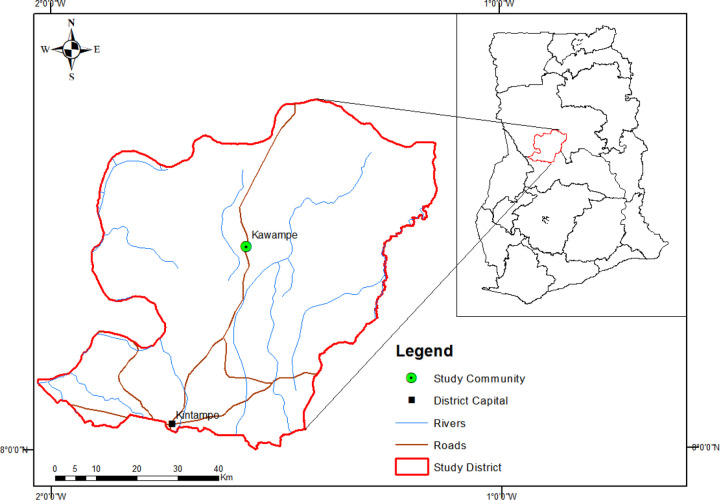
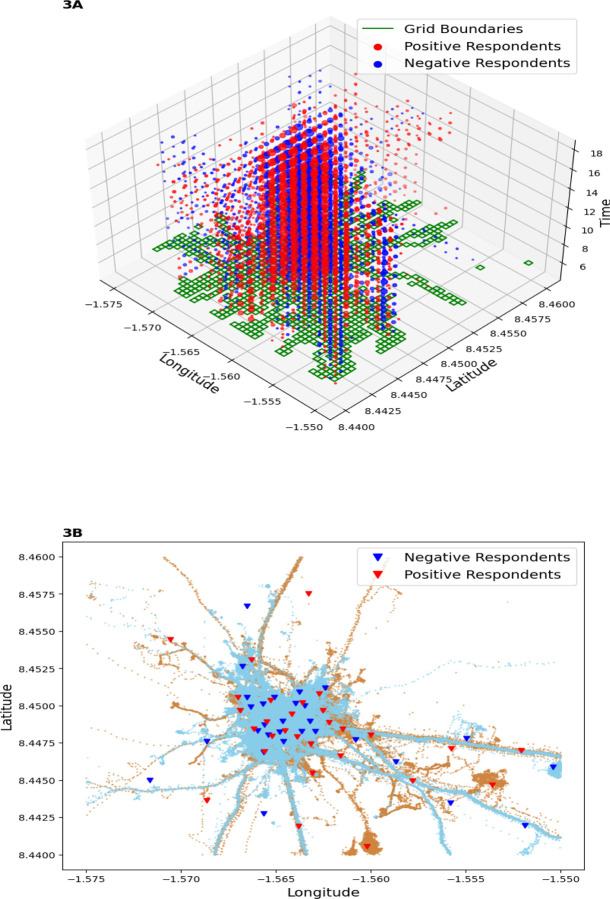
Methods: 59 positive and negative participants wore GPS tracking devices for 10 consecutive days and their movement data captured in real time. The data was overlaid on the community map to determine where each group differentially spent most of their time. Soil samples were collected from these identified sites and other communal places. Physical and chemical properties were determined for each sample using standard methods and helminth eggs cultured into larvae using the Baermann technique. Bivariate and multivariate analyses were used to determine associations between larvae counts and soil factors. Helminth species were identified with metagenomic sequencing and their distributions mapped to sampling sites in the community.
Results: The study found that there was no significant difference in the average larvae counts in soil between sites assessed by infected and non-infected participants (P=0.59). However, soil factors, such as pH, carbon and sandy-loamy texture were associated with high larvae counts (P<0.001) while nitrogen and clay content were associated with low counts(P<0.001). The dominant helminth species identified were Panagrolaimus superbus (an anhydrobiotic helminth), Parastrongyloides trichosuri (a parasite of small mammals), Trichuris trichuria (whipworm), and Ancylostoma caninum (dog hookworm). Notably, no Necator americanus was identified in any soil sample.
Conclusion: This study provides important insights into the association between soil factors and soil-transmitted helminths. These findings contribute to our understanding of STH epidemiology and support evidence-based decision-making for elimination strategies.
Keywords: GPS tracking; Metagenomics; Soil-transmitted helminths; soil factors.
Conflict of interest statement
Competing Interests: The authors declare no competing interests.
Figures



References
-
- Hay A. A., Kiadaliri, “Global, regional, and national disability-adjusted life-years (DALYs) for 315 diseases and injuries and healthy life expectancy (HALE), 1990–2015: a …,” 2016. [Online]. Available: http://lup.lub.lu.se/record/b002b350-12f6-4e5b-8b4f-33d074a02525 - PMC - PubMed
-
- WHO, “Helminth control in school-age children,” 2011.
Publication types
Grants and funding
LinkOut - more resources
Full Text Sources