


Are Canadian Women Prepared for the Transition to Primary HPV Testing in Cervical Screening? A National Survey of Knowledge, Attitudes, and Beliefs
- PMID: 37504372
- PMCID: PMC10378227
- DOI: 10.3390/curroncol30070512
Are Canadian Women Prepared for the Transition to Primary HPV Testing in Cervical Screening? A National Survey of Knowledge, Attitudes, and Beliefs
Abstract
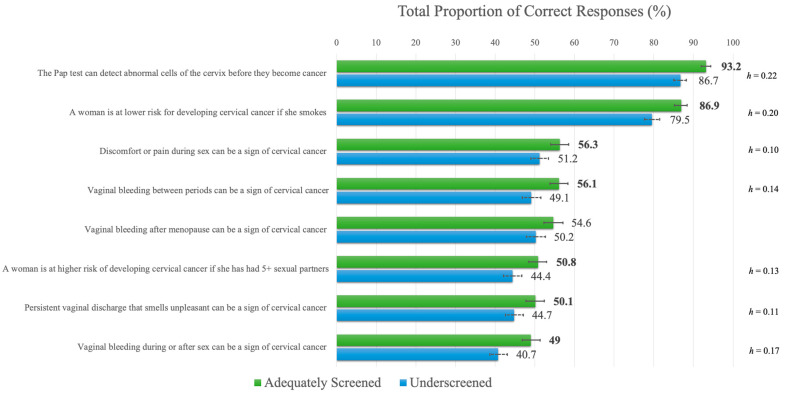
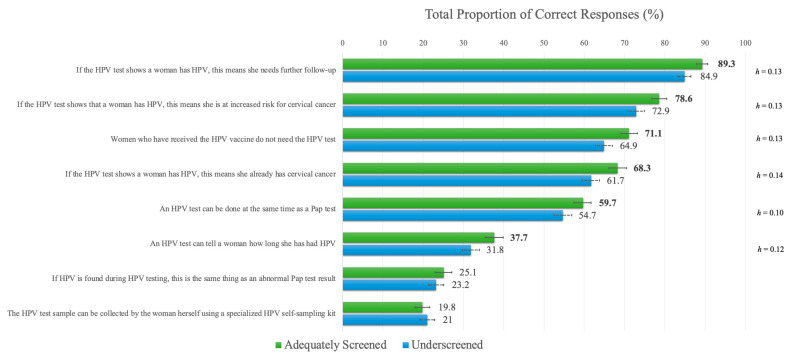
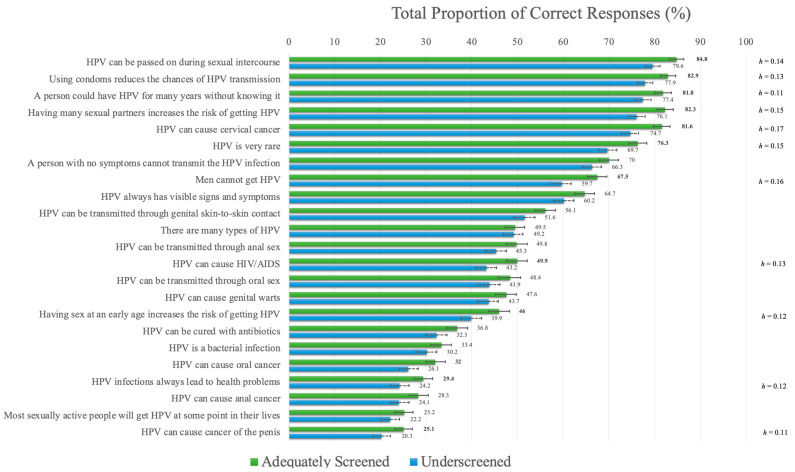
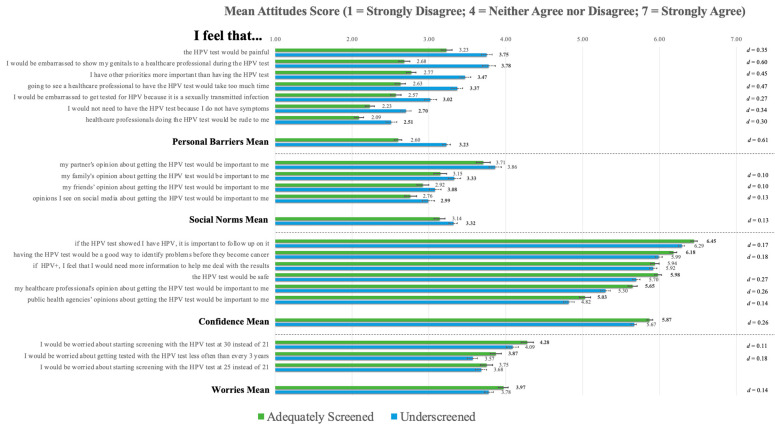
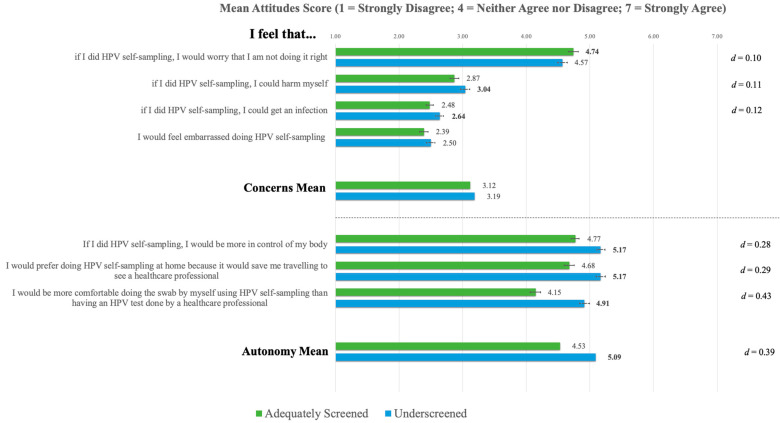
As Canadian provinces and territories prepare to transition to HPV-based primary screening for cervical cancer, failure to identify and address potential barriers to screening could hinder program implementation. We examined screening-eligible Canadians' attitudes towards and knowledge of cervical screening. A nationally representative sample of screening-eligible Canadians (N = 3724) completed a web-based survey in the summer of 2022. Oversampling ensured that half of the sample were underscreened for cervical cancer (>3 years since previous screening or never screened). The participants completed validated scales of cervical cancer, HPV, and HPV test knowledge and HPV test and self-sampling attitudes and beliefs. Between-group differences (underscreened vs. adequately screened) were calculated for scales and items using independent sample t-tests or chi-square tests. The underscreened participants (n = 1871) demonstrated significantly lower knowledge of cervical cancer, HPV, and the HPV test. The adequately screened participants (n = 1853) scored higher on the Confidence and Worries subscales of the HPV Test Attitudes and Beliefs Scale. The underscreened participants scored higher on the Personal Barriers and Social Norms subscales. The underscreened participants also endorsed greater Autonomy conferred by self-sampling. Our findings suggest important differential patterns of knowledge, attitudes, and beliefs between the underscreened and adequately screened Canadians. These findings highlight the need to develop targeted communication strategies and promote patient-centered, tailored approaches in cervical screening programs.
Keywords: HPV; HPV testing; cervical cancer screening; knowledge attitudes and beliefs; self-sampling; web-based survey; women.
Conflict of interest statement
The authors have no conflicts of interest to declare.
Figures
References
-
- Cervical Cancer Statistics. [(accessed on 27 June 2022)]. Available online: https://cancer.ca/en/cancer-information/cancer-types/cervical/statistics.
-
- Cervical Cancer Screening in Canada: Monitoring & Evaluation of Quality Indicators. [(accessed on 10 July 2023)]. Available online: https://s22457.pcdn.co/wp-content/uploads/2019/01/Cervical-Cancer-Screen....
-
- Action Plan for the Elimination of Cervical Cancer, 2020–2030. [(accessed on 30 August 2022)]. Available online: https://www.partnershipagainstcancer.ca/topics/elimination-cervical-canc...
-
- Tota J.E., Bentley J., Blake J., Coutlée F., Duggan M.A., Ferenczy A., Franco E.L., Fung-Kee-Fung M., Gotlieb W., Mayrand M.-H., et al. Introduction of molecular HPV testing as the primary technology in cervical cancer screening: Acting on evidence to change the current paradigm. Prev. Med. 2017;98:5–14. doi: 10.1016/j.ypmed.2016.11.029. - DOI - PubMed
