. 2023 Jul 28;13(1):12241.
doi: 10.1038/s41598-023-39491-x.

5-Aminosalicylic acid alters the gut microbiota and altered microbiota transmitted vertically to offspring have protective effects against colitis

Affiliations

5-Aminosalicylic acid alters the gut microbiota and altered microbiota transmitted vertically to offspring have protective effects against colitis

Haruka Wada et al. Sci Rep. .

Abstract

Although many therapeutic options are available for inflammatory bowel disease (IBD), 5-aminosalicylic acid (5-ASA) is still the key medication, particularly for ulcerative colitis (UC). However, the mechanism of action of 5-ASA remains unclear. The intestinal microbiota plays an important role in the pathophysiology of IBD, and we hypothesized that 5-ASA alters the intestinal microbiota, which promotes the anti-inflammatory effect of 5-ASA. Because intestinal inflammation affects the gut microbiota and 5-ASA can change the severity of inflammation, assessing the impact of inflammation and 5-ASA on the gut microbiota is not feasible in a clinical study of patients with UC. Therefore, we undertook a translational study to demonstrate a causal link between 5-ASA administration and alterations of the intestinal microbiota. Furthermore, by rigorously controlling environmental confounders and excluding the effect of 5-ASA itself with a vertical transmission model, we observed that the gut microbiota altered by 5-ASA affected host mucosal immunity and decreased susceptibility to dextran sulfate sodium-induce colitis. Although the potential intergenerational transmission of epigenetic changes needs to be considered in this study, these findings suggested that alterations in the intestinal microbiota induced by 5-ASA directed the host immune system towards an anti-inflammatory state, which underlies the mechanism of 5-ASA efficacy.


Conflict of interest statement

The authors declare no competing interests.

Figures
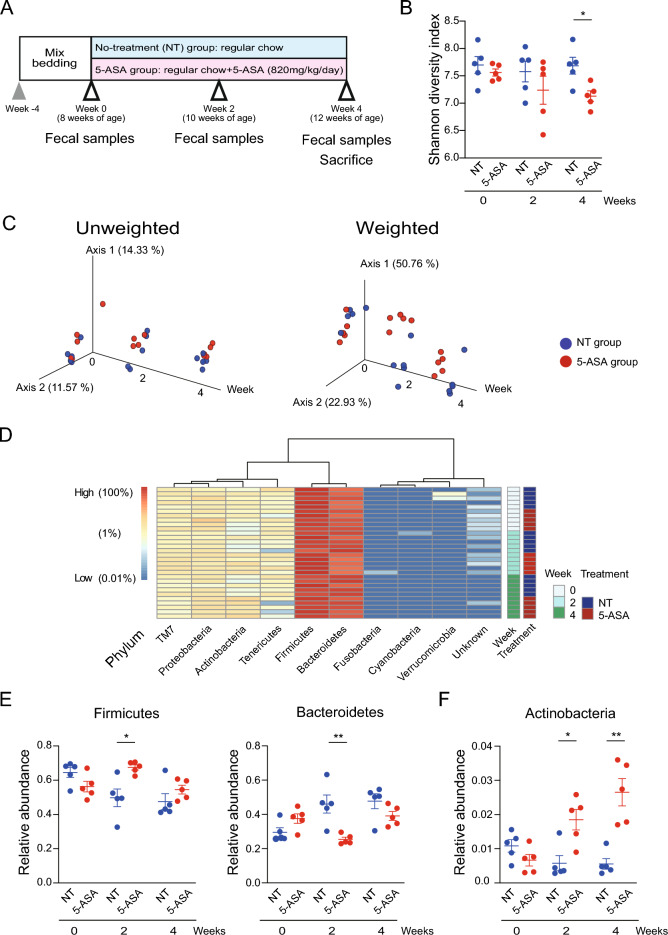
Figure 1
Figure 1
Oral administration of 5-aminosalicylic acid alters the gut bacterial composition. (A) The study design of oral 5-aminosalicylic acid (5-ASA) administration. Fecal samples were collected at weeks 0, 2, and 4. Mice were sacrificed to collect tissues at week 4. (B) Changes in the Shannon diversity index over time in female animals treated with 5-ASA. (C) PCoA plots based on unweighted and weighted UniFrac distances of the intestinal bacterial compositions in female animals. (D) Heatmap of relative abundances of bacterial phyla over time in female animals. Each row represents a single DNA sample, and each column represents each phylum. (E) Changes in the relative abundances of phyla Firmicutes and Bacteroidetes over time in female animals. (F) Changes in the relative abundance of phylum Actinobacteria in female animals. *p < 0.05, **p < 0.01, Mann–Whitney U-test. The data are described as the mean ± SEM. Male data are shown in Supplemental Figure S1. Heatmap was generated by Pretty Heatmaps (version 1.0.12) (https://cran.r-project.org/web/packages/pheatmap).
Figure 2
Figure 2
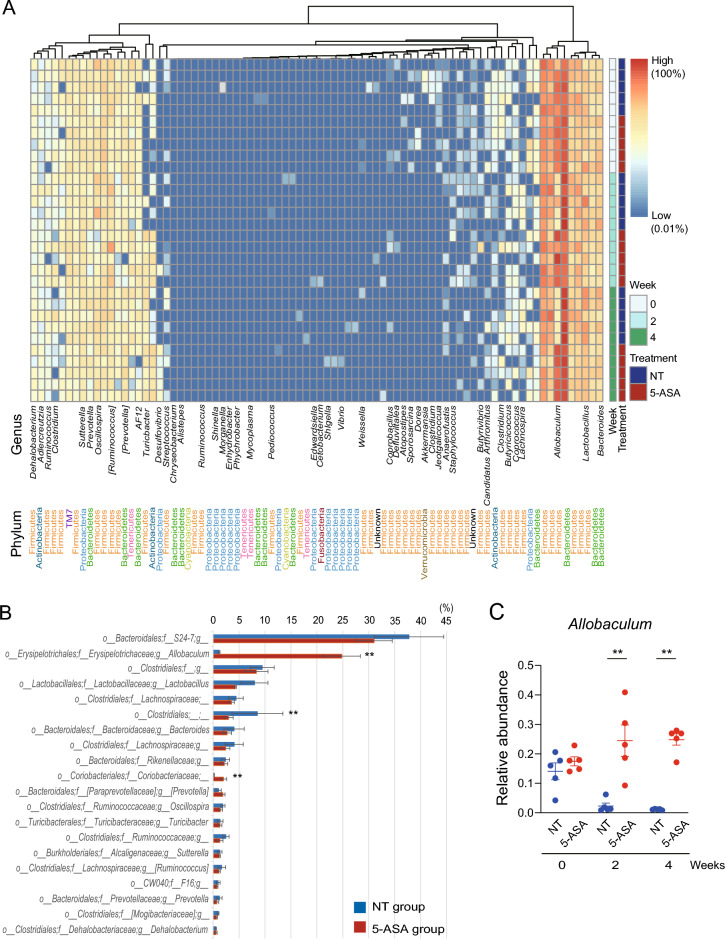
Alterations of bacterial genera by 5-aminosalicylic acid administration. (A) Heatmap of the relative abundances of bacterial genera over time in female animals. Each row represents a single DNA sample, and each column represents each genus. A blank in the name of the genus indicates it was not annotated with QIIME 2. (B) Top 20 bacterial genera with high relative abundance in female animals treated with 5-aminosalicylic acid (5-ASA). (C) Relative abundance of the genus Allobaculum over time in female animals. **p < 0.01, Mann–Whitney U-test. Corrected p was not significant with Mann–Whitney U-test and Benjamini–Hochberg procedure. The data are described as the mean ± SEM. Male data are shown in Supplemental Figure S2. Heatmap was generated by Pretty Heatmaps (version 1.0.12) (https://cran.r-project.org/web/packages/pheatmap).
Figure 3
Figure 3
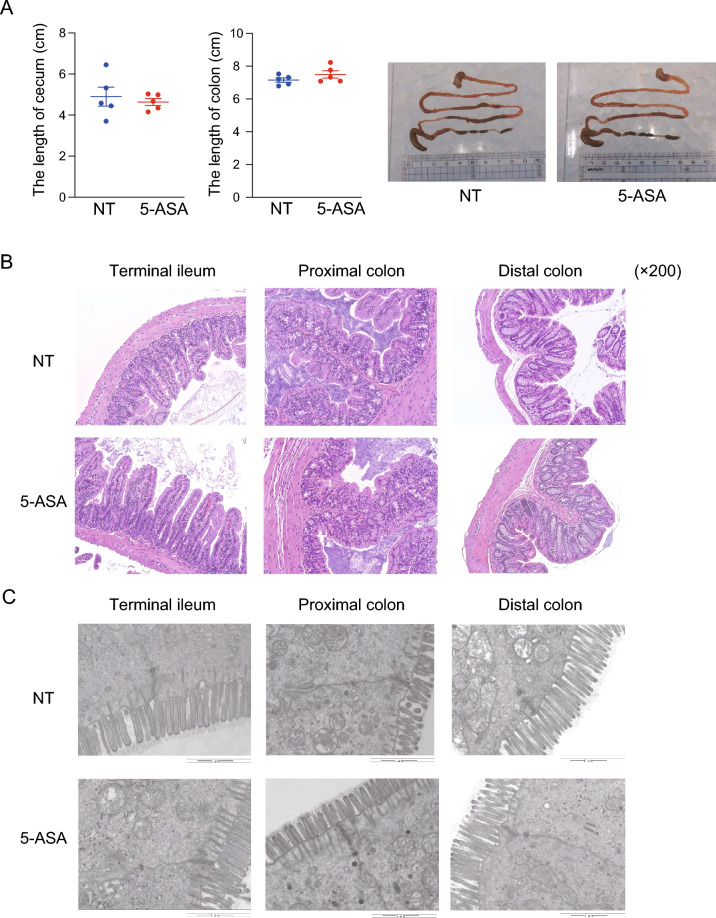
Oral 5-aminosalicylic acid administration does not affect the intestinal morphology. (A) The length of the cecum and colon in female animals in the 5-aminosalicylic acid (5-ASA) group and the non-treated (NT) group. Representative images are presented. (B) Representative images of female intestinal specimens stained with hematoxylin and eosin (H&E) under an optical microscope (×200). (C) Representative images of female intestinal specimens obtained by transmission electron microscopy. Scale bars 1 µm (see Supplemental Figure S4D). The data are described as the mean ± SEM. Male data are shown in Supplemental Figure S4.
Figure 4
Figure 4
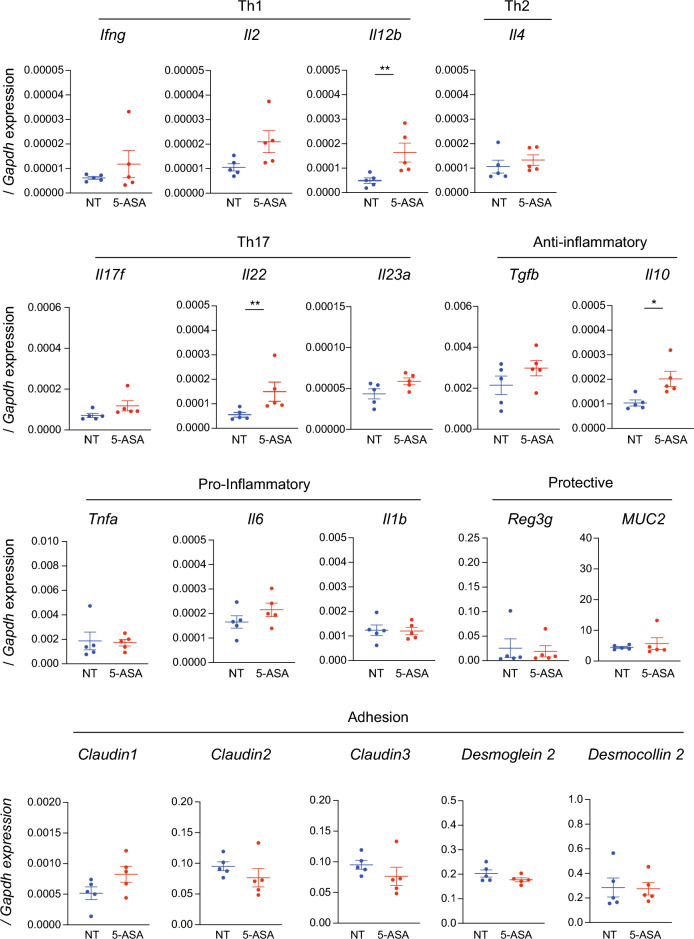
The oral administration of 5-aminosalicylic acid influences mRNA expression in the colonic mucosa. mRNA expressions of cytokines and pro- and anti-inflammatory molecules involved in colonic inflammation in the colonic mucosa were examined in the 5-aminosalicylic acid (5-ASA) group and non-treated (NT) group by real-time qPCR. mRNA expressions are expressed as ΔΔCT relative to the housekeeper gene Gapdh. Female data are presented as the mean ± SEM. *p < 0.05, **p < 0.01, Mann–Whitney U-test. Male data are shown in Supplemental Figure S5.
Figure 5
Figure 5
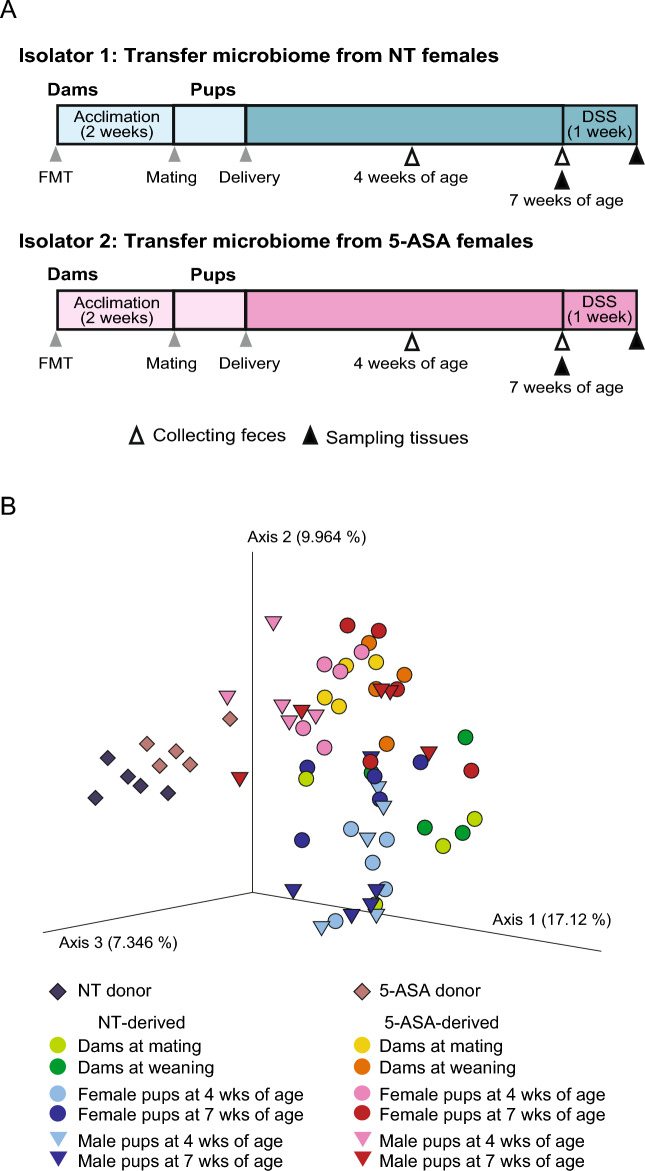
Vertical transmission of the gut microbiota in non-treated mice or mice treated with 5-aminosalicylic acid. (A) The study design took advantage of the intergenerational vertical transmission of intestinal microbiota to obtain pups with gut microbiota treated with 5-aminosalicylic acid (5-ASA) whilst excluding the possible effect of 5-ASA residues. Five pups of each sex were sacrificed at 7 weeks of age for further analyses and the others were used for dextran sodium sulfate-induced colitis experiments. (B) PCoA plot based on unweighted UniFrac distances of bacterial compositions of animals in Isolator 1 (the non-treated [NT]-derived group) and Isolator 2 (the 5-ASA-derived group), and the donors of fecal microbiota transfer.
Figure 6
Figure 6
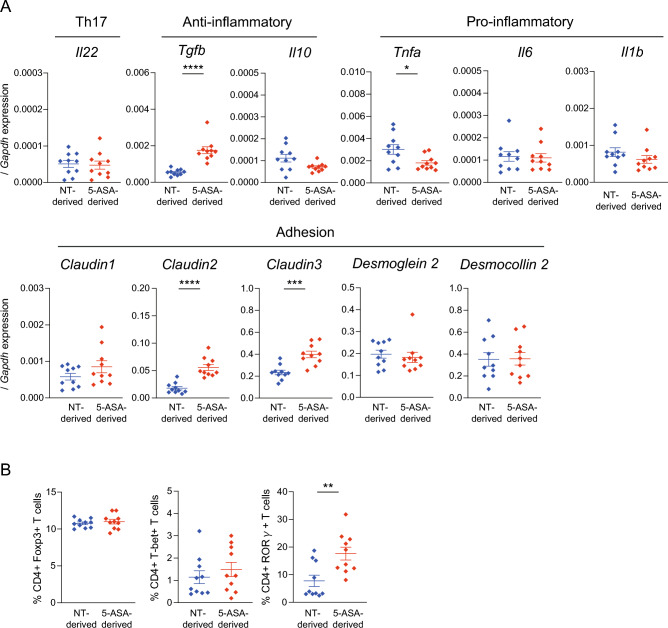
Vertically transmitted 5-aminosalicylic acid-induced alterations of the intestinal microbiota influence the host immune profile. (A) mRNA expressions in the colonic mucosa of the 5-aminosalicylic acid (5-ASA)-derived group and non-treated (NT)-derived group were examined by real-time qPCR (n = 10). mRNA expressions are expressed as ΔΔCT relative to the housekeeper gene Gapdh. (B) Flow-cytometric analyses of live CD45+ TCRβ+CD4+ T cells expressing Foxp3+, T-bet+, or RORγt+ in the mesenteric lymph nodes of the 5-ASA-derived and NT groups (n = 10). The data are the mean ± SEM. *p < 0.05, **p < 0.01, ***p < 0.001, ****p < 0.0001, Mann–Whitney U-test. The gating strategy for flow cytometric analyses is shown in Supplemental Figure S8.
Figure 7
Figure 7
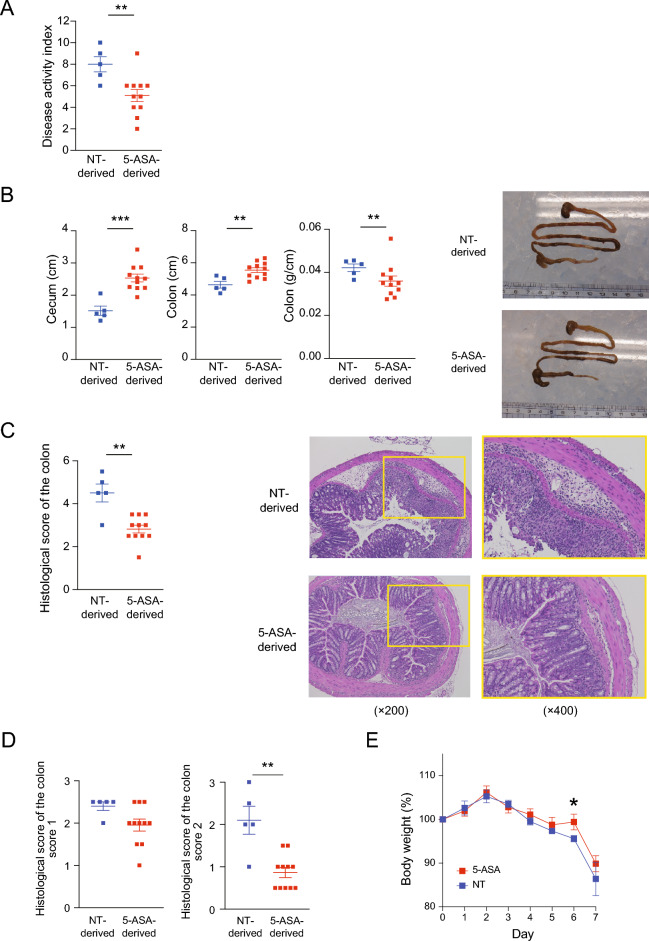
Vertical transmission of intestinal microbiota altered by 5-aminosalicylic acid leads to a protective effect protect against dextran sulfate sodium-induced colitis. The severity of colitis was assessed on day 7 after dextran sulfate sodium (DSS)-induced colitis was initiated in the 5-aminosalicylic acid (5-ASA)-derived group and non-treated (NT)-derived group. Male data are shown (n = 5 in the NT-derived group and n = 11 in the 5-ASA-derived group) (A) disease activity index. (B) The length of the cecum, length of the colon, and the colon weight per length with representative macroscopic images. (C) Histological score of the colon with representative microscopic images (×200 and ×400). (D) Histological scores of score 1 (inflammatory cell infiltrate) and score 2 (intestinal architecture). (E) Body weight changes during DSS treatment. The data are the mean ± SEM. **p < 0.01, ***p < 0.001, Mann–Whitney U-test. Female data are shown in Supplemental Figure S9.

References

    1. Nishida A, et al. Gut microbiota in the pathogenesis of inflammatory bowel disease. Clin. J. Gastroenterol. 2018;11:1–10. doi: 10.1007/s12328-017-0813-5. - DOI - PubMed
    1. Gagliardi A, et al. Rebuilding the gut microbiota ecosystem. Int. J. Environ. Res. Public Health. 2018;15:5. doi: 10.3390/ijerph15081679. - DOI - PMC - PubMed
    1. Dixit K, Chaudhari D, Dhotre D, Shouche Y, Saroj S. Restoration of dysbiotic human gut microbiome for homeostasis. Life Sci. 2021;278:119622. doi: 10.1016/j.lfs.2021.119622. - DOI - PubMed
    1. El-Sayed A, Aleya L, Kamel M. The link among microbiota, epigenetics, and disease development. Environ. Sci. Pollut. Res. Int. 2021;28:28926–28964. doi: 10.1007/s11356-021-13862-1. - DOI - PubMed
    1. Rooks MG, Garrett WS. Gut microbiota, metabolites and host immunity. Nat. Rev. Immunol. 2016;16:341–352. doi: 10.1038/nri.2016.42. - DOI - PMC - PubMed

Publication types