


Efficacy of beetroot juice on reducing blood pressure in hypertensive adults with autosomal dominant polycystic kidney disease (BEET-PKD): study protocol for a double-blind, randomised, placebo-controlled trial
- PMID: 37507763
- PMCID: PMC10386227
- DOI: 10.1186/s13063-023-07519-2
Efficacy of beetroot juice on reducing blood pressure in hypertensive adults with autosomal dominant polycystic kidney disease (BEET-PKD): study protocol for a double-blind, randomised, placebo-controlled trial
Abstract
Background: In autosomal dominant polycystic kidney disease (ADPKD) impaired nitric oxide (NO) synthesis, in part, contributes to early-onset hypertension. Beetroot juice (BRJ) reduces blood pressure (BP) by increasing NO-mediated vasodilation. The aim of this double-blind, randomised, placebo-controlled study is to test the hypothesis that BRJ reduces systolic and diastolic clinic BP in hypertensive adults with ADPKD.
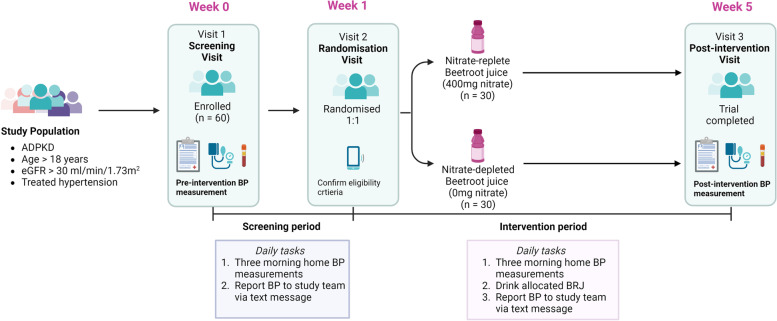
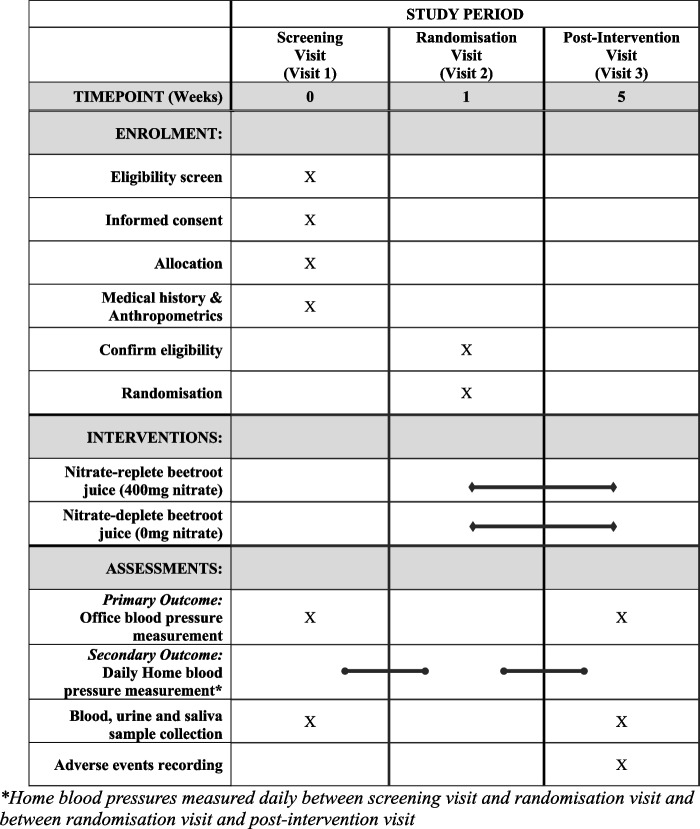
Methods: Participants with ADPKD and treated hypertension (n = 60) will be randomly allocated (1:1) to receive a daily dose of either nitrate-replete (400 mg nitrate/day) or nitrate-deplete BRJ for 4 weeks. The co-primary outcomes are change in mean systolic and diastolic clinic BP before and after 4 weeks of treatment with daily BRJ. Secondary outcomes are changes in daily home BP, urinary albumin to creatinine ratio, serum and salivary nitrate/nitrite levels and serum asymmetric dimethylarginine levels before and after 4 weeks of BRJ.
Discussion: The effect of BRJ in ADPKD has not been previously tested. BRJ is an accessible, natural dietary supplement that, if effective, will provide a novel adjunctive approach for treating hypertension in ADPKD.
Trial registration: ClinicalTrials.gov NCT05401409. Retrospectively registered on 27th May 2022.
Keywords: Beetroot juice; Dietary interventions in hypertension; Polycystic kidney disease.
© 2023. Crown.
Conflict of interest statement
The authors declare that they have no competing interests.
Figures
References
Publication types
MeSH terms
Substances
Associated data
Grants and funding
LinkOut - more resources
Full Text Sources
Medical
