


Antioxidative Properties of Fermented Soymilk Using Lactiplantibacillus plantarum LP95
- PMID: 37507980
- PMCID: PMC10376881
- DOI: 10.3390/antiox12071442
Antioxidative Properties of Fermented Soymilk Using Lactiplantibacillus plantarum LP95
Abstract
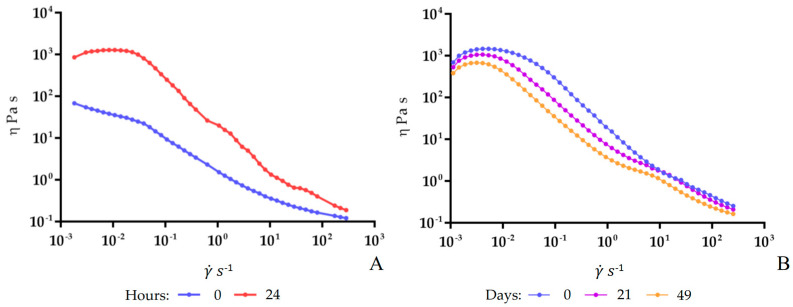
In recent times, there has been a growing consumer interest in replacing animal foods with alternative plant-based products. Starting from this assumption, for its functional properties, soymilk fermented with lactic acid bacteria is gaining an important position in the food industry. In the present study, soymilk was fermented with Lactiplantibacillus plantarum LP95 at 37 °C, without the use of stabilizers as well as thickeners and acidity regulators. We evaluated the antioxidant capacity of fermented soymilk along with its enrichment in aglycone isoflavones. The conversion of isoflavone glucosides to aglycones (genistein, glycitein, and daidzein) was analyzed together with antioxidant activity (ABTS) measurements, lipid peroxidation measurements obtained by a thiobarbituric acid reactive substance (TBARS) assay, and apparent viscosity measurements. From these investigations, soymilk fermentation using Lp. plantarum LP95 as a starter significantly increased isoflavones' transformation to their aglycone forms. The content of daidzein, glycitein, and genistein increased after 24 h of fermentation, reaching levels of 48.45 ± 1.30, 5.10 ± 0.16, and 56.35 ± 1.02 μmol/100 g of dry weight, respectively. Furthermore, the antioxidant activity increased after 6 h with a reduction in MDA (malondialdehyde). The apparent viscosity was found to increase after 24 h of fermentation, while it slightly decreased, starting from 21 days of storage. Based on this evidence, Lp. plantarum LP95 appears to be a promising candidate as a starter for fermented soymilk production.
Keywords: Lactiplantibacillus plantarum; fermentation; functional food; isoflavones; soymilk.
Conflict of interest statement
The authors declare no conflict of interest.
Figures




References
-
- Shah A.M., Tarfeen N., Mohamed H., Song Y. Fermented Foods: Their Health-Promoting Components and Potential Effects on Gut Microbiota. Fermentation. 2023;9:118. doi: 10.3390/fermentation9020118. - DOI
-
- Van Dyck S. 3-The Impact of Singlet Oxygen on Lipid Oxidation in Foods. In: Decker E.A., editor. Oxidation in Foods and Beverages and Antioxidant Applications. Woodhead Publishing; Sawston, UK: 2010. pp. 57–75.
-
- Li C., Li W., Chen X., Feng M., Rui X., Jiang M., Dong M. Microbiological, Physicochemical and Rheological Properties of Fermented Soymilk Produced with Exopolysaccharide (EPS) Producing Lactic Acid Bacteria Strains. LWT-Food Sci. Technol. 2014;57:477–485. doi: 10.1016/j.lwt.2014.02.025. - DOI
LinkOut - more resources
Full Text Sources
