


Impact of Menopausal Status and Recurrent UTIs on Symptoms, Severity, and Daily Life: Findings from an Online Survey of Women Reporting a Recent UTI
- PMID: 37508246
- PMCID: PMC10376736
- DOI: 10.3390/antibiotics12071150
Impact of Menopausal Status and Recurrent UTIs on Symptoms, Severity, and Daily Life: Findings from an Online Survey of Women Reporting a Recent UTI
Abstract
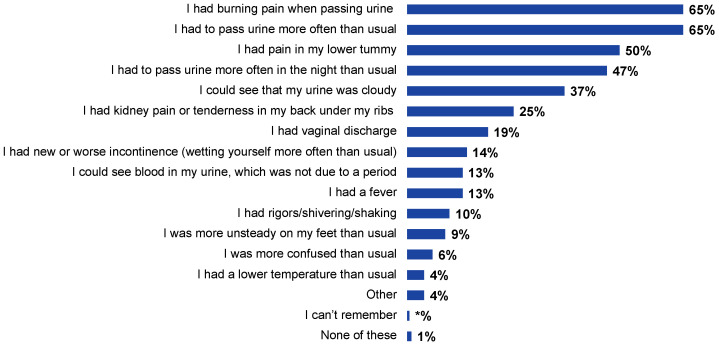
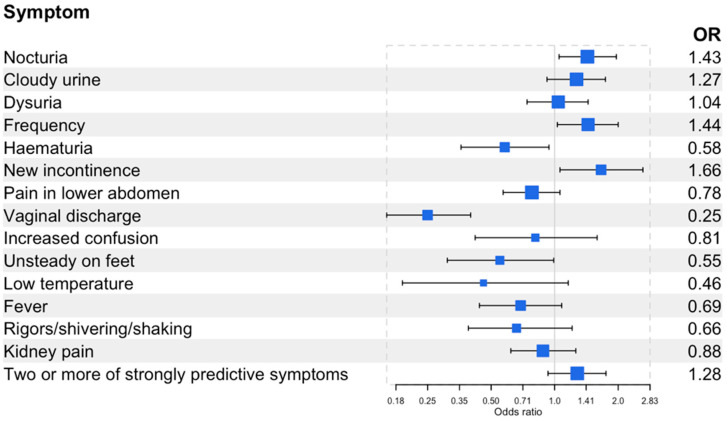
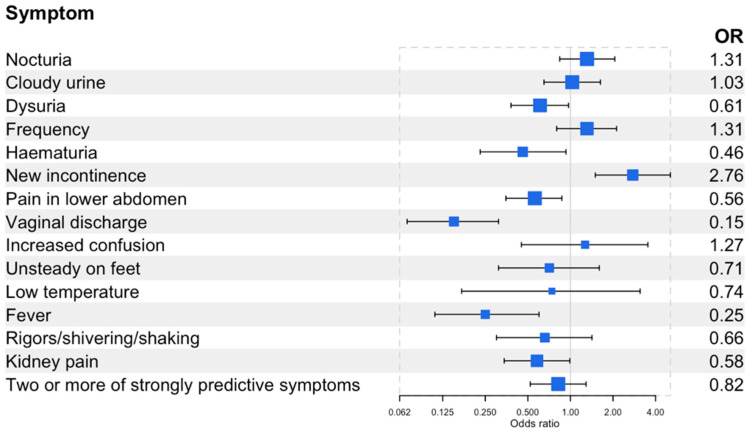
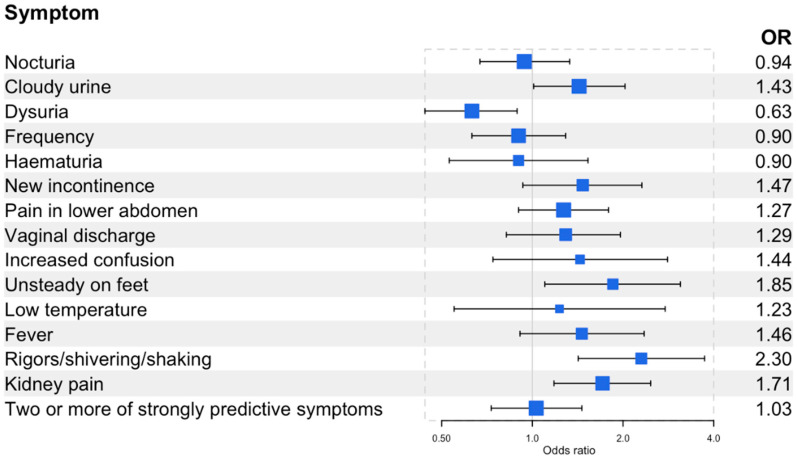
Introduction: Current UKHSA UTI diagnostic guidance advises empirical antibiotics if two of the following symptoms are present: cloudy urine, dysuria, and new onset nocturia. Hormonal changes during menopause may impact UTI symptoms, and qualitative studies suggest women with recurrent UTIs may present with different UTI symptoms. This study aims to assess whether menopausal status and the presence of recurrent UTIs impact UTI symptoms in women. Methods: An e-survey was conducted between 13 March 2021 and 13 April 2021. Women aged 16 years or older with a history of a UTI in the last year were eligible for inclusion. We defined menopause as those aged 45-64 years; pre-menopause as those less than 45 years; and post-menopause as those 65 years and older. Recurrent UTIs were defined as three or more UTIs in the last year. The data were weighted to be representative of the UK population. Crude unadjusted and adjusted odds ratios were estimated using logistic regression. Results: In total, 1096 women reported a UTI in the last year. There were significant differences in UTI symptoms based on menopausal status and the presence of recurrent UTIs. Post-menopausal women self-reported more incontinence (OR 2.76, 95% CI 1.50,5.09), whereas menopausal women reported more nocturia. Women with recurrent UTIs reported less dysuria, more severe symptoms (OR 1.93 95% CI 1.37,2.73) and a greater impact on daily life (OR 1.68, 95% CI 1.19,2.37). Conclusions: This survey provides evidence that acute UTIs present differently based on menopausal status and in women with recurrent UTIs. It is important that healthcare professionals are aware of these differences when assessing women presenting with an acute UTI and, therefore, further research in this area is needed.
Keywords: menopause; recurrent UTIs; symptoms; urinary tract infection.
Conflict of interest statement
The authors declare no conflict of interest.
Figures
References
-
- Beerepoot M.A.J., Geerlings S.E., van Haarst E.P., Mensing Van Charante N., ter Riet G. Nonantibiotic prophylaxis for recurrent urinary tract infections: A systematic review and meta-analysis of randomized controlled trials. J. Urol. 2013;190:1981–1989. doi: 10.1016/j.juro.2013.04.142. - DOI - PubMed
-
- Alam M.F., Cohen D., Butler C., Dunstan F., Roberts Z., Hillier S., Palmer S. The additional costs of antibiotics and re-consultations for antibiotic-resistant Escherichia coli urinary tract infections managed in general practice. Int. J. Antimicrob. Agents. 2009;33:255–257. doi: 10.1016/j.ijantimicag.2008.08.027. - DOI - PubMed
Grants and funding
LinkOut - more resources
Full Text Sources
Miscellaneous
