Review
. 2023 Jun 25;13(7):1038.
doi: 10.3390/biom13071038.

Fungal Endophytes: Microfactories of Novel Bioactive Compounds with Therapeutic Interventions; A Comprehensive Review on the Biotechnological Developments in the Field of Fungal Endophytic Biology over the Last Decade

Affiliations
Review

Fungal Endophytes: Microfactories of Novel Bioactive Compounds with Therapeutic Interventions; A Comprehensive Review on the Biotechnological Developments in the Field of Fungal Endophytic Biology over the Last Decade

Aditi Gupta et al. Biomolecules. .

Abstract

The seminal discovery of paclitaxel from endophytic fungus Taxomyces andreanae was a milestone in recognizing the immense potential of endophytic fungi as prolific producers of bioactive secondary metabolites of use in medicine, agriculture, and food industries. Following the discovery of paclitaxel, the research community has intensified efforts to harness endophytic fungi as putative producers of lead molecules with anticancer, anti-inflammatory, antimicrobial, antioxidant, cardio-protective, and immunomodulatory properties. Endophytic fungi have been a valuable source of bioactive compounds over the last three decades. Compounds such as taxol, podophyllotoxin, huperzine, camptothecin, and resveratrol have been effectively isolated and characterized after extraction from endophytic fungi. These findings have expanded the applications of endophytic fungi in medicine and related fields. In the present review, we systematically compile and analyze several important compounds derived from endophytic fungi, encompassing the period from 2011 to 2022. Our systematic approach focuses on elucidating the origins of endophytic fungi, exploring the structural diversity and biological activities exhibited by these compounds, and giving special emphasis to the pharmacological activities and mechanism of action of certain compounds. We highlight the tremendous potential of endophytic fungi as alternate sources of bioactive metabolites, with implications for combating major global diseases. This underscores the significant role that fungi can play in the discovery and development of novel therapeutic agents that address the challenges posed by prevalent diseases worldwide.

Keywords: bioactive compounds; drug resistance; endophytes; host–microbe interactions; medicinal properties.


Conflict of interest statement

The authors declare no conflict of interest.

Figures
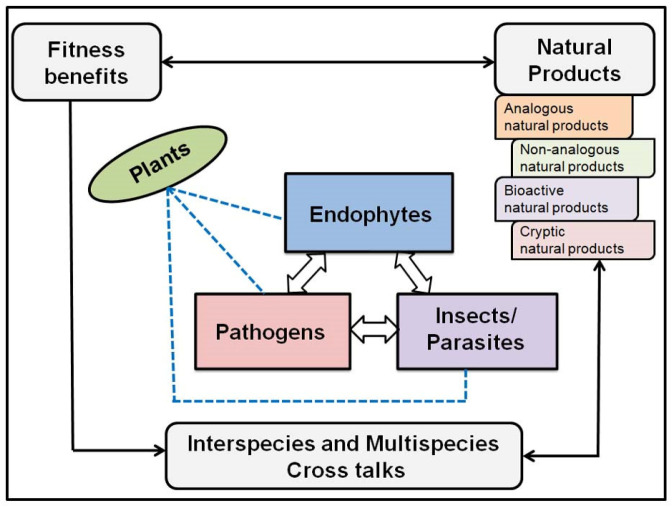
Figure 1
Figure 1
A schematic representation of plant–fungus cost–benefit interactions including interactions among host plant, endophytic fungi, pathogens, and insects which leads fungal endophytes to produce an array of metabolites with profound bioactivities.
Figure 2
Figure 2
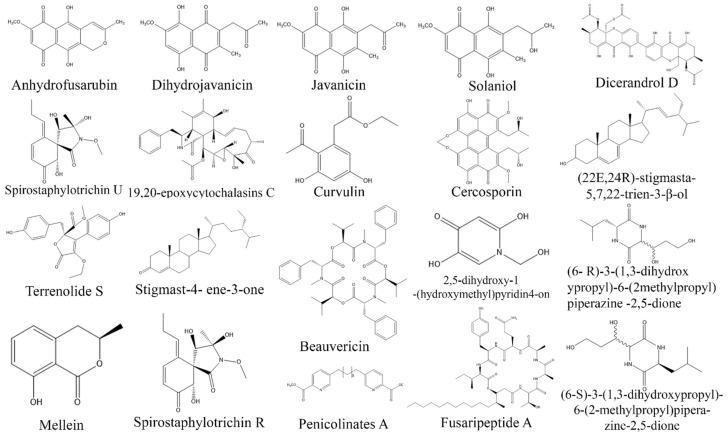
Structures of plant-analogous compounds from fungal endophytes (structures were taken from protologue publications and were redrawn using ChemDraw Ultra 12.0).
Figure 3
Figure 3
Structures of anticancer compounds from fungal endophytes (structures were taken from protologue publications and were redrawn using ChemDraw Ultra 12.0).
Figure 4
Figure 4
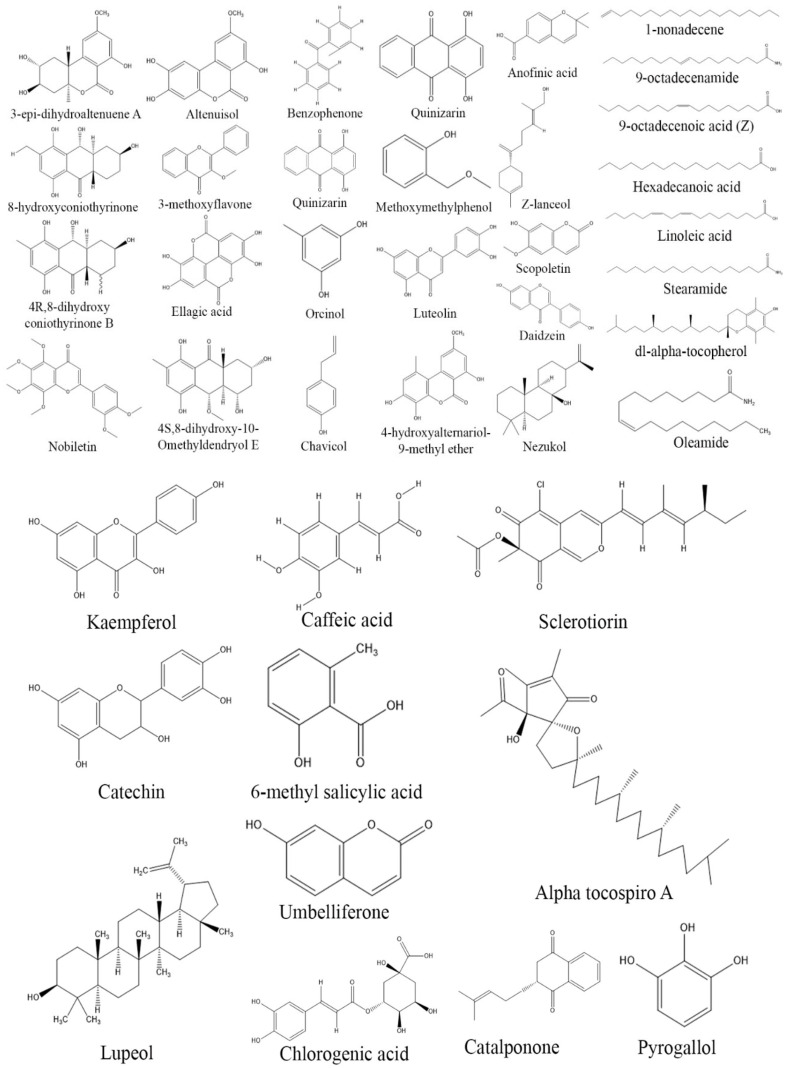
Structures of antioxidant compounds from fungal endophytes (structures were taken from protologue publications and were redrawn using ChemDraw Ultra 12.0).
Figure 5
Figure 5
Structures of anti-inflammatory compounds from fungal endophytes (structures were taken from protologue publications and were redrawn using ChemDraw Ultra 12.0).
Figure 6
Figure 6
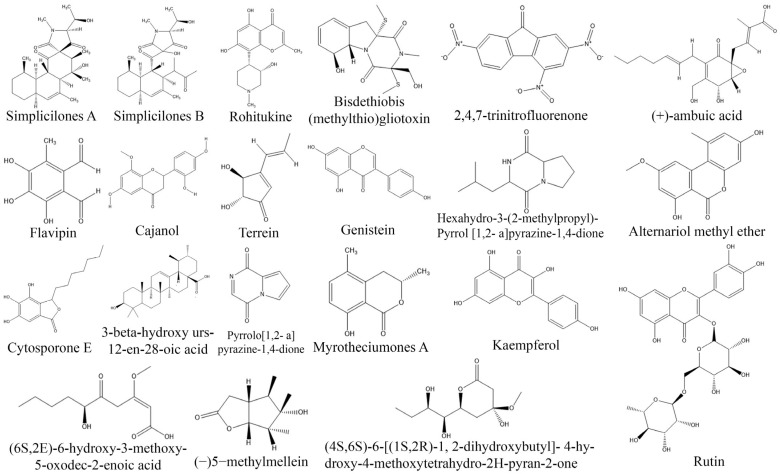
Structures of antidiabetic compounds from fungal endophytes (structures were taken from protologue publications and were redrawn using ChemDraw Ultra 12.0).
Figure 7
Figure 7
Structures of immunosuppressive compounds from fungal endophytes (structues were taken from protologue publications and were redrawn using ChemDraw Ultra 12.0).
Figure 8
Figure 8
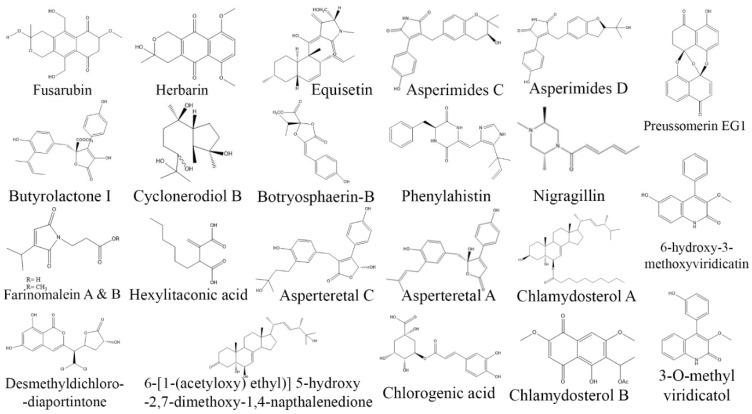
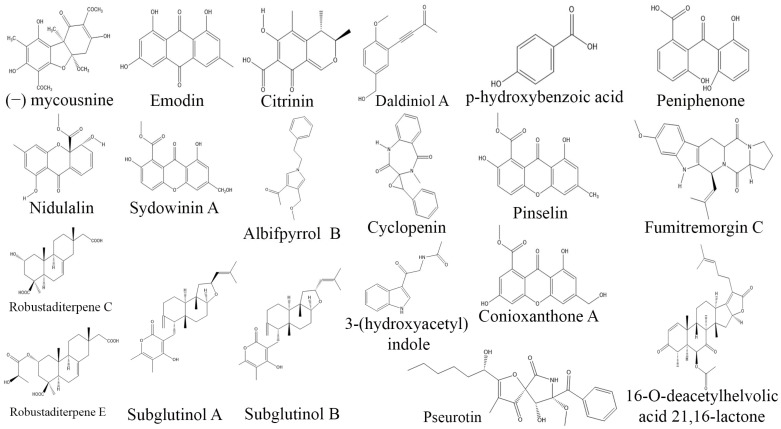
Structures of antibacterial compounds from fungal endophytes (structures were taken from protologue publications and were redrawn using ChemDraw Ultra 12.0).
Figure 9
Figure 9
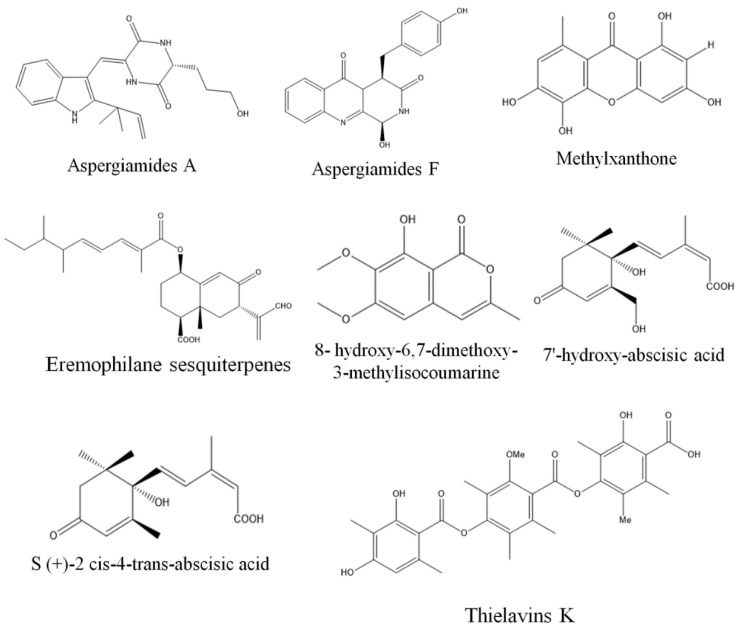
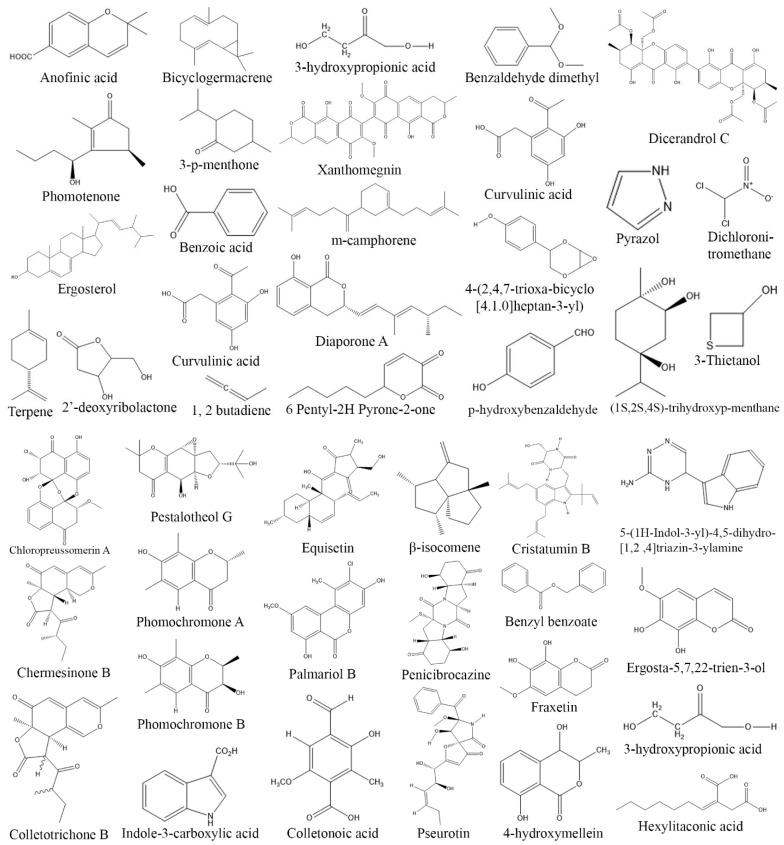
Structures of antifungal compounds from fungal endophytes (structures were taken from protologue publications and were redrawn using ChemDraw Ultra 12.0).
Figure 10
Figure 10
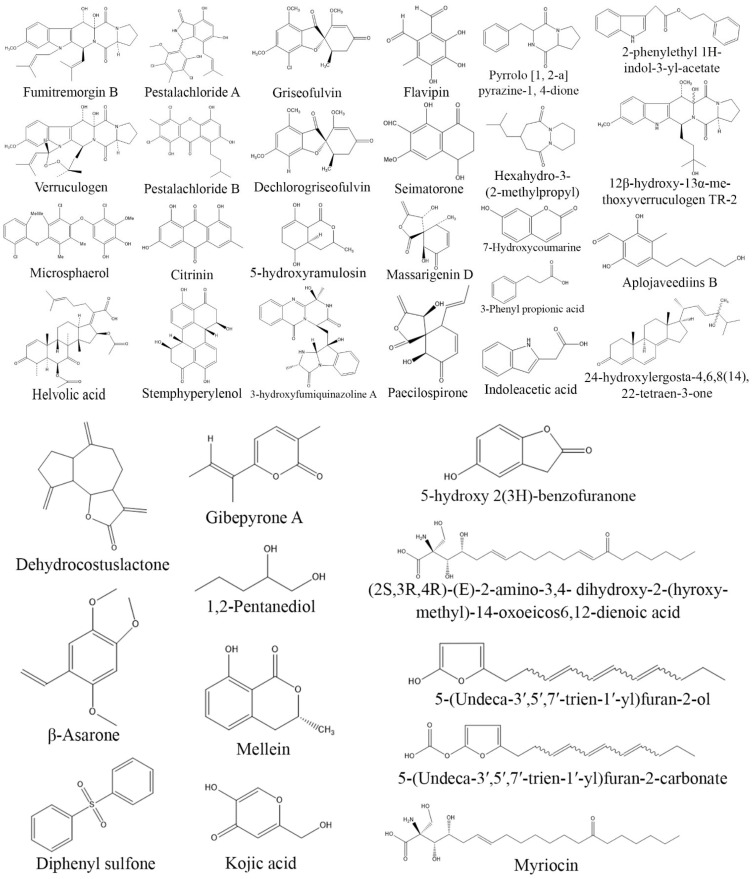
Structures of antiviral compounds from fungal endophytes (structures were taken from protologue publications and were redrawn using ChemDraw Ultra 12.0).
Figure 11
Figure 11
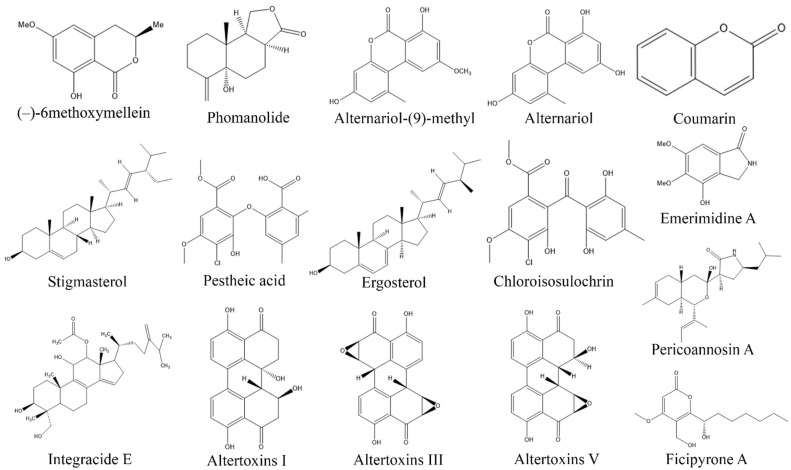
Structures of antiprotozoal compounds from fungal endophytes (structures were taken from protologue publications and were redrawn using ChemDraw Ultra 12.0).

References

    1. Caruso D.J., Palombo E.A., Moulton S.E., Zaferanloo B. Exploring the promise of endophytic fungi: A review of novel antimicrobial compounds. Microorganisms. 2022;10:1990. doi: 10.3390/microorganisms10101990. - DOI - PMC - PubMed
    1. Pasrija P., Girdhar M., Kumar M., Arora S., Katyal A. Endophytes: An unexplored treasure to combat Multidrug resistance. Phytomed. Plus. 2022;2:100249. doi: 10.1016/j.phyplu.2022.100249. - DOI
    1. Digra S., Nonzom S. An insight into endophytic antimicrobial compounds: An updated analysis. Plant Biotechnol. Rep. 2023:1–31. doi: 10.1007/s11816-023-00824-x. - DOI - PMC - PubMed
    1. Deshmukh S.K., Verekar S.A., Bhave S.V. Endophytic fungi: A reservoir of antibacterials. Front. Microbiol. 2015;5:715. doi: 10.3389/fmicb.2014.00715. - DOI - PMC - PubMed
    1. Adeleke B.S., Babalola O.O. Pharmacological potential of fungal endophytes associated with medicinal plant: Review. J. Fungi. 2021;7:147. doi: 10.3390/jof7020147. - DOI - PMC - PubMed

Publication types