


Desulfovibrio in the Gut: The Enemy within?
- PMID: 37512944
- PMCID: PMC10383351
- DOI: 10.3390/microorganisms11071772
Desulfovibrio in the Gut: The Enemy within?
Abstract
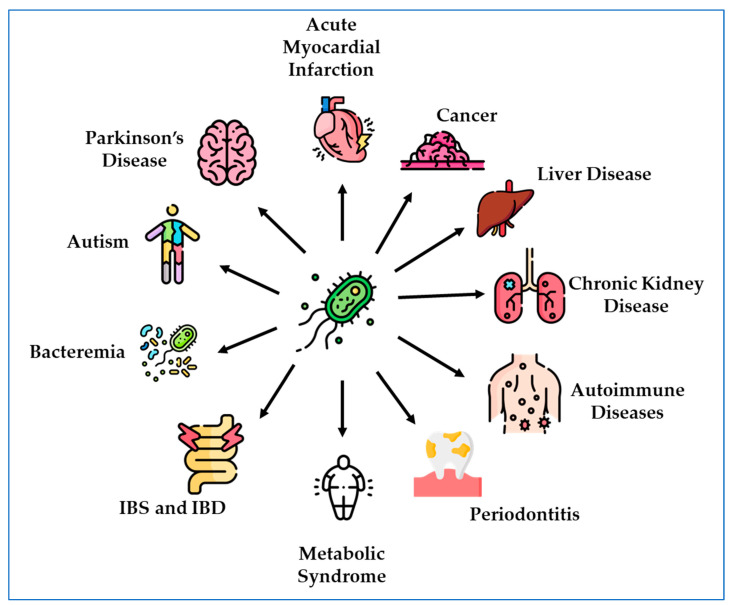
Desulfovibrio (DSV) are sulfate-reducing bacteria (SRB) that are ubiquitously present in the environment and as resident commensal bacteria within the human gastrointestinal tract. Though they are minor residents of the healthy gut, DSV are opportunistic pathobionts that may overgrow in the setting of various intestinal and extra-intestinal diseases. An increasing number of studies have demonstrated a positive correlation between DSV overgrowth (bloom) and various human diseases. While the relationship between DSV bloom and disease pathology has not been clearly established, mounting evidence suggests a causal role for these bacteria in disease development. As DSV are the most predominant genera of SRB in the gut, this review summarizes current knowledge regarding the relationship between DSV and a variety of diseases. In this study, we also discuss the mechanisms by which these bacteria may contribute to disease pathology.
Keywords: Desulfovibrio; Parkinson’s disease; hydrogen sulfide (H2S); inflammatory bowel disease; lipopolysaccharide (LPS); sulfate reducing bacteria (SRB).
Conflict of interest statement
The authors declare no conflict of interest.
Figures


References
-
- Jørgensen B.B. Mineralization of organic matter in the sea bed—The role of sulphate reduction. Nature. 1982;296:643–645. doi: 10.1038/296643a0. - DOI
-
- Mckenzie J.A., Vasconcelos C. Dolomite Mountains and the origin of the dolomite rock of which they mainly consist: Historical developments and new perspectives. Sedimentology. 2009;56:205–219. doi: 10.1111/j.1365-3091.2008.01027.x. - DOI
-
- Schwartz W., Postgate J.R. The Sulfate-Reducing Bacteria (2nd Edition) X + 208 S., 20 Abb., 4 Tab. University Press, Cambridge 1983. US $ 39.50. J. Basic Microbiol. 1985;25:202. doi: 10.1002/jobm.3620250311. - DOI
-
- Loubinoux J., Valente F.M., Pereira I.A., Costa A., Grimont P.A., Le Faou A.E. Reclassification of the only species of the genus Desulfomonas, Desulfomonas pigra, as Desulfovibrio piger comb. nov. Int. J. Syst. Evol. Microbiol. 2002;52:1305–1308. - PubMed
Publication types
Grants and funding
LinkOut - more resources
Full Text Sources
Other Literature Sources
Research Materials
