


Bifidobacterium longum subsp. longum Reduces Perceived Psychological Stress in Healthy Adults: An Exploratory Clinical Trial
- PMID: 37513541
- PMCID: PMC10383821
- DOI: 10.3390/nu15143122
Bifidobacterium longum subsp. longum Reduces Perceived Psychological Stress in Healthy Adults: An Exploratory Clinical Trial
Abstract
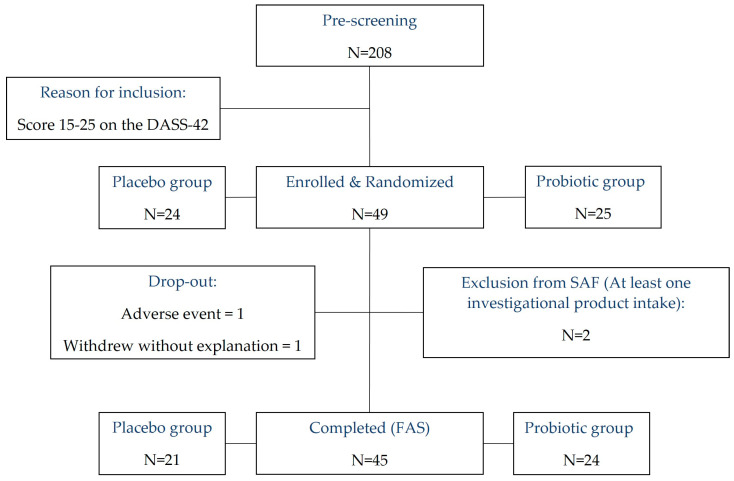
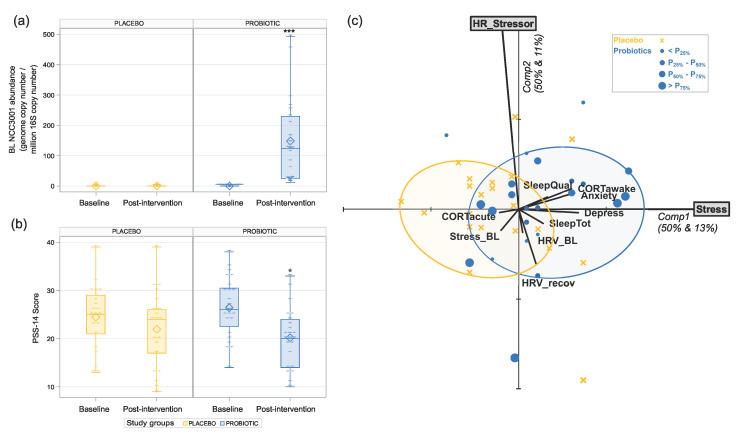
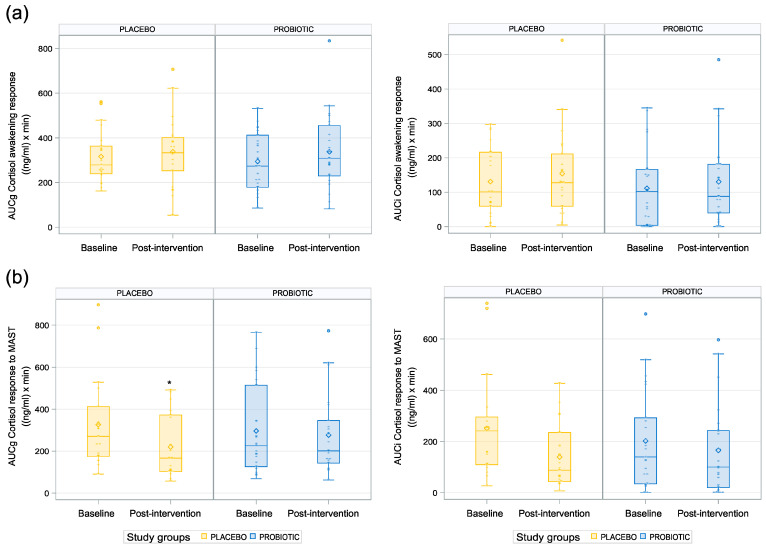
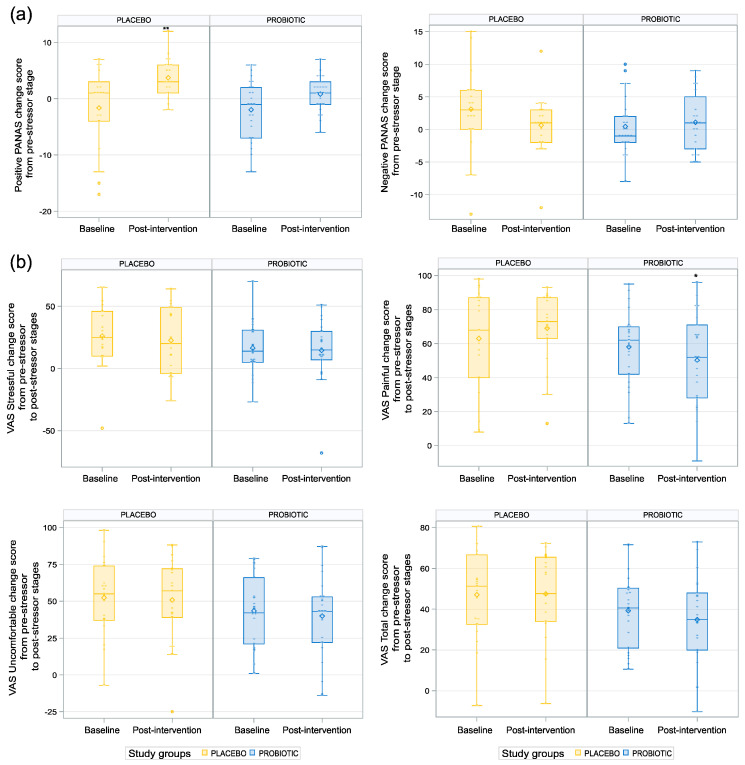
Emerging science shows that probiotic intake may impact stress and mental health. We investigated the effect of a 6-week intervention with Bifidobacterium longum (BL) NCC3001 (1 × 10¹⁰ CFU/daily) on stress-related psychological and physiological parameters in 45 healthy adults with mild-to-moderate stress using a randomized, placebo-controlled, two-arm, parallel, double-blind design. The main results showed that supplementation with the probiotic significantly reduced the perceived stress and improved the subjective sleep quality score compared to placebo. Comparing the two groups, momentary subjective assessments concomitant to the Maastricht Acute Stress Test revealed a lower amount of pain experience in the probiotic group and a higher amount of relief at the end of the procedure in the placebo group, reflected by higher scores in the positive affect state. The awakening of the salivary cortisol response was not affected by the intervention, yet the reduction observed in the salivary cortisol stress response post-intervention was higher in the placebo group than the probiotic group. Multivariate analysis further indicated that a reduction in perceived stress correlated with a reduction in anxiety, in depression, and in the cortisol awakening response after the 6-week intervention. This exploratory trial provides promising insights into BL NCC3001 to reduce perceived stress in a healthy population and supports the potential of nutritional solutions including probiotics to improve mental health.
Keywords: cortisol; gut–brain axis; probiotic; psychological stress; sleep.
Conflict of interest statement
M.B., N.R.-D., C.L., L.L., S.K., M.S., A.R., B.B., P.S., M.V., G.B., S.C.M. and J.H. are employees of Société des Produits Nestlé S.A., Switzerland. B.D., K.V. and L.V.O. declare that they have no conflict of interest.
Figures
References
-
- Duchaine C.S., Aube K., Gilbert-Ouimet M., Vezina M., Ndjaboue R., Massamba V., Talbot D., Lavigne-Robichaud M., Trudel X., Pena-Gralle A.B., et al. Psychosocial Stressors at Work and the Risk of Sickness Absence Due to a Diagnosed Mental Disorder: A Systematic Review and Meta-analysis. JAMA Psychiatry. 2020;77:842–851. doi: 10.1001/jamapsychiatry.2020.0322. - DOI - PMC - PubMed
-
- Zahar S., Schneider N., Makwana A., Chapman S., Corthesy J., Amico M., Hudry J. Dietary tryptophan-rich protein hydrolysate can acutely impact physiological and psychological measures of mood and stress in healthy adults. Nutr. Neurosci. 2022;26:303–312. doi: 10.1080/1028415X.2022.2047435. - DOI - PubMed
-
- Berding K., Bastiaanssen T.F.S., Moloney G.M., Boscaini S., Strain C.R., Anesi A., Long-Smith C., Mattivi F., Stanton C., Clarke G., et al. Feed your microbes to deal with stress: A psychobiotic diet impacts microbial stability and perceived stress in a healthy adult population. Mol. Psychiatry. 2023;28:601–610. doi: 10.1038/s41380-022-01817-y. - DOI - PMC - PubMed
-
- Hill C., Guarner F., Reid G., Gibson G.R., Merenstein D.J., Pot B., Morelli L., Canani R.B., Flint H.J., Salminen S., et al. Expert consensus document. The International Scientific Association for Probiotics and Prebiotics consensus statement on the scope and appropriate use of the term probiotic. Nat. Rev. Gastroenterol. Hepatol. 2014;11:506–514. doi: 10.1038/nrgastro.2014.66. - DOI - PubMed
Publication types
MeSH terms
Substances
Supplementary concepts
LinkOut - more resources
Full Text Sources
Other Literature Sources
